Friday Video Extravaganza

SPECIAL EARLY EDITION!

Hit the jump for some musical fun.

Why Do I Find Zombies Fascinating?

It's pretty much summed up in these two articles: One by William Grassie and a response by Robin Hanson.

I particularly like this part of Grassie's introduction:
Like the White Queen in Lewis Carroll Through the Looking Glass, I find it useful to practice imagining these "impossibilities" a little bit each day. "When I was younger I always did it for a half an hour a day," the Queen tells Alice. "Why sometimes I believed as many as six impossible things before breakfast."1 It is not bad to think of these impossibly dark possibilities. [...] A little bit each day is a great way to focus life on really important matters.
The point of this thought experiment, however, is not to contemplate death and disaster, but to imagine survivors and continued life.
That's pretty much what zombies are all about for me: what becomes important when the darkest catastrophe conceivable happens. And the end of civilized society, combined with the possibility that everyone you love could come back as your enemy, is about as dark a catastrophe as is conceivable, at least by me. Plus, there's the undisputed fact that survivor stories are fascinating.
TED Is a Friend of Mine

I've become a big fan of the TED talks, particularly those related to education. Since the videos might use up some computer power to load, and I'd rather not slow down the main page, I'm going to make use of this new "jump break" technology. So "hit the jump" for a few of my current favorites.


From the Lectern: Week 5

Last week we got separate answers to the key questions a consumer faces: 'What is feasible?' and 'What is desirable?' This week, we see how consumers combine the answers to these two questions in order to make an actual choice. After seeing that (and noticing what this theory actually predicts), we also take note that our model works equally well if we don't know the outcome of our choices with certainty.

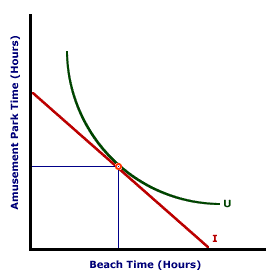
The key in combining what is feasible and what is desirable is to notice that our budget line and indifference curves can go on the same graph since they have the same axes. We know from this that individuals can only reach indifference curves that are in the feasible set (at least least a single point). Getting more would be nice but it's not in the cards. So, since the goal of the consumer is to maximize utility, the choice the consumer makes has to be the one that gives the highest utility for the given budget, which means it's going to have to be on the budget line somewhere.

Because of the other assumptions we make about how indifference curves work, we know that the best or highest indifference curve can't be one that cuts below the budget line anywhere, because that would mean our choice is no better than one that gives us less of both goods than we could get. So the choice of the consumer has to occur where the budget line and indifference curve are tangent (touch at one and only one point). This also yields the interesting result that the slope of the budget line, which is the relative prices and thus represents the trade-off between the two goods in the market, has to be equal to the slope of the indifference curve, which is the marginal rate of substitution and represents the trade-off between the two goods in the mind of the consumer. This makes sense: if apples are $1/lb and oranges $2/lb, but in your mind you'd be willing to swap 3 apples to get an orange, you have incentive to change your behavior: buy fewer apples and more oranges. So the choice of the consumer has to look like the graph on the right.

Once we think of equilibrium this way, we can see that the price of the good, the price of related goods (or what you think the price will be in the future), and your income (or what you think your income will be in the future) will all change the quantity demanded in the ways we've been saying they will with demand curves. The demand curve is derived from the combinations of goods that the consumer views as utility maximizing for various prices, and this relationship shifts when anything else that changes the budget line shifts. Finally, of course, if your preferences (in the form of indifference curves) change, then of course your choice will too.

The last thing we covered this week is that we don't need to know for sure how much utility a choice will give us as long as we can figure out our expected utility. This makes matters a bit more complicated, but it brings up the idea that people tend to dislike taking risks (this skiing guy notwithstanding). Most of us, if given the choice between going home as we are, or risking $50 against somebody else (winner takes home all $100, so $50 extra) on a fair coin flip, we'll just go home. Actually, even if the other guy puts an extra $5 on the table, so we could win bigger than we could lose, we'd still walk away. It's worth something to us to have the guarantee rather than taking the risk.

We actually assumed this was the case last week when we said consumers had diminishing marginal utility. This assumption means that the line representing different chances of winning a high level of utility or a low level is always below the utility function itself. Essentially, expecting to win $200 on average is never going to make us as happy as having $200 for sure. Not only that, but depending on our chances of winning big (where on the line we are), the gamble gives us the same utility as if we were guaranteed a smaller amount of money, say $175. We would actually be willing to pay up to $25 of the expected winnings in order to be guaranteed that we won't lose.

This risk-aversion is what makes insurance companies profitable. You see, all of life involves gambles we can't really get out of--car crashes, house fires, severe illness or injury, you name it--and we are willing to accept a little bit less than we would get on average if only we can be guaranteed the outcome. The insurance company makes an offer: if you win $400, we'll take the money and you'll only get $180 of it; but if you win nothing, we'll still give you $180, and we'll eat the loss. Since we're risk averse, this guaranteed $180 gives us more utility than expecting $200 on average (which gave as much utility as a guaranteed $175). The insurance company knows if it does this a lot, it will bring in about $200 per person and only have to pay out $180. Steady employers can work this way, too: if you did your job freelance you might be able to make more money on average, but your income would go up and down a lot depending on how business is doing this week. If you take a steady job, though, your employer absorbs at least some of the risk, so you're OK making a bit less.

So there you have it. Equilibrium choices, with and without risk. We'll have more to say about risky decision toward the end of the semester. The key idea will be that risk works this way assuming everyone involved is uncertain about the same things. Things get trickier when one side of the market knows something about the outcome that the other doesn't. But that's for another day.

Next week I'm  giving an exam, so no lectern post. I'll have to come up with something fun instead!

Two Links on Teaching

Advice on how college professors should teach from Lee Craig and Craig Newmark. I like some of the suggestions, while others I don't think I buy into. I'll just mention a couple of my favorites here.

Via Lee Craig:
Outlines are good; scripts are bad.
On course evaluations, Lee focuses on what he can control: (1) Were you organized?, (2) Did you treat students professionally?  You cannot control how *effective* you are as a teacher because you cannot control what prejudices students bring to the classroom.
Via Craig Newmark:
For a minute or two every couple of classes raise your voice to almost a yell. This will startle the sleepy students and will entertain the others because it will remind them of Jon Stewart, who they love. Related: schtick is your friend.
One of the most effective ways to build credibility is to demonstrate that you (sometimes) know exactly what the students are thinking. When discussing a difficult bit of material or question, say "You may be wondering [what they're wondering] . . ." or "If you thought the answer was ______, here's a better way to think about it." On the first day of many of my courses, particularly my MBA course, I say, "You may be asking yourself: 'If you're so smart, why aren't you rich?'" Watch the students' eyes widen in surprise as they think, "How did the old guy know I was thinking that?"
I'm interested in what you readers like and dislike about the lists. Are there any of these that all your favorite teachers had in common? Any that you think are actually horrible recommendations?
Dying Majors?

What follows is a response to this article, which describes 10 college majors the author believes are in permanent decline. While I would always advise taking a grain of salt with any opinions about higher education published on a site named 'Online Degree Programs,' I think the idea of education moving away from these areas is interesting enough to comment on. My interpretation is pretty much guided by a single principle: The primary purpose of an undergraduate degree is a signal of innate ability.

Philosophy and the Classics. The article claims the number of people majoring in these areas is down. They don't offer any real data, but do provide some anecdotal evidence. Personally, I find it unlikely that these are permanently shifting down. My reasoning is that most BA degrees from Arts & Science colleges pretty much send the same signal to the potential employers regardless of the major. The ability to think, to read carefully, to do busywork that requires literacy and numeracy--these are the main things employers need to see from an undergraduate degree. Almost no one with a BA uses technical skills learned from the major in a work environment, they're all learned on the job. In this sense, Philosophy and Classics are just two flavors of the same signaling device, along with Political Science, Mathematics, English, and of course Economics. The only way these majors are actually on their way out is if students are look for more vocational training in their college curriculum. Personally, I'd like to see more people in vocational training than in traditional college studies, but I doubt this is a long run trend. More likely the relatively unimpressive economic performance of the last decade has inclined people toward more targeted skill sets. If the economy returns to the average growth we saw from 1950-2000 (and we have no reason to think it won't), I suspect this trend will reverse itself.

<insert people group here> Studies and Social Work. I'm honestly not surprised American Studies (as the article calls it) are on their way out, despite my previous statement about the BA as a generic signal. The key difference is that programs focusing on specific people groups are narrowly focused enough that they don't necessarily represent utilization of the broad skill sets of more conventional BA's, but they're still vague enough that not everyone knows what skills do get utilized (and this probably varies depending on which program at what school we're talking about). I think the article makes a good point: a literature or history degree sends a more easily interpreted signal, so these departments seem likely to absorb faculty and students from American Studies (those that don't fall victim to the recession, that is). Social Work is a bit more surprising, but much that they do could be absorbed by Psychology departments, and that degree is broad enough to appeal that if social work doesn't turn out that great (or the low pay gets annoying), there are other job prospects.

Journalism. Given the recent construction of the new Temple of Apollo Journalism College building on my own campus, I find this one a bit hard to believe. It's true that newspapers are a dying breed. Free content news sources that make use of internet technology are primarily going to replace the one or two print editions per day/week that make up the newspaper business model. Even TV news is probably going to be supplanted by sources that provide information online as it develops. But there will always be people willing to pay for information condensation and filtering (and perhaps more importantly, there will always be those who want to advertise to those who want this service). I suspect that journalism schools will shift the media tools they teach--newsprint is out and blogging is in. But as the technology makes getting information out there easier, the skills needed to attract a readership and keep them interested over time will probably have an increased demand, not a reduced. People are going to need a way to signal that they're not just armchair reporters.

Foreign Languages and Humanities. Foreign language is sort of a mislabeled degree in the first place, since the goal is always to learn not just the language of a culture but their history, customs, and common modes of thinking as well. For English speakers, this has long been largely a matter of recreation, since most other cultures are willing to adapt to the English speaking world in order to conduct business. And in as much as they are known to be matters of recreation, they don't send as good a signal as many other BAs. However, the next 20 years could easily see the rise of China and India to rival the current big 3 economic powers (US, EU, and Japan). For that matter, recent events have suggested that the staying power of the EU is not what we previously thought, so we could see a massive leveling of the playing field across eastern and western hemispheres. If this is the case, then I think we'll see two groups of people doing a lot of studying in foreign languages and humanities (or letters as it's called here): a renewal of recreational education as international trade leads to renewed growth, and people shooting for influential positions in multinational corporations. That's right, I think trade contracts in the mid-21st century are going to depend a lot on corporations playing to local loyalties in a way not yet seen. I see a lot more future tension between globalization and xenophobia, and familiarity with the national personality might be the signal a corporate vice president needs to tip the scales in their favor.

These beliefs could be way off base. I don't think online degree programs will ever make up a large share of the higher ed market, much less replace current universities (although I think current universities will absorb a lot of techniques from these programs). So take my predictions with a grain of salt, and we'll see how I did in 2030.

From the Lectern: Week 4

I've gone back and forth on how to write up this week's lecture. The focus has been on some technical issues which I don't feel can be communicated well in print without taking the form of a textbook, and I'm going to have you read a textbook, you may as well just buy a copy of Krugman and Wells for yourself! However, since my goal in these posts is to get across the key ideas we are covering, I will discuss two here: budget constraints and utility.

After the last few weeks' discussion of supply, demand, and the gains from trade, it is important to realize that all of the claims about how the market price leads to such nice outcomes depends on the idea that supply tells us about the opportunity cost of inputs, and that demand tells up about how much buyers value the end product. In order to see why the demand curve means what we said it does, we need to examine how consumers make the decisions they do. To understand this, we need to answer two questions: (1) What is feasible? What options are available to me? and (2) What is desirable? What satisfies my goals?

Answering the first is relatively straightforward. To think about it in simple terms, we need only make a few simplifying assumptions. While they sound ridiculous (and they are!), the theory of consumer choice does not require them; they just makes things easy to talk about and draw on a graph. So for simplicity will talk about the world as having only 1 time period, after which everything ends. There is no saving for later, there is no borrowing, there is no negotiating for higher wages, there is no leaving something for posterity--there is now, and only now. Second, we say there are only two goods in the world. There is no third way. Since Valentimes is upon us, we'll go with lame $1 per pound cherry chocolates and Equate-brand $0.50 per pair boxers, since that's what people buy as gifts (Don't they? I don't know because my wife is too cool for valentimes).

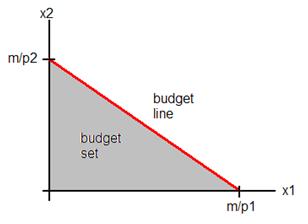
Now, in this simple world you have $10 to spend on valentimes presents. You could buy 10 pounds of chocolates, but you wouldn't have anything left over to buy boxers. You could buy 20 pairs of boxers, but you'd have to skip the chocolates. You could buy 5 pounds of chocolates and 5 pairs of boxes, and have $2.50 left over (as odd a choice as that may be in a world with nothing else to buy and no way to save). Or you could buy any other combination of the goods as long as you spend no more than the $10 you have. This full set of options is called the feasible set or budget set, and the line showing your options if you spend all $10 is the budget line. These are you options; whatever choice you make, it's got to be in here somewhere.

The question "What is desirable?" takes a bit more work to think about. After all, philosophers have been trying to explain human desires for millennia. As a description of human desires and behavior, economists first tried to understand why we like one thing more than another by saying we like whatever gives us the most utility. Utility is just the personal, subjective sense of satisfaction people get from doing things--in short, utility is the satisfaction of desire. While this isn't the most clever way to avoid philosophical troubles, it's remarkably effective. Utility also had the bonus of being measured by the cleverly named units 'utils.' Economists figured once we sorted out how to measure utility and compare it across people, we'd have this "human choice" think pretty well licked. They came up with utility functions, which they assumed would increase as we got to consume more stuff, but increasing by less and less the more we already had. This particular version of diminishing returns was referred to as diminishing marginal utility, marginal just being economics code for "the last one," in this case marginal utility being the extra utility from the very last unit of a good consumed.

Of course, economists eventually figured out that utility cannot be measured the way weight can, and no human being ever counts utils in making decisions. What humans do, though, is they can tell whether they like one option better than another, or the other better than the first, or if it doesn't make any difference. So economists modified their utility theory to use indifference curves, which represent on a utility function the same thing elevation lines represent on a hill. An indifference curve shows any combination of our two goods (lame chocolates and cheap boxers, remember?) that the buyer thinks are just as good as each other. If asked to choose between to combinations on the same indifference curve, the buyer won't care... because they're indifferent.

Economists make some simple assumptions about how indifference curves work. We assume that they represent different levels of utility, which is what consumers want anyway; but we don't need to know how much. All we need to know is whether the combinations (or 'bundles') of chocolate and boxers on one curve are better or worse than another. We assume consumers know their own preferences well enough to do this, and that their preferences are consistent enough that they can make these comparisons no matter how many different boxers & chocolate bundles are available to them. We also assume that even a tiny extra amount of bad chocolate (or any good), if it's gotten without having to give anything else up, moves us to a better indifference curve. Finally, we assume that if you have more and more boxers taken away, you'll begin to suffer from 'boxers deprivation,' and it will take an ever increasing amount of extra chocolate for you to stay indifferent. This last leads to the downward sloping, convex shape of indifference curves.

These indifference curves are how economists represent human desires. The consumer will make a choice, then, that gets to the best possible indifference curve that's still in the feasible set. But that's a topic for next week.

Lovecraft and Lewis, Masters of Worldview

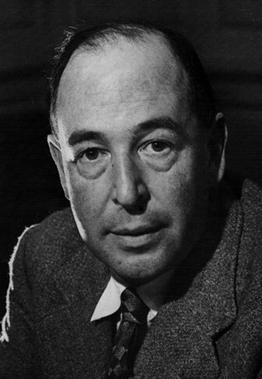
I've made no secret of my admiration for C. S. Lewis. I particularly like his non-fiction works dealing with the interaction of Christianity and the rest of life. I don't like him because I agree with his theology (he was Anglican, which I'm not, and believed in a few things like purgatory which I don't). I like him because Lewis, more than any other modern writer, understood that the Christian cannot believe the good news of Christ without it changing the way you interact with every aspect of reality. To illustrate how deeply (and sometimes subtly) this difference runs, consider the following (somewhat long) paragraph from God in the Docks:
I have every respect for those who wish women to be priestesses. I think they are sincere and pious and sensible people. Indeed, in a way they are too sensible. That is where my dissent from them resembles Bingley's dissent from his sister. I am tempted to say that the proposed arrangement would make us much more rational 'but not near so much like a Church'.
 [...] Christians think that God Himself has taught us how to speak of Him. To say that it does not matter is to say either that all the masculine imagery is not inspired, is merely human in origin, or else that, though inspired,it is quite arbitrary and unessential. And this is surely intolerable: or, if tolerable, it is an argument not in favour of Christian priestesses but against Christianity. It is also surely based on a shallow view of imagery. Without drawing upon religion, we know from our poetical experience that image and apprehension cleave closer together than commonsense is here prepared to admit; that a child who has been taught to pray to a Mother in Heaven would have a religious life radically different from that of a Christian child. And as image and apprehension are in an organic unity, so, for a Christian,are human body and human soul. [...]
[...] The point is that unless 'equal' means 'interchangeable,' equality makes nothing for the priesthood of women. And the kind of equality which implies that the equals are interchangeable (like counters or identical machines) is, among humans, a legal fiction. It may be a useful legal fiction. But in church we turn out backs on fictions. [...]
This is what common sense will call 'mystical.' Exactly. The Church claims to be the bearer of a revelation. If that claim is false then we want not to make priestesses but to abolish priests. If it is true, then we should expect to find in the Church an element which unbelievers will call irrational and which believers will call supra-rational. There ought to be something in it opaque to our reason though not contrary to it--as the facts of sex and sense on the natural level are opaque.
[...] With the Church, [...] we are dealing with male and female not merely as facts of nature but as the live and awful shadows of realities utterly beyond our control and largely beyond our direct knowledge. Or rather, we are not dealing with them but (as we shall soon learn if we meddle) they are dealing with us.
Aside from being able to apply the form of revelation to a practical decision of the Church, I like that the quote above shows that the necessity of mystics. It takes the clarity and comprehension of Lewis to explain it to someone like me.

I particularly enjoy Lewis' fiction -- the Narnia books, the Space trilogy, the Screwtape Letters, the Great Divorce, etc. --because his sharp understanding of the Christian worldview always comes through. Not that his protagonists always adhere to the Christian worldview, but the worlds in which they exist derive their essence from Lewis' character, just as Christianity says the real world derives its character from its Creator. Consider the following commentary on Heaven and Hell from The Great Divorce:
'Son,'he said,' ye cannot in your present state understand eternity...That is what mortals misunderstand. They say of some temporal suffering, "No future bliss can make up for it," not knowing that Heaven, once attained, will work backwards and turn even that agony into a glory. And of some sinful pleasure they say "Let me have but this and I'll take the consequences": little dreaming how damnation will spread back and back into their past and contaminate the pleasure of the sin. Both processes begin even before death. The good man's past begins to change so that his forgiven sins and remembered sorrows take on the quality of Heaven: the bad man's past already conforms to his badness and is filled only with dreariness. And that is why...the Blessed will say "We have never lived anywhere except in Heaven," : and the Lost, "We were always in Hell." And both will speak truly.'
Or consider this from The Lion, The Witch, and The Wardrobe:
"But where is the fourth?" asked Aslan.
"He has tried to betray them and joined the White Witch, O Aslan," said Mr. Beaver. And then something made Peter say:
"That was partly my fault, Aslan. I was angry with him and I think that helped him to go wrong."
And Aslan said nothing either to excuse Peter or to blame him but merely stood looking at him with his great golden eyes. And it seemed to all of them that there was nothing to be said.
"Please--Aslan," said Lucy, "can anything be done to save Edmund?"
"All shall be done," said Aslan, "But it may be harder than you think." And then he was silent again for some time. Up to that moment Lucy had been thinking how royal and strong and peaceful his face looked; now it suddenly came into her head that he looked sad as well.
Or perhaps the best example of the Christian worldview extended outside its usual bounds, the following excerpt from Perelandra, in which Ransom comes to the new and untarnished world:
As he let the empty gourd fall from his hand and was about to pluck a second one, it came into his head that he was now neither hungry nor thirsty. And yet to repeat a pleasure so intense and almost so spiritual seemed an obvious thing to do. His reason, or what we commonly take to be reason in our own world, was all in favour of tasting this miracle again; the childlike innocence of fruit, the labours he had undergone, the uncertainty of the future, all seemed to commend the action. yet something seemed opposed to this "reason." It is difficult to suppose that this opposition came from desire, for what desire would turn from so much deliciousness? But for whatever cause, it appeared to him better not to taste again. Perhaps the experience had been so complete that repetition would be a vulgarity--like asking to hear the same symphony twice in a day.
In every case, Lewis looked at every circumstance through the lens of Christianity. The reason, I believe, that so many of us turn to Lewis time and again for the expression of our heartfelt thoughts is precisely because Lewis' words are born out of meditation on the Kingdom of Christ and the transforming power of the Holy Spirit. Lewis puts words to what our still fallen but sanctified hearts yearn to mean.

In this sense, Lewis represents an internal consistency of thought and feeling that few authors ever achieve. However, as the title suggests (Ghost Ship Moment approaching!), I feel there is a parallel genius of the evolutionary atheistic worldview in Howard Philips Lovecraft.

Now, I have friends whom I highly respect who believe that Christianity offers the only logically consistent worldview. As a logician, I take this to be a silly claim simply because logical validity is simply not that high a bar to set, and is certainly not enough to identify the only worldview which is true. In order to be logically valid, a worldview needs only that its conclusions flow necessarily from its premises, and that none of the (stated or unstated) premises are explicitly contradictions. This does preclude some worldviews that are commonly held, particularly in reference to what the worldview asserts regarding right and wrong. But in this, Lewis himself set out the conditions that must be met for a worldview to be at least consistent in his book The Abolition of Man:
[...] wherever any precept of traditional morality is simply challenged to produce its credentials, as though the burden of proof lay on it, we have taken the wrong position. The legitimate reformer endeavours to show that the precept in question conflicts with some precept which its defenders allow to be more fundamental, or that it does not really embody the judgement of value it professes to embody.The direct frontal attack 'Why?'--'What good does it do?'--'Who said so?' is never permissible; not because it is harsh or offensive but because no values at all can justify themselves on that level. [...] Only those who are practising the Tao will understand it. It is the well-nurtured man, the cuor gentil, and he alone, who can recognize Reason when it comes. It is Paul, the Pharisee, the man 'perfect as touching the Law' who learns where and how the Law was deficient.
In order to avoid misunderstanding, I may add that though I myself am a Theist, and indeed a Christian, I am not here attempting any indirect argument for Theism. I am simply arguing that if we are to have values at all we must accept the ultimate platitudes of Practical Reason as having absolute validity: that any attempt, having become sceptical about these, to reintroduce value lower down on some supposedly more 'realistic' basis, is doomed. Whether this position implies a supernatural origin for the Tao is a question I am not here concerned with.
And this criterion, in my view, is precisely what Lovecraft satisfies while more modern atheistic apologists fail.

Lovecraft's worldview vehemently denies the existence of any supernatural Deity, instead holding that the material world is all there is, modern sciences possess the tools to identify objective reality and truth, and the nature of man and all life is driven by the process of evolution. In this sense his views are not very different from many other scientific atheists. However, Lovecraft is willing to accept two things most others this category are not: First, he makes no attempt to place himself or his own perceptions outside of the generally accepted morals and attitudes of his culture, implicitly accepting the Tao as a product of evolution which he has no need or interest in questioning; and second, he is willing to follow the premises of his worldview wherever they lead, making no attempt at imposing new assumptions along the way that prevent distasteful conclusions.

Consider the essay At the Root, on the sources of World War I (written before its conclusion):
Four years ago a large part of the civilised world laboured under certain biological fallacies which may, in a sense, be held responsible for the extent and duration of the present conflict. These fallacies, which were the foundation of pacifism and other pernicious forms of social and political radicalism, dealt with the capacity of man to evolve mentally beyond his former state of subservience to primate instinct and pugnacity, and to conduct his affairs and international or interracial relations on a basis of reason and good-will. That belief in such capability is unscientific and childishly naive, is beside the question. The fact remains, that the most civilised part of the world, including our own Anglo-Saxondom, did entertain enough of these notions to relax military vigilance, lay stress on points of honour, place trust in treaties, and permit a powerful and unscrupulous nation to indulge unchecked and unsuspected in nearly fifty years of preparation for world-wide robbery and slaughter. We are reaping the result of our simplicity.
[...]
Man's respect for the imponderables varies according to his mental constitution and environment. Through certain modes of thought and training it can be elevated tremendously, yet there is always a limit. The man or nation of high culture may acknowledge to great lengths the restraints imposed by conventions and honour, but beyond a certain point primitive will or desire cannot be curbed.[...]
Lovecraft accepts distinctions of "civilised" and "high culture", acknowledging the perceived goodness of "respect for the imponderables." Nevertheless, the slow crawl of evolution means to him that any sort of "sanctification" must be a superficial one, with all men ultimately no more sophisticated than any other beast.

Much of Lovecraft's fiction revolves around the human mind attempting to comprehend its true place in the stark, unforgiving, uncaring universe of Lovecraft's beliefs. In many cases the realization is enough to drive his protagonists to madness or even suicide rather than live with the reality of insignificance. The opening paragraph of one of his most famous works, The Call of Cthulhu, says it best:
The most merciful thing in the world, I think, is the inability of the human mind to correlate all its contents. We live on a placid island of ignorance in the midst of black seas of infinity, and it was not meant that we should voyage far. The sciences, each straining in its own direction, have hitherto harmed us little; but some day the piecing together of dissociated knowledge will open up such terrifying vistas of reality, and of our frightful position therein, that we shall either go mad from the revelation or flee from the deadly light into the peace and safety of a new dark age.
Lovecraft's writing is often difficult to read, in some ways the polar opposite of Lewis. But what Lovecraft truly masters is atmosphere, especially the eerie sense of being alone and without recourse amidst a universe that does not care what happens to you. Lovecraft described his reasoning for this focus on fear in Notes on Writing Weird Fiction:
I choose weird stories because they suit my inclination best—one of my strongest and most persistent wishes being to achieve, momentarily, the illusion of some strange suspension or violation of the galling limitations of time, space, and natural law which forever imprison us and frustrate our curiosity about the infinite cosmic spaces beyond the radius of our sight and analysis. These stories frequently emphasise the element of horror because fear is our deepest and strongest emotion, and the one which best lends itself to the creation of Nature-defying illusions. Horror and the unknown or the strange are always closely connected, so that it is hard to create a convincing picture of shattered natural law or cosmic alienage or “outsideness” without laying stress on the emotion of fear.
My personal favorite of Lovecraft's works is a masterpiece of  atmospheric horror. Just taking one relatively weak example, nearly at random, from The Colour Out of Space:
Winter came early, and was very cold. Ammi saw Nahum less often than usual, and observed that he had begun to look worried. The rest of his family too, seemed to have grown taciturn; and were far from steady in their church-going or their attendance at the various social events of the countryside. For this reserve or melancholy no cause could be found, though all the household confessed now and then to poorer health and a feeling of vague disquiet. Nahum himself gave the most definite statement of anyone when he said he was disturbed about certain footprints in the snow. They were the usual winter prints of red squirrels, white rabbits, and foxes, but the brooding farmer professed to see something not quite right about their nature and arrangement. He was never specific, but appeared to think that they were not as characteristic of the anatomy and habits of squirrels and rabbits and foxes as they ought to be. Ammi listened without interest to this talk until one night when he drove past Nahum's house in his sleigh on the way back from Clark's Corner. There had been a moon, and a rabbit had run across the road, and the leaps of that rabbit were longer than either Ammi or his horse liked. The latter, indeed, had almost run away when brought up by a firm rein. Thereafter Ammi gave Nahum's tales more respect, and wondered why the Gardner dogs seemed so cowed and quivering every morning. They had, it developed, nearly lost the spirit to bark.
Lovecraft embraces how Nature, from a truly atheistic, scientific perspective, will inevitably feel unnatural. In other works, he places a frequent emphasis on impurity of ancestral descent (and impurity in general), a focus driven by his unrepentant racism. And after all, in his view there is no real reason to repent of racism; no human being, nor plant or animal or any other form of life, deserves more particular recognition or concern beyond any other except what that granted by a sense of identity. Within Lovecraft's view, that sense of identity is owed to no one, although as in Lewis' Tao it will of course be felt with some. In some sense, Lovecraft accepts 'love your neighbor'... but he doesn't play ball on who your neighbor is.

I could go on quoting Lewis and Lovecraft until all readers abandon me (have you?). I truly enjoy both authors. One I largely agree with, while the other I vehemently deny. But in both there is a logic, a consistency of perspective, that flows through fiction and non- alike. I think it is this consistency that enables them to write so compellingly. I would have loved to see them debate each other, if for no other reason than to see two worldviews truly, honestly collide.

From the Lectern: Week 3

Last week, we talked about what will affect the behavior of buyers and sellers in a market, and the theoretical reasons why economists care so much. This week, we focus on the issue of how strongly buyers and sellers respond to the incentives around them, and look at some practical issues for why this is important.

As always, we need an example market. For this week, we're going to look at a somewhat more serious example than last week: Processed corn. This market affects the everyday lives of everyone in this room through the two main forms it takes, corn syrup (including the high-fructose variety) and ethanol. Between the sweetener and the fuel additive, most of us don't go a an afternoon without interacting with some form of processed corn. So what happens in this market is, if not more important, at least more relevant to our lives.

Given our example market, we need to say something meaningful about how the responsiveness of behavior is measured. From a mathematical perspective, the easiest and simplest way to show the change in something (for example, how much processed corn people decide to buy) that results from a change in something else (such as the price of processed corn) is by calculating the slope. On our graph of the demand curve, this is just difference between the new and old quantity demand divided by the difference between the new and old price. But there are some problems with thinking about changes this way. First of all, what the number means depends on how we measure price and quantity, so we have to keep careful track of the units.  If quantity is bushels per day and price is dollar per bushel, then the elasticity becomes dollars per day, which is reasonable as far as it goes, but seems kind of awkward. Second, it's tough to tell what number the slope has to reach before we can say the response was "big" or "small." Is - $5,000/day a big slope for the demand curve (recall that the number is negative since the demand curve slopes down)?

To get around these problems, instead of using slope we calculate changes using an engineering concept (yeah, we stole equilibrium from them, too) called elasticity. Elasticity is calculated in such a way that instead of looking at just the change in price, we look at the percentage change in price, and instead of change in quantity, percentage change in quantity. Percentage change means we have a sense of scale: a $1 increase in price is a lot if the price is already $1 (a 100% increase, in fact), but not much if the price is $1,000 (only a 0.1% increase). It also eliminates the issue of units, since a 10% change is a 10% change whether we're measuring in bushels, kilograms, or boots-full.

Elasticity gives us an easy way to identify what counts as a big or small response, too. If the percentage change in quantity is bigger than the percentage change in price, then the elasticity will be more than 1. We call this an elastic demand. If it is smaller, the elasticity will be less than 1 and we say demand is inelastic.

With this method of measurement in mind, there are several different types of elasticities on the demand side. The most important is the one we've been talking about so far, the price elasticity of demand. This tells us how much buyers respond to price changes. We'll consider the practical importance of this more later, but just as an example consider a firm trying to increase its revenue. Firm's total revenue is just the amount they make by selling one item, the price, times the number of items they sell, the quantity demanded. If the corn seller raises its price, we know it's going to sell less corn. But what happens to its revenues? Well, that depends on whether price goes up more than quantity goes down or quantity goes down more than price goes up. In other words, it depends on the price elasticity of demand. If demand is inelastic, then the quantity won't fall much if price goes up, so the firm's revenue increases. If demand is elastic, though, quantity falls a lot, so revenue actually falls. Generally, the more substitutes available, the bigger a part of buyers' income the good is, and the more buyers there are, the more elastic the demand curve will be.

Price elasticity of demand is the most important elasticity on the buyers side, but not the only one. Anything that can shift an individual's demand curve also has an elasticity (except for tastes; we'll see why later on). So there's income elasticity of demand, cross-price elasticity of demand (that's responsiveness to prices of other goods), etc. There's also price elasticity of supply, which is the same as the previous price elasticity but on the other side of the market. Anything that shifts supply curves also has an elasticity (except technology; again, we'll see why later in the class).

Once we understand elasticity, we can begin to consider what happens when the government intervenes in markets. In class, we covered how the strength of effects of government interventions are determined by elasticity, but here I just want to get some basics.

First of all, suppose the government decides that the market price for corn is unfair. They might think it's too high, and thus makes food and alternative fuels too expensive. Alternatively, they could think it's too low, not allowing the good people of America's heartland to make a decent living. The results are similar, so we'll focus on the first case.

If the government thinks the market price for processed corn is too high, a simple way to bring it down is to simply say by law that the price can't go above something lower. We call this maximum legal price a price ceiling. In competitive markets, price ceilings do several things in the market. First of all, at the new government mandated price sellers aren't going to want to bring much to market, but buyers are going to want to buy a lot. This creates a shortage of the good that just won't go away. Second, the amount that gets exchanged in the market is lower than it would be otherwise, since corn processors aren't bringing as much to market; you can't buy what's not there. This means there are units that could have created gains from trade, but don't, creating a deadweight loss. Third, it means that the corn doesn't necessarily go to those who value it the most: whoever is lucky enough to buy corn at the low price wins, and everyone else is left with an empty bag. This could lead people to waste resources either trying to cope with the shortage or trying to sneak to the front of the line somehow. They may even engage in illegal, black market corn sales! Finally, if corn sellers can't be compensated for the good at the market price, they may find ways to increase their revenues by cutting corners on product quality.

Now, for the few buyers who do get to buy corn, this is still a good deal (unless of course they have to pay by waiting in line or bribery). If we looked at a price floor, in which the government decides to keep the price high, all the same problems occur except that (1) there is a persistent surplus of the good rather than a shortage, (2) instead of under-investing in quality, firms will over-invest in quality (I don't know, maybe they'll waste resources making the corn extra shiny), and (3) a few sellers benefit, rather than a few buyers. In both cases, there's a trade-off between helping some people and hurting others.

Because they cause so many obvious economic problems, the US government decided to do away with most of its price controls after the 1970s. The two most prominent exceptions are rent controls, a kind of price ceiling, and minimum wages, a kind of price floor. Instead, the government generally affects markets like the processed corn  market through taxes and subsidies. We'll focus on taxes.

The key thing to keep in mind about taxes is that they don't affect what really matters in markets--what buyers are willing to pay for the goods and the production costs that firms must cover to sell them. They do, however, affect the information prices convey to buyers and sellers, and thus change the incentives to interact with the economy. Taxes create a wedge between the price that buyers have to pay and the price that sellers receive as revenue. When the government imposes taxes on a firm (the results would be the same if they made buyers pay, but it's easier to talk about with firms), the firm has to be able to keep enough after taxes are payed to cover their costs. Because of this, the amount of corn exchanged in the market has to go down until the wedge between supply and demand is equal to the tax (as seen in this clever diagram). Since the wedge means there are units of the good that could create gains from trade but now they don't, taxes create a deadweight loss just like price controls did. However, they at least don't create the surpluses/shortages and quality issues.

Notice, though, that both buyers and sellers get reduced gains from trade, since some of those gains now go to the government as tax revenue. Also notice that firms don't pay the whole tax themselves, since the price they get to keep doesn't fall by the whole tax; firms pass on as much as the price wedge as they can (depends on how much buyers respond to price changes), and then have to cover the rest themselves. So the next time someone says "Don't tax businesses, they'll just pass that along to consumers," you can respond by saying "Actually, they only pass on part." In markets where buyers don't have a lot of other options, like gasoline or tobacco (addictive substance, so I'm told), firms can probably pass on most of it, even if the government tells sellers to pay out of their profits. In markets where buyers  can go elsewhere, like food services or any local businesses, firms will probably end up paying most of the tax, even if the government wants to get the money from rich buyers.

The government could decide to spend tax revenue made elsewhere (lets say from cigarettes) on a subsidy if they want to encourage cheap "food" (and by that I mean corn syrup) and "fuel" (and by that I mean ethanol). This does the exact opposite of the tax, encouraging higher cost firms, firms that would have taken their resources elsewhere under the market price, to join the market. They also encourage low-value consumers, consumers who would have found better things to do with their money than buy corn syrup and ethanol, to join the market. It does this by creating a wedge on the other side of the market price, making buyers pay a low price and sellers receive a high price (once they get paid by both buyers and government). This again distorts the information in prices, so it also creates deadweight loss.

So what's the bottom line? If the demand curve represents how much buyers value a product, and the supply curve represents what it costs firms to produce them, then any intervention by the government makes everyone worse off. Of course, those are a couple of big "ifs." For that reason, the next several weeks will be devoted to supporting the claims about what these curves really mean.

Why a Central Bank? Part 3: Modern Debates

This post was prompted by this review of Ron Paul's End the Fed and a subsequent online discussion. By virtue of my economics background, a friend asked me to chime in on why Ron Paul's solution to various economic problems should be discarded as easily as his opponents suggest. Parts 1 and 2 are here and here.

Having covered the background on what money does and how it does it, and followed that by looking at the long history of problems and attempted solutions to a well functioning monetary system in the US, we can consider Ron Paul's arguments. I have to admit up front that my knowledge of them is second hand; I have not read End the Fed for myself, although I have seen the list of consequences in the review and spoken to his supporters. As such, my responses below will be general, and I admit there is a margin of error. If any reader wishes to buy me a copy of the book, though, I promise to read it and respond in more detail (with a shout out to the purchaser as well).

What follows is the nine point list of consequences from ending the Fed mentioned in the review, with my own responses.

1. "It would bring an end to dollar depreciation." Not having read this sentence in context, I do not know whether this refers to the exchange rate between the dollar and other currencies or to problems of inflation. If the latter, then we have seen that eliminating the central bank does not guarantee the end of inflation, since matters of inflation and deflation then depend entirely on what controls money, whether it be commercial banks of the Congress or metallurgical market developments. Based on US history, eliminating the central bank would likely lead to an average deflation rather than average inflation, but this is at least as problematic as inflation and is more historically associated with recessions. If Paul means the former (exchange rate depreciation), then he is complaining about a problem that isn't even a problem. When the dollar deflates relative to other currencies, importing becomes expensive but we reap the gains of increased exports (as any seller on etsy can testify). What we need is a reliable trend in prices, whether it be up, down, or constant; there are many good substitutes for cash as a long-term store of value.

2. "It would take away from government the means to fund its endless wars." As we have seen, governments in general, and the US government historically, have never needed central banks to fund war debt. As long as the government has the Mint, they will have the power to fund wars, and as long as the government has guns, they will have the Mint. Actually, by putting a layer between the Congress and the ability to create money, a central bank actually reduces the capacity to fund endless wars, as long as the Bank is well managed. At its worst, though, a central bank fully accommodating the Congress acts as if no bank were intervening; we can't do much worse on this front than we have done in the Revolutionary War, War of 1812, and Civil War (both North and South) without any central bank. And in so far as expanding the money supply also funds the welfare state (a claim I would want empirical justification for, but it is plausible), what the Mint could do for war it could just as easily do for welfare.

3. It would "stop the business cycle." Given what we talked about last time, I think this requires little response. The complex reinterpretations of Murray Rothbard notwithstanding, I can't really see how anyone can look at the history of money and banking, especially US history, and not see that the business cycle is not at all caused by central banking. At its best, we have solid examples of well led banks, such as the second Bank or the Fed after Volcker's corrective measures, in which the bank greatly reduced the negative impact of the business cycle. It's true, a poorly run or politically associated central bank can make recessions worse, but that is an argument against crappy governance, not against governance itself.
 
4. It would "end inflation." I think I've basically covered this one under 1 above. Let me just reiterate that a predictable, low level of inflation is not actually a real problem in an economy, especially if the alternative is unstable deflation, as would almost certainly be the case in a growing economy with the gold standard. And while the ensuing political struggles could yield great literature like the next Wizard of Oz, I don't see how the economy would be improved by fighting to see who gets to control the monetary system.

5. It would "build prosperity for all Americans." I think we've seen through US history that the only way that the monetary system can help real prosperity is by being relatively stable and allowing citizens to reliably use money for its functions. A central bank that is well governed can do this, while a poorly governed central bank can hurt money's ability to function. Historically, turning over the monetary system to the whimsy of the Congress or the shifts in the gold market don't do much better than a poorly operated Fed could.

6. It would "end ... the corrupt collaboration between government and banks that virtually defines the operations of public policy in the post-meltdown era." We didn't talk about this much, but I think we're all aware that alliances between government and corrupt businessmen has always been a problem. Why Ron Paul thinks a central bank is needed to move money between the hands of businessmen, criminals, and politicians I have no idea. This is a great argument for making the central bank as independent of political and commercial influence as possible, but it is a poor argument for eliminating the Fed and directly turning over the power of printed money to politicians or businessmen.

7. It would "put the American banking system on solid financial footing" and "customers' deposits would be safer than they are today." Again, for banking systems to be solid and deposits to be safe, we need movements in prices to be steady enough that any changes can be written into contracts. If the ideal is constant prices, we need the amount of money in the economy to grow at the same rate as the rest of the economy, which is something gold can't accomplish. Only money that is designed to match output growth can do this effectively, which is after all why the US colonies started letting chartered banks print notes in the first place. What we need is reliable, good governance.

8. It would "end the way in which our electoral cycles have been corrupted by monetary manipulation." As mentioned in 6 above, criminals don't need a central bank to manipulate politics with their dollars. It's true that a poorly led central bank could make this worse, and there is some evidence of it at the Fed: in the 1970's, Arthur Burns seemed particularly susceptible to political pressure. But all this shows is that the man in charge matters, as Nixon himself demonstrated in a similar position. One wonders when Ron Paul's next book End the Presidency or a more pastoral End the Priesthood is coming out.

9. "The national wealth would no longer be hostage to the whims of a handful of appointed bureaucrats whose interests are equally divided between serving the banking cartel and serving the most powerful politicians in Washington." As I've mentioned a couple of times, this is a legitimate concern about how the Fed is managed. But why turning "the national wealth" over exclusively to the whims of either banking cartels, mining company managers, or powerful politicians makes things better.


As we've seen, the money supply will be governed by someone, one way or the other. The question is not whether to govern it, but who should be doing to governing. One of the brilliant results of having a central bank is that it can be managed by a Nicholas Biddle or a Paul Volcker, who resisted the powerful interests seeking control over the money supply. At their worst, central banks manage the money supply in the manner it would be managed if there were no central bank at all.

Given these constraints, and the fact that the president appoints the head of the Fed, I think we should be at least as concerned with who presidential candidates would appoint as Fed chairmen as we are with who they would appoint to the Supreme Court. But "ending the Fed" doesn't seem to really accomplish anything good, especially if you dislike politicians and businessmen having power over your life. In my view, the nature of money and the history of US banking speak out against eliminating the central bank in simpler, clearer language than even the eloquence of Ron Paul can counter.

Lewis and Apologetics: A Rebuttal

This post is in response to this article, which critiques C.S. Lewis' approach to discussing faith and philosophy in Mere Christianity. At the outset, I'd like to say I know and like the author, and I feel comfortable responding to his article precisely because I believe he will accept and approve of a dialogue on the matter. I believe he would accept that this is in no way an attack on him, but only my own perceptions and opinions in reaction to his critique.

I intend to respond to the article in a generally mechanical way. I'll be working my way through the article, responding to specific points that I think deserve commentary. I'll then provide a summary of my thoughts at the end. First of all, the central premise:
This argument is so powerful because it claims that you have no philosophical basis for TALKING about anything without the Bible, because only the Bible gives you the ability to make distinctions,[...]
 This is indeed a powerful argument, based on a bold but vague claim. In order to be sure what the author is claiming, we need to recognize first that logic, like all mathematics, is founded upon a series of definitions. The definitions necessary for the logic to work are tautologically true within the system, regardless of whether any elements of that logic correspond to empirical reality, and they are distinct from the premises or assumptions of any particular logical argument within the system.

In a mathematical sense, an argument just provides a mapping from the assumptions provided to the conclusions drawn; the definitions of the logical system then determine whether this mapping is classified as valid (you did it right) or invalid (you didn't). Of course, none of this tells us whether the premises or conclusions are true, but logic never has or will demonstrate anything to be true or false. That's not what logic does.

So the claim the author wishes to argue for seems to be either that all arguments using the commonly accepted definitions of logic require the premise "the Bible is essentially reliable" in order to be valid, or that no logic exists or could exist that does not include as a definition "the Bible is essentially reliable." In order to interpret with charity, I will assume whichever is best supported by what follows to be the author's intended meaning.

The next couple of paragraphs outline a relatively common interpretation of the intellectual condition of the unregenerate human mind, culminating in this sentence:
So this is the kind of people we’re dealing with: people who try as hard as they can to run away from the truth.
At this stage I would have liked to have seen some reasoning for why we are so aggressively chasing down such damaged intellects; it feels a bit like the author sees himself as challenging paraplegics to a footrace. But that's just my rhetorical sensibilities rather than a critique of the content.

The author then goes on to say that Paul requires us to answer these errors / heresies with Scripture, citing 2 Tim 3:14-17. I find this curious, since the passage cited reminds Timothy to remain confident in the teachings of Scripture "because you know those from whom you learned it," and because of his life-long connection to Scripture. The author interprets this in the following way:
How do we decide whose philosophy is right? Paul tells Timothy to use Scripture to decide.
While I agree with this in essence, it's not strictly true. Paul tells Timothy to "continue in what you have learned and have become convinced of" in the face of heretical opposition. At least in the passage cited, he doesn't tell Timothy to decide or argue anything at all.

Similarly, the author cites 2 Cor 10:5 and 1 Pet 3:15 as reasons to use Scripture to destroy non-Christian thought in apologetics. This, despite the fact that the context of 2 Cor 10, which does include "We are destroying speculations and every lofty thing raised up against the knowledge of God, [...]" is speaking of waging war against sin within the visible church, among those who are confident that they are Christ's (verse 7). And 1 Peter 3 does say we should "make a defense," but a defense of what? "[...] to give an account for the hope that is in you." Peter calls us to tell why we trust in Christ, not why the person asking questions is wrong not to. It may be that Scripture strongly supports the aggressive apologetics the author is building toward, but these passages aren't talking about that. If Scripture is our test of what to believe, then at this point we have reason to be a bit skeptical.

The author then comes to the meat-and-potatoes of his complaint against C. S. Lewis:
The problem comes in when we try to co-operate with non-Christian assumptions in our arguments. [...] What Lewis is doing is silently, implicitly accepting the non-Christian’s definition of morality and trying to build his argument from there. What he should have done was to focus on and destroy the non-believer’s definition of morality before moving on in his argument.
If Lewis is letting non-Christians define the requirements of righteousness before God, then he has indeed abandoned too much. But given the Scriptural understanding that the requirements of God's law is written on the hearts of the ungodly (Romans 2:14-15), a fact which the author of the article has earlier appealed to, this seems a decidedly uncharitable interpretation without more evidence. Indeed, in his own defense I believe Lewis would appeal to this fact, given where he himself draws the line between reasonable and inconsistent worldviews in The Abolition of Man. And given Paul's own history of arguing for Christ by beginning with the Gentile's own vain believes (Acts 17:16-34), asserting that Lewis is obligated to destroy non-Christian's beliefs before moving on seems a peculiar conclusion to reach.

The author proceeds to point out precisely why failing to destroy the non-Christian's beliefs can cause trouble:
As Christians, we ALREADY accept the biblical definition of morality, and so Lewis’s argument will make perfect sense. However, a non-Christian will not accept this definition, even if he agrees with Lewis in a superficial way. [...]
If you accept the non-Christian definition of morality and try to move on from there, you can ONLY arrive at the Scriptural definition of morality by being INCONSISTENT. Why? Because Scripture defines morality as obedience to God, and if we start out with ANY other definition, we’re going to have to change our definition halfway through to make it consistent with Scripture.
I find this section puzzling. Surely the most honest and consistent way to develop this argument is to use Paul's method, which I see Lewis as employing regularly: point out the areas where the non-Christian superficially supports Christian views, then explain that Christianity aligns with this on the surface precisely because of how it defines morality, and finally point out if this definition of morality is true it imposes obligations on the non-Christian that cannot be ignored. The author seems to argue here that this must be done silently, and if the Christian is caught it would be inconvenient, so they may as well skip it. The author asserts that
The only consistent way to argue for Christianity is to present Scriptural definitions of morality and everything else to the unbeliever and explain why ONLY the Scriptural definition of morality is rational. Lewis doesn’t do this:[...]
Which, up to this point, the author hasn't either. For that matter, the author spends the next paragraph pointing out that if the non-Christian accepts Scripture as truth, the rest is easy; if they don't, the Christian argument is easily "refuted" (although I would prefer the term rejected).

At this point, the author actually starts to build the case for the claim made at the beginning:
If God created the world to glorify and reveal Him, then all philosophies that deny the Christian God are basically wrong and will contain internal contradictions.
Of course, this "if / then" clause is not, in itself, valid. While the first conclusion certainly follows from the "if" premise, being wrong and containing contradictions are fundamentally different things. For example, "If all fish are made of mud, and I am a fish, then I am made of mud" contains no contradictions, even though each premise and the conclusion are all false.
In fact, the unbeliever loses the ability to make ANY kind of DISTINCTION if his non-Christian worldview is true. Why is this the case? Because Paul argues that Scripture is the standard that we use to judge the truth and falsehood of EVERYTHING (2 Tim 3:14-17). If that’s true, judgments about the world have to be made through Scripture as our guide. And without Scripture, such judgments are IMPOSSIBLE.
Again, this can only be valid reasoning if the "we" Paul says uses Scripture as a standard refers to all human beings everywhere, which in the passage cited he plainly does not mean. For that matter, Paul doesn't even claim in this passage that Scripture is the standard for judging the truth and falsehood of everything. Rather, Paul tells us that Scripture is "useful for teaching, rebuking, correcting and training in righteousness, so that the man of God may be thoroughly equipped for every good work." The Scripture does not tell us whether my socks contain artificial fibers; it guides God's people to live righteously. It seems that if anything, Scripture tells us that the author's claim about Scripture's ability to evaluate the author's claim is dubious at best.

The next paragraph cites the example of Hitler, which by the corollary of  Godwin's Law causes him to automatically lose the argument. But we'll let it pass this time.
What makes your definition of success so much better than mine? If you’re going to make these kinds of distinctions in a way that makes sense, you have to bring in Scripture. Without Scripture, everything is relative, and you can’t even TALK coherently about absolutes.
I realize I'm belaboring the point, but the author still hasn't demonstrated this. He repeatedly asserts it, and has reminded us that relativism and absolutes don't go together, but he has not yet even attempted to refute an alternative system of absolutes, much less shown that no coherent alternative can exist.
So the ONLY possible way to have a consistent philosophy is to accept Scripture as our standard for truth. And if we argue this way, we can help the non-believer see that he’s been suppressing the truth of Scripture for his whole life and that God is commanding Him to repent.
The author here makes a curious claim: apparently if we are logically consistent enough, someone who by nature suppresses the truth will be more likely to stop suppressing the truth and thereby recognize our logical consistency. Even setting aside the problem of confusing logical consistency with truthfulness, how telling the truth causes someone who ignores the truth listen to the truth escapes me. Perhaps this refers to the fact that the Holy Spirit uses the preaching of the Word to change hearts, but if that's the case the purpose of destroying false beliefs before actually sharing Scriptural ones again escapes me.

What follows are several examples meant to illustrate this point, including the idea that without Scripture a non-Christian can reject the cosmological argument for God by rejecting the following:
The argument is that everything which has a beginning also has a cause.
I think it is important here that no Scripture is cited. I know of no passage in Scripture that makes this claim. Rather, it is from common reasoning that this claim is made, so by the author's argument we ought not get too bent out of shape if non-Christians reject it. This suggests to me that the cosmological argument is rejected by the author's apologetics rather than by stubborn anti-Scripturalism.
To sum up, this is where I think Lewis is inconsistent: instead of presupposing Scripture, destroying unbelieving definitions of morality, and showing that Scripture is the only rational basis for philosophy, Lewis doesn’t even talk about the Scriptural definition of morality, implicitly accepting the non-Christian’s definition (which will certainly be unbiblical). He then makes a huge jump in reasoning, saying that our moral sense should lead us to accept Scripture, even though the unbeliever’s definition of morality contradicts Scripture. Unless Lewis is talking to people who are already Christians, he and the unbeliever agree about morality only in a superficial way.
As I hope I have made clear,  the above critique can only apply if the author can demonstrate, either in terms of necessary assumptions or necessary definitions, that "Scripture is the only rational basis for philosophy." The author does not even attempt to do this in any full sense, and in attempting to inductively support it with examples the author falls short. This doesn't prove that the author's claim is wrong, but it does take the energy out of calling Lewis inconsistent.

Lewis' apologetic approach seems to focus on (1) statements about his own experience in relation to God and Scripture, and (2) providing links between what his audience already knows or believes to be true and the validity of the claims of Christ in Scripture. While this might not sound like an effective way to tear down idols, it is actually the precise pattern we see in Peter's Pentecostal sermon to the Jews (Acts 2), Paul's Areopagite sermon to the Gentiles (Acts 17), and Paul's exhortation in 2 Timothy 3 to "continue in what you have learned and have become convinced of, because you know those from whom you learned it," looking to the power of Scripture for faith and righteousness.

In fact, I make no claim that Lewis is fully logically consistent. I in part focus on rhetoric in the above critique precisely because Paul's exhortations regarding the spread of the Gospel (for example in 1 Cor 9:21-23 and 1 Tim 4:15-16) focus a lot on how we present ourselves, without even once mentioning logic (and Paul could have; he knew his Aristotle, make no mistake). In this sense Lewis' apologetic, which emphasizes communicating well and delivers, seems to me far more Scriptural than the author's apologetic, which emphasizes logical argument and falls short.

Again, none of this is to say that the author of the article is in any sense illogical or writing in an un-Christian manner. I know and appreciate the author, and value his insight. On this particular effort, however, I believe some weaknesses in his thinking (which we all have) rise to the surface. I believe he would welcome help improving in these areas, and in so far as this article is able to do that, I hope it will be taken as it is intended. I always enjoy the intellectual workout the author gives me, and I look forward to continued interaction on this and many other subjects in the future.
 

© Metadoxy
Revolution Elements by Blozard. Original WP theme by Jason Schuller | Distributed by Deluxe Templates