Grade Inflation and "The Mean TA"
There are really three broad reasons to go to college ("because someone told me to" does not count as a reason): Consumption, Productivity, and Signaling. For a more detailed discussion of the first two, feel free to attend my first lecture next semester. When we're talking about grade inflation / compression, the concern is the third reason.
The basic idea is that there are better workers and worse workers. Better workers should have better jobs, more responsibilities, higher pay, etc. The problem is that worse workers also want better jobs with higher pay, and it is very difficult for a potential employer to know which type the person they are interviewing really is. Under this problem (which economists call hidden information or adverse selection), better workers will never be offered what their skill and productivity deserves.
One possible way around this problem is for workers to be able to send a signal: better workers need to do something that could only pay off for them if they are the better type; something that would never be worth while for a worker who will always be low productivity. One option is to get a college degree. Better workers endure years of expense, pain, and frustration at never-ending busywork in order to prove they are someone who can endure years of expense, pain, and frustration at never-ending busywork. The end result is for the best workers to be identified as having endured the best, the next best enduring next best, and so on. This helps potential employers identify worker types, and thus reward them appropriately.
This only works if workers are able to properly differentiate between types of workers who come through the signaling process. From this perspective, the purpose of posting letter from the beginning of the alphabet next to students' class records is to separate them into different types. Some schools will even add +/- to the letter in order to provide further differentiation. Historically, most students coming through the system would receive a C, better students would receive a B, and the very best would receive A (F was typically for the people who probably shouldn't be trying to signal their type). In order for this separation to work, there must be many labels available for different student types.
Which brings us to the problem of grade inflation. Now, for those of you who know any macroeconomics, you will already know that in the long run inflation doesn't cause problems by itself (it's only in the short run when not everything is inflating at the same rate that problems arise). However, inflation is really on the proper term if there is no maximum level being approached. In the case of grades, though, we just don't have anywhere to go above A+ or 100%. As most students move from C to B to B+, the available degrees of differentiation get fewer and fewer. This reduces the pain and pressure students feel to perform, which is certainly more enjoyable for them. However, it also makes it harder for better workers to distinguish themselves, and therefore less likely that they will be paid what they're worth when they leave school: not so nice for them.
Because of this, my averages are always in the C range. I don't impose this directly on each class, since that would make it hard to separate students from different classes. But I don't dumb down the material, grant special bonuses, or curve up, either. In general, I've found that a plurality of students always put in just enough time/effort/skill to get in the 70-79% range, so that's what they earn. Across my university, something in the range of 30% of students in intro level courses get A's these days. In the Economics department, it's about half that, mostly because our department chair takes a firm stand against grade inflation. The proportion of A's I give out is on the low end even for our department; on the other hand, I can and have written some extremely glowing recommendations for my A students before, pointing out the fact that making an A in my course is a big deal.
This earned me the title of "the mean TA" a few years ago. I guess I am kinda mean about it. In the long run, though, I think resisting grade inflation is much more in the interest of the students than being "nice" and taking away their ability to signal.
Truth Claim of the Day
"More often when you strip away adherence to theology you do not get atheism, you get animism."Please, discuss. The context is here. Via Arnold Kling at EconLog.
The Essence of Oligopoly
In an Oligopoly market, on the other hand, when the market sees news like this:
Asking for Orange Juice on American Airlines May Violate Federal Law - "An American Airlines stewardess having an extremely bad day flipped the frak out on a first class passenger for asking for a glass of OJ [...]"
It responds kinda like this:
Delta Offers Gold Status to Victims of Psychotic American Airlines Stewardess
Priceless.
Truth Claim of the Day
The work of science has nothing whatever to do with consensus. Consensus is the business of politics.Please, discuss. The context is found in the comments here, in a quote from Michael Crichton.
Truth Claim of the Day
"The list is the origin of culture. It's part of the history of art and literature. What does culture want? To make infinity comprehensible. It also wants to create order -- not always, but often. And how, as a human being, does one face infinity? How does one attempt to grasp the incomprehensible? Through lists, through catalogs, through collections in museums and through encyclopedias and dictionaries.
"The list doesn't destroy culture; it creates it."
Tip: Don't Do This (video)
With that in mind, I would like to encourage you readers, if you ever happen to be driving one, not to do what this guy did (WARNING: some language in video):
I think this calls for a new series on this blog: Full of Fail.
How to Deceive with Statistics
If your goal is to get people nervous about something specific like Swine Flu, one of the most effective ways to do it is to talk about how scientists have been attempting to identify how many people have been affected by it, then start quoting some statistics about how many people have been affected by any and all diseases:
Visit msnbc.com for Breaking News, World News, and News about the Economy
Now, even if the statistics are actually reporting about those suffering from flu-like symptoms, they're still palming the actual swine flu card and playing something different. Boo, NBC Nightly News. Boo.
In other news, sorry I haven't been posting much lately. I've been trying to help out with my daughter more. I've also been developing my dissertation and doing some curriculum development for a couple distance learning courses. So that hasn't left much time for blogging. The curriculum development is almost done now, so I'm hoping to be back to a more regular schedule soon. I've got a few more posts scheduled for the next couple of weeks, so hopefully that will last until I can put things up more regularly.
How to Deceive with Statistics
Dear Ivy League Schools,
It makes sense that you want to fudge on the proportion of full-time faculty in order to improve your rankings. It also makes sense that you don't want to pay huge fines for reporting false numbers to the government.
What doesn't make sense is expecting that you can successfully satisfy both of these desires. Perhaps none of your administration has taken introductory economics, so let me give you taste: Human beings face constraints. We have many desires, but cannot satisfy all of them. This is what creates the thing we call choice. Your choice was look good to US New & World Report or look honest to US Department of Education. If you try to do both, you'll accomplish neither.
If you're going to report conflicting numbers, make sure at least one set is not publicly available.
Where These Dreams Go
"Are we practicing for a funeral?'' Debbie responded. "It's kinda depressing.''
"Really? I don't think it's depressing at all,'' Simon said. "It's a beautiful expression of regeneration and the transforming power of the Gospel.'' Debbie looked at Simon skeptically. "You're not the only person with a church background, you know. I used to teach Sunday school for a while,'' Simon said.
"I didn't realize that,'' Debbie said. "Why'd you stop going?''
"It's... kind of a long story,'' Simon said.
"Still playing God-awful street music?'' A man said as he walked up to them. Simon recognized him as the bystander from the argument on Broadway the other day.
"Still complaining about other people's musical tastes?'' Simon said.
"Do you guys know each other?'' Debbie asked.
"No, we don't,'' the man said. "This gentleman made me late to an important appointment the other day. Such is the extent of our acquaintance.''
"Some guys were arguing about MacArthur Park,'' Simon said.
"Yuck,'' Debbie said.
"Yeah, well, they dragged this guy into it, and he basically told all of us we wouldn't know good music if it jumped out of the sewers and bit us on the...''
"Hey, now,'' Debbie said.
"And I've yet to be proven wrong,'' the man said, "unless I misheard, and you were not in fact about to subject us to a puritanical dirge from a defunct religion.''
"Well you're just sweeter than a box of free puppies,'' Debbie said to the man.
"The Christian knows sarcasm,'' the man said as he drew a wind-up watch from his pocket and checked it. "You've evolved after all.''
"I have a couple questions for you,'' Simon said to the man.
"Excuse me?'' the man asked.
"If you answer them, just two questions, I predict I can play one of your top ten favorite songs,'' Simon said.
"I'm intrigued,'' the man said.
"Suppose your true love, the person you care about more than any other person in the world, is going to have her collar bone broken regularly every few years unless you take a pill that makes all music you hear sound like Alice in Chains. Do you take the pill?'' Simon asked.
The man paused for a moment. "That's a ridiculous question. It's completely unrealistic. But just to play along, I think I would have to be a fool to take the pill,'' the man said. "I don't consider myself a fool.''
"One more question,'' Simon said. "Who was greatest: Johnny Cash, Elvis, Bob Dylan, John Lennon, or Michael Jackson?''
"That would obviously be Elvis Presley,'' the man said before glancing at Simon's guitar. "Perhaps not as obviously as I thought; Johnny Cash is a legend.''
Simon nodded, then began to strum his guitar.
♫Put on my blue suede shoesThe man looked on in awe. "How did he know...?'' he asked Debbie. She shrugged.
And I boarded the plane
Touched down in the land of the Delta Blues
In the middle of the pouring rain
W.C. Handy -- won't you look down over me
Yeah I got a first class ticket
But I'm as blue as a boy can be
♫Then I'm walking in Memphis
Walking with my feet ten feet off of Beale
Walking in Memphis
But do I really feel the way I feel
♫Saw the ghost of Elvis
On Union Avenue
Followed him up to the gates of Graceland
Then I watched him walk right through
Now security they did not see him
They just hovered 'round his tomb
But there's a pretty little thing
Waiting for the King
Down in the Jungle Room
♫Then I'm walking in Memphis
Walking with my feet ten feet off of Beale
Walking in Memphis
But do I really feel the way I feel
♫They've got catfish on the table
They've got gospel in the air
And Reverend Green be glad to see you
When you haven't got a prayer
But boy you've got a prayer in Memphis
Simon continued playing the instrumental part. "Maybe we street musicians have a little more to us than you thought.''
"I don't think there's any doubt,'' the man said. "My name is Milton Burke, I'm a consultant for the council.''
"Burke? You used to teach mathematics here at the university, didn't you?'' Debbie said.
"I did, back when universities mattered,'' Milton said.
"Well, it's nice to properly meet you, Professor Burke,'' Simon said. "I'm Simon, this is Debbie.''
"Please, it's Milton. I'd be fascinated to learn more about a man who can read minds like that,'' Milton said. "I'd like you both to join me for dinner at my home on the Governor's Island.'' He took two cards from his pocket and handed them to Debbie. "If you show these to the ferryman he'll take you across.''
"What do you think, Debbie?'' Simon asked.
"Governor's Island? Are you kidding?'' Debbie said. "We'll be there!''
"Brilliant,'' Milton said. "I'll see you tonight. 7:30. Now if you'll excuse me.'' Milton walked away briskly.
"How did you guess that, anyway?'' Debbie asked.
"When he pulled his watch out,'' Simon said, "He dropped a Marc Cohn concert ticket on the sidewalk there. Apparently he figured it was a good enough concert to save through the zombie apocalypse.'' Simon continued to play.
♫Now Muriel plays piano
Every Friday at the Hollywood
And they brought me down to see her
And they asked me if I would --
Do a little number
And I sang with all my might
And she said --
"Tell me are you a Christian child?"
And I said "Ma'am I am tonight"
♫Then I'm walking in Memphis
Walking with my feet ten feet off of Beale
Walking in Memphis
But do I really feel the way I feel
♫Put on my blue suede shoes
And I boarded the plane
Touched down in the land of the Delta Blues
In the middle of the pouring rain
Touched down in the land of the Delta Blues
In the middle of the pouring rain♫
Simon and Debbie presented the cards to the guard on the ferry to Governor's Island. The guard looked at them with suspicion, but eventually allowed them on. The ferry took them around the east side of the island. They could see the provisional government headquarters, which had been assembled around the old national monument. The ferry ended up at a dock on the south-eastern side of the island, near several small apartment buildings. Sun had set, and Simon and Debbie could see a firepit burning behind one of the apartments. Someone was cooking something over it.
"What do you think the odds are he has fresh steaks and is grilling them for the street performers he met in the morning?'' Debbie asked.
Milton called to them from the firepit and waved.
"Not sure,'' Simon said, "but if he does he just beat out your coffee for my new best friend.'' They walked over to the firepit.
There were no fresh steaks, but there was fresh chicken, which turned out to be much easier to raise in city limits. They gathered around the firepit and enjoyed their meals and small talk for some time.
"Milton, thanks for opening your home for us,'' Simon said as he finished his dinner. "It's been a long time since I've known someone to do that. To be honest, I'm kinda left wondering why.''
"Yeah, I mean, it's really nice what you've done for us, but you didn't seem too interested in making friends at first,'' Debbie said.
"True enough,'' Milton said, "but a couple of things changed my mind. First, there was Simon's trick with the song. One way or another, that was a sharp insight, and I'd like to know a man with that kind of insight. And second, Debbie, you seem to be a devout Christian, yes?''
Debbie adjusted uncomfortably in her seat. "Yeah,'' she said.
"Well, up until yesterday I assumed only the naive and the simple could live through what we have and believe in an overseeing deity,'' Milton said. "But now that I see you are a reasonable person, I wonder how a reasonable person can live through the end of the world and still be a devout Christian. So in short, I found you both fascinating.''
"That's very... enlightened of you, I suppose,'' Simon said. "You seem to take a very detached view of the whole thing.''
"I think all of us who have gone through what we have, seen what we have seen, done what we have done, must become a bit detached in order to stay sane, don't you think?'' Milton said.
"It seems like disconnecting from the most important questions of life isn't 'staying sane,' at least to me,'' Debbie said. Simon was astonished at how unwilling Debbie was to avoid conflict.
"Perhaps you're right,'' Milton said, "in which case reason and objectivity seem to me to be goals worth sacrificing a little sanity to achieve. That's how I'd always assumed otherwise intelligent Christians held on to their belief in God, so it's only appropriate I consider its possible application to myself.''
"So you really do believe in logic above all else?'' Simon said. "That seems like a hard way to live.''
"It used to be,'' Milton said. "The prestige it brought only barely made it palatable. But when the dead form of my next door neighbor, pleasant old woman that she was, started hobbling toward my car, it was logic that reminded me that by definition what I had to do was not, in fact, a hit-and-run killing. And now it is this same objectivity of analysis that enables this fine meal of ours. So it has its advantages.'' Milton poured himself a glass of very old scotch, and offered some to the others. Debbie declined, but Simon wasn't about to pass up the opportunity.
"But my story isn't so interesting,'' Milton said. "Where do you come from, Simon? What manner of people raise a son that can read minds and then send him off to busk the streets of old New York?''
Simon chuckled. "I guess the trick is they didn't send me. I grew up in Greenfield, West Virginia, went to church every Sunday, and my parents managed to save enough money to send me to college. After my second year, though, the guys in my band decided to come to New York City to cut a record and try making it big. I decided to go along over my parents... forceful... objections. Been here ever since.''
"Did you stay in contact with your family before the crisis?'' Milton asked.
"Mostly through my brother, John,'' Simon said. "While I was trying to make ends meet working two jobs here, he decided to skip college altogether and took a job as a miner. Raised up a nice little family and everything.''
"Where is your brother now?'' Milton asked.
Simon remained silent for a while. "I haven't heard anything,'' Simon said finally.
"You should take an airship down there to find out about them,'' Debbie said.
"Maybe,'' Simon said. "If I ever save up enough for that kind of trip.''
"You say you went to church as a child?'' Milton said.
"Yeah, even taught Bible some here for a while,'' Simon said. "I really enjoyed that.''
"But you stopped going,'' Milton said.
"It got complicated,'' Simon said. "I still believe Christianity is true. I guess I'm still working out everything that's happened.''
"A reasonable reaction, all things considered. But you, Debbie,'' Milton said. "You never gave up on the church.''
"Well, the church is the whole reason I ended up in New York,'' Debbie said. "I came as an intern for the student ministry. That was my support structure, I couldn't have turned to anyone else if I'd wanted to.''
"It would have been good to have a coherent social group during the crisis,'' Milton said. "At least, I assume it was at first.''
"It was,'' Debbie said. "When things first got bad we all gathered at the church building. It just seemed like the safest place we could go.''
"I'm not sure how logical that was,'' Milton said.
"It might not have been, but it seemed right,'' Debbie said. "We organized supplies, shared resources--the church really took care of its own.''
"I'm curious,'' Milton said, "and stop me if this is too hard or offensive a question, but... who did you have to kill?''
"I'm sorry?'' Debbie said.
"The one thing we all have in common now that our progenitors never did is that we've all been faced with the choice of kill or be killed,'' Milton said. "Did you ever have to kill someone you'd known?''
"Yes,'' Debbie said. "More than one, actually. I knew a lot of students because of my job, and things spread quickly in student housing.''
"What did you do?'' Milton said.
"Yeah, now I want to know, too,'' Simon said.
"Well,'' Debbie said, "without getting too graphic, one of the members of the congregation was on the NYPD, and he owned several guns. He gave me one. I used it.''
"Debbie,'' Simon said.
"I... did what I had to,'' Debbie said.
"And through all that, you never doubted what sort of God could let these creatures loose on mankind?'' Milton said. "What sort of God stands back while brother kills brother, letting it happen in the name of 'free will' I suppose?''
"Actually, I believe the only reason humanity doesn't act this way at all times is because God holds us back,'' Debbie said. "Anyone who thinks people are naturally good hasn't really dealt with other people's crap before.''
"I suppose that is true,'' Milton said.
Simon picked up his guitar. "This is getting a little tense for me. I play when I'm tense,'' Simon said.
"And you look at that Johnny Cash signature for confidence,'' Debbie said.
"True, but then again why not?'' Simon said. "My dad got the signature a long time ago. It's kind of a symbol of having the guts to do what you need to.''
"Like Johnny Cash himself, I suppose?'' Milton said.
"Yes,'' Simon said. "He understood humanity, I think.''
The three sat as Simon played for what seemed like a long while.
"Well, it is getting late,'' Milton said, "and I still have some paperwork to put together for the morning. You are both welcome to stay here tonight, or you can use the cards to take the ferry back to the city. Good night.''
A shadow moved behind the bushes on the inland side of the yard. Simon looked over nervously before glancing at Debbie. She didn't seem to notice. A form started to come around into the firelight.
"Simon, are you OK?'' Debbie asked.
Simon looked at Debbie. "Yeah, I'm fine. Why?''
"You seem on edge,'' Debbie said.
Simon looked back toward the bushes. He jumped slightly at what he saw. The young blond girl in the blue, blood-stained dress stood there. Her eyes stared blankly forward. Simon closed his eyes tightly and rubbed them.
"See, like that,'' Debbie said. "You're a pretty jumpy guy, you know that?''
"Debbie, about those students you had to kill,'' Simon said. "Do you remember their faces.''
"Every day,'' Debbie said. "It still turns my stomach to think about it. Did you have to kill someone?''
Simon looked down at his guitar. "The week before it all started, my brother John's daughter came up to spend a couple weeks of her summer vacation visiting me. When the zombies came, the first thing I did was steal a hand gun and a bunch of bullets. I figured at that point, my divinely ordained purpose was to protect her, to make sure she got back to her family. After a month or so, she got the flu. We had been getting help from a church group, but the sick were quarantined with no visitors, and I couldn't let her get put in that kind of an environment. So we swapped supplies with them from time to time, but otherwise we held up in my apartment. It was pretty safe, and I hardly even fired the gun. That was before the quicker ones, the ghouls, came.
"I'm not sure how, but we managed to make it through the winter. She was still sickly, but on the mend. She was so scared at night once the ghouls came. The shrieking... it's hard on a kid, you know? I used to play her a song to help her fall asleep.
♫Hush-a-bye, don't you cry
Go to sleep my little baby
When you wake, you'll have cake
And all the pretty little horses♫
"No matter how bad it was, I'd just play her that song, and she could be peaceful. Even on days when I had to use the gun more, we were doing OK.
"She got sick again. I don't know what it was, pneumonia, maybe. I couldn't get help or look for a doctor because of the ghouls, so she just got worse and worse. I tried to tell her not to be afraid, that I would get her back to her daddy.
♫Hush-a-bye, don't you cry
Go to sleep my little baby
When you wake, you'll have cake
And all the pretty little horses♫
"She died as I was playing. The ghouls managed to get through the barricade downstairs and into the apartment building. I wasn't about to let them have her body, so I took the gun and the rest of the bullets and blew them away. They just kept coming. Twenty, thirty, probably more---They kept running up the hallway, and I kept shooting. I ran out of bullets as the last one fell.
"When I went back into the apartment, she wasn't lying on the bed anymore. She'd gotten up and started to wander the apartment, slowly. I found her in the kitchen. She looked at me with those dead eyes and started stumbling toward me. I kept a utility hatchet handy for breaking in doors or tearing up furniture.''
"Oh God,'' Debbie said, placing a hand over her mouth.
"I was out of bullets. So I picked up the hatchet, and... and I...'' Simon's voice broke off.
"Simon,'' Debbie said. "I'm so sorry.''
"And do you know the worst part?'' Simon said. "It wasn't two weeks later they pumped the cure into those clouds. Every revenant, cured. If I'd known there was a cure... If I'd just waited...''
"Simon, you did what you thought you had to,'' Debbie said.
"Yeah,'' Simon said, "I'm not sure that's the best way to break it to John. That's the real reason I haven't tried to go back, to see if they're still there. If he is alive, it'd kill him to know what I did. How do you even tell someone that?'' Tears ran down Simon's face.
"That's why you're so jumpy all the time,'' Debbie said.
"I haven't told this to anyone,'' Simon said. "Not the church group, not a pastor, not to God Himself. I thought it would fade in time, but it hasn't. Every night I see her.'' Simon looked toward the bushes. "Even when I'm awake, sometimes... I can still see her.''
Debbie reached out and held Simon's hand.
"Governor's Island??'' Winston said. "You. Simon Stone. You had dinner on Governor's Island?''
"It's not that incredible,'' Simon said. "We met a professor named Milton Burke. He invited us out.''
"Well, I've never heard of this Burke, but if he lives on the island he must have some serious pull,'' Winston said. "You're gonna be famous.''
"Ha. The mathematician you've never heard of is going to make the paper pusher famous,'' Simon said.
"I'm telling you, man, you just wait,'' Winston said. "You'll be meeting people on the Council, eating steak, telling them your opinions about the political system.''
"I don't have any opinions about the political system,'' Simon said.
"You will once you meet some politicians,'' Winston said. "I know something about this stuff.''
"Winston, you're a paperwork grunt just like me,'' Simon said.
"Let's just say I haven't always been a paperwork grunt, OK?'' Winston said.
The office mailboy walked by, leaving an envelope on top of a stack of files on Simon's desk. As Simon picked up the envelope, the precarious stack crashed to the floor.
"It's from Milton,'' Simon said. "He wants me and Debbie to come to dinner again on Friday night.''
"See?'' Winston said.
"It says Councilman Franklin Abraham will be there,'' Simon said.
"Are you serious???'' Winston said. Simon showed him the letter. "You're gonna be famous. That's all there is to it. Famous.''
"You know, you could probably come along too,'' Simon said. "Give you a chance to meet some politicians of your own.''
"Thanks, Simon,'' Winston said, "but I have to pass. I tried on that sombrero once. Didn't fit.''
"Debbie, Simon, this is Councilman Franklin Abraham,'' Milton said as the four of them sat down to dinner. The firepit flickered warmly.
"Nice to meet you both. Please call me Franklin,'' the Councilman said. "Milton tells me you're brilliant musicians.''
"We enjoy playing, at least,'' Debbie said.
"Well, perhaps you can play something for us after supper,'' the Councilman said. "We don't get nearly enough music on the Island here.''
They began to eat their dinner, which consisted of grilled steak and baked potatoes. "Sorry there are no fresh greens,'' Milton said, "but some things are so rationed even the government can't get a hold of it.''
"So Franklin, I hear you are trying to elect a president?'' Debbie said.
"Yes we are,'' the Councilman said. "A strong executive is vital to continuing the reconstruction process through the harsh months ahead. We need someone with the authority and vision to make quick decisions should cities need assistance due to harsh weather or disease.''
"You don't feel the Council of Mayors is capable of handling it?'' Debbie asked.
"Well, don't get me wrong, I believe in the council. But if taking over for Councilman Douglass on the Collaborations Committee has taught me anything, it's that councils can't do everything, and they can't do anything quickly,'' the Councilman said. "It seems like it's taking forever just to decide where to go looking for surviving cities.''
"I've wondered about that,'' Simon said. "It seems like we could have just sent an few airships to canvas the whole country by now.''
"To be fair to the Council, it is a bit more complex than that,'' Milton said. "We have plenty of helium, but fuel and equipment are still at a premium, so we need to optimize while looking for survivors.''
"Milton has been developing a grid algorithm to find the most likely locations of survivors,'' the Councilman explained. "Deborah?''
"It's Debbie,'' she said.
"Right, Debbie. You work for a church, yes?'' the Councilman said.
"Yes,'' Debbie said.
"I'd love to hear how the religious constituency in Manhattan is doing,'' the Councilman said.
"Well, I couldn't tell you much about the 'religious constituency,' but the Christians seem to be holding up well,'' Debbie said.
Milton chuckled. "Councilman, I'm afraid you've failed to make a distinction that is very important to many Christians. They do not consider themselves to be religious in the broad sense, all indicators to the contrary.''
"Well, Milton, that's a bit unfair,'' Simon said. "Over-generalizing and stereotyping are problems that have been recognized for many people groups, and there's no good reason why Christians should be any different. For instance, it would hardly be appropriate to lump orthodox Christianity into either the polytheistic or monotheistic categories, since the God we believe in is one God, but three persons. The simultaneous presence of unity and diversity in the Christian God makes Him importantly different from other religions. So it seems like you should be more familiar with what we actually teach and believe before you make a caricature of us.''
"That... is true,'' Milton said.
"Well said, Simon,'' the Councilman said. "I've been looking for a man who can keep up with Milton intellectually but show a little more diplomatic perspective.''
"I'm sorry, are you offering me a job?'' Simon said.
"You'd take a job with the council?'' Debbie said.
The Councilman raised an eyebrow toward Debbie. "It's not personal, Franklin,'' Debbie said, "I'm just naturally wary of government. They have a history of questionable practices.''
"You mean like turning half the country into zombies?'' the Councilman said. Simon visibly stiffened.
"Yes. Without warning, without notice that things were 'under control,' and keeping the cure a secret until they released it,'' Debbie said. "Like that.''
"On one level you're quite right,'' the Councilman said. "It was government, of a sort, that created the nightmare of that year. It wasn't meant to be like that. The Revenant Reagent? It was being developed as a way to take injured soldiers or cancer patients or anyone else with a fatal wound and place them in suspended animation, all while accelerating the ability of the body to heal. That's why it didn't activate until those exposed were on the brink of death. The zombie-like state was a side effect that was still being ironed out. The research wasn't finished.
"But as for the government releasing it, that wasn't our decision. There was one Senator who happened to be active in the development of the project. Through manipulation of the CDC, FEMA, and the Department of Agriculture, he managed to get the reagent released into the atmosphere. It never should have happened, but it was the lack of proper government involvement that led to that decision.''
"Now, let us not forget,'' Milton said, "that it turned out to be a very good thing for the population in general. The reagent was the only reason so many were able to survive the ghouls.''
"That's true, Milton, but that doesn't excuse the Senator for going around the government in secret,'' the Councilman said.
"I thought you said that a strong executive was vital?'' Simon asked. The Councilman looked at him darkly.
"Which Senator was it, if I may ask?'' Debbie said.
"My predecessor,'' the Councilman said. "Fred Douglass.'' Simon and Debbie looked at him slack-jawed. "It's never as simple as it ought to be, is it? But that's enough of that. Those days are over now, and I'm in the mood for a song.''
"I left my Cello in my other jacket,'' Debbie said.
Simon picked up his guitar and began to play gently.
♫They painted up your secrets
With the lies they told to you
And the least they ever gave you
Was the most you ever knew
♫And I wonder where these dreams go
When the world gets in your way
What's the point in all this screaming?
No one's listening anyway
♫Your voice is small and fading
And you hide in here unknown
And your mother loves your father
'Cause she's got nowhere to go
♫And she wonders where these dreams go
'Cause the world got in her way
What's the point in ever trying?
Nothing's changing anyway
♫They press their lips against you
And you love the lies they say
And I tried so hard to reach you
But you're falling anyway
♫And you know I see right through you
'Cause the world gets in your way
What's the point in all this screaming?
You're not listening anyway♫
"Beautiful, thank you,'' the Councilman said. "Simon, Debbie, I'd like to get to the real reason I asked to meet you here.''
"You asked to meet us?'' Simon said.
"We thought Milton...'' Debbie said.
"I'm sure he would have invited you anyway, but this evening I requested you,'' the Councilman said. "I want to offer you both jobs. I've given Milton here a new assignment. We believe there may be a surviving community in the middle of West Virginia, Greenfield. Milton is going to lead a team out there to meet them and bring ambassadors. I'd like you both to go along. It's not complicated work, but...''
"I'll do it,'' Simon said.
"What?'' Debbie said.
"If John's alive, I have to find him,'' Simon said.
"Then our purposes are in agreement,'' the Councilman said. "Deb?''
"It's Debbie,'' Debbie said. "Yes. I'll go.''
"Excellent,'' Milton said. "We leave tomorrow evening. It will be an adventure on the American frontier!''
"Yes it will,'' Debbie said.
"Yeah,'' Simon said.
"I've never had a real adventure,'' Milton said. "I hope this is a good one.''
Check out this episode's songs:
Walking in Memphis by Marc Cohn
All the Pretty Little Horses (Traditional) arranged by Mark Snow
Acoustic #3 by the Goo Goo Dolls
My Typical Week in Images
Truth Claim of the Day
His thesis is that rules and incentives can only go so far, but when overused undermine the moral will for virtue. That is, rules and incentives can actually corrupt the moral climate.Please, discuss. The context can be found here.
Truth Claim of the Day
To contemplate a person as an ideal is to submit to his authority. The admirer of Napoleon does not judge him by independent previously established standards, but accepts, on the contrary, the figure of Napoleon as a standard for judging himself. Such an admirer may be mistaken in the choice of his hero, but his relation to greatness is correct.Please, discuss. The quote is from Michael Polanyi (1959), The Study of Man, page 96.
Products You May Need
For your consideration:
For the kid who has everything (until it all gets thrown in the trash by airport security), the Playmobil Security Check Point.
What do hens and ergonomics have in common? This chair.
Enjoy the aesthetics of toast, but watching your carbs? No? Well, you might like this inflatable breakfast dish anyway.
More worried about the coming alien invasion than the coming zombie apocalypse? Consider investing in either of the fine anomaly detectors here or here. (May also work with ghosts, but I don't think that's guaranteed)
Ever wish you could relax in your very own isolation pod? Now, for a mere $40k, you can.
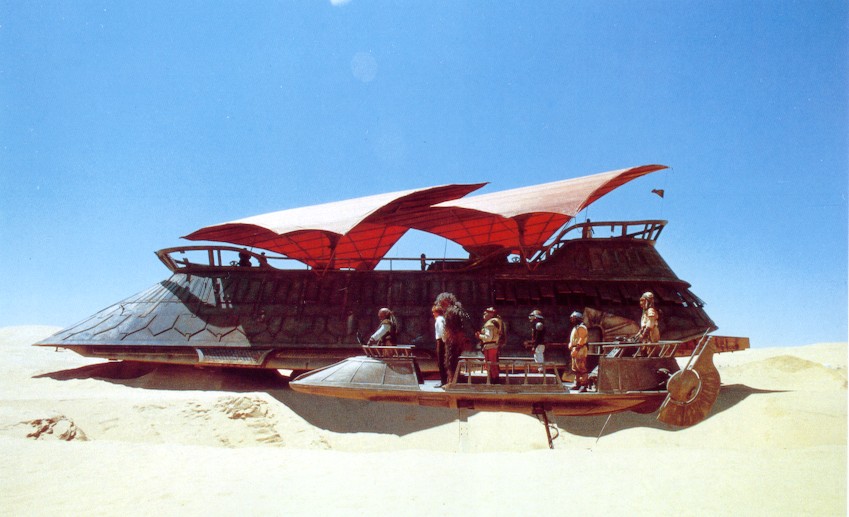
And last, but certainly not least, the JL421 Badonkadonk Land Cruiser: a small personal tank shaped frighteningly like Jabba the Hutt's Barge.
New Sidebar Links
I am also considering doing some revamping on the layout and design of the blog in general. Monochrome black and gray fit me really well when I started this blog, but I don't think it quite fits anymore. Anything you guys would like to see in a change? Color schemes? Or Colour schemes, for those from the British Isles?
Truth Claim of the Day
In many ways the core of blogging is a willingness to apply what you know to every problem you encounter, and see how good a job you can do of it in a more or less integrated fashion.Please, discuss. I think this is a particularly good one for readers to voice thoughts on, since you after all are among the people who read blogs (probably several). The context is here.
Daddy Instincts
First of all, I think spanking is an appropriate part of disciplining a child. I think the severe backlash against spanking, whether among the Dr. Spock crowd or the APers, is unwarranted. That said, I think corporal punishment should be infrequent, never the first choice of punishment, and never, *ever* out of anger or frustration. I don't trust a lot of people to do this. Nobody's planning to spank my <5 month old daughter right now, but as she gets older, some of my good friends and family will. Let me assure you: no matter how trustworthy I'm sure you are, you do *not* get to spank my daughter. I will have to know and trust your caretaking abilities for a long time before I will entrust you with that authority. For most of you, I just won't. It's nothing personal.
Second of all, if my mother had spanked my daughter after I had already expressed to her that I didn't want her spanked and had already told her about her sore bottom, my visceral reaction would be to slap my own mother. "I slapped your face so that you'd know not to hit my children on their wounds." I hope I would be able to reign in this violent tendency, and I'm confident my mother wouldn't do such a horrible thing, but I guess it's nice to know I have daddy instincts.
Finally, I would like this to be a notice to my parents, my parents-in-law, and really all parents out there: Just because my wife and I parent differently than you does not mean our every action is a judgement on the way you raised / are raising your kids. I don't think there is a one-size-fits-all way to parent, and I certainly don't doubt you are doing what you think is best for your child, which is all one can expect anyway. We're just not going to do things that way. If you ask us, we'll tell you why. If you want to discuss parenting choices, we'll discuss. If you want to defend yourself, don't. You're not under attack.
This Colder Season
♫ Tonight at the end of light
Tonight, I feel lonely
I thought I heard my heart stop beating
I long for you to hold me
I guess I feel like Eden
The twilight tried its best
Tonight I feel good and evil
Against my chest
♫ Would I love you less or better
If I didn’t miss your face
Read your words like a love letter
Would I have known your grace?
I guess I feel like Eden
Aware of all I am
Tonight I feel good and evil
Against my skin
♫ We’re all homesick
Is love the reason?
My hunger led me to your hope
Until the end of this colder season
Keep us warm
♫ Cause we are always Eden
The day after she fell
We feel good and evil
And choose which one to tell ♫
A pair of AA batteries clattered into the bottom of the soft guitar case.``Thank you, thanks so much,'' Simon said as he adjusted the tuning knobs on his guitar. ``I'm here every morning,'' he said. He looked around at the people walking by, and was glad he had found this intersection last week. He had played in various spots, especially around Soho, but most parts of Manhattan just didn't get enough foot traffic. Not anymore, anyway. The extra money for fresh coffee was hard enough to come by, but for Simon, staying where the people were was more a matter of keeping his mind from wandering to unpleasant places.
Simon stroked his beard and looked up at the Woolworth building towering over him across Broadway. It was cool out for the time of year, but muggy. The overnight nip of coming fall had left the morning air. He wiped a few beads of sweat on the sleeve of the striped Paul Smith shirt he had scavenged from Saks Fifth Avenue, reminding himself again to find something linen next time. As Simon continued looking around, he heard the buzzing of propellers overhead---most likely an airship bound for Governors Island, Simon thought. ``Well, ladies and gentlemen, this particular Secret Agent's got time for one more song before duty to the Provisional Government calls,'' Simon said. ``And for a button, I'll let you call the tune.''
A man walking past stopped and turned to Simon. ``Really? Anything I want?'' the man said with a slight smirk.
``We aim to please,'' Simon said.
The man pulled a button battery out of his pocket and tossed it into the case. ``I'll buy that. I want to hear MacArthur Park.'' The man's smirk grew wider.
Simon winced slightly. ``The man wants Richard Harris, and Richard Harris he shall have!'' He started to strum a few chords.
A second man walked up and threw another button battery into the case. ``No, no, no! I'm a musician, so in the name of all that is good, no! I'll pay you if you promise not to play that crap!''
``Hey, I already payed for it!'' the first man said. ``This guy has to play it!''
``You don't even like the song, do you?'' the second man said. ``You're just yanking his chain!''
``Nobody likes MacArthur Park,'' the first man said, ``but he said he'd play anything, and he's gonna freakin' play MacArthur Park!''
``Not if I out-bid you.''
``Well, I'll pay triple!''
``How's about I pay him with a Blackberry and you with an ass-beating!''
Simon didn't much want to get in the middle of things, but he glanced down at the signature beneath the bridge of his guitar and mustered the courage to speak up. ``Hey, hey, guys! Let's figure out a way to settle this that doesn't involve reenacting a Zombie attack!''
``OK, well are you gonna play it?'' the first man said. ``I was here first.''
``Yeah, but I paid you more,'' the second man said. ``Plus you owe it to society to not do what this guy says.'' The second man grabbed a bystander by the sleeve and pulled him toward the conversation. ``This guy thinks people around here want to hear MacArthur Park. You don't like that song, right?''
``Sir,'' the bystander said, yanking his arm free, ``you have no idea what kind of music I like. I've a mind to side with your rival here out of spite.'' He began to walk away as the two men looked at Simon. Before Simon could come up with how to respond, the bystander turned and frowned at him, mouthing Don't do it!
Simon chuckled slightly, and was struck with an idea. ``You know what? My music, my rules. When I was growing up, my brother and I had a way to settle things like this without things getting too bloody,'' Simon said. ``Knowledge Bowl, it's a battle of wits, and whoever answers wrong first loses. Agreed?''
``Yeah.''
``Whatever.''
``OK, since he was here first, you have to take the first question,'' Simon said to the second man. ``Where did the Beatles record 191 of their songs?''
``Abbey Road,'' the second man said.
``Sure, he gets an easy one,'' the first man said.
``OK,'' Simon said. ``Which rock and roll legend died in a plane crash along side Ritchie Valens and the Big Bopper?''
``Definitely Buddy Holly,'' the first man said.
``Yep,'' Simon said.
``Unbelievable,'' the second man said.
``You guys are pretty good. This is actually kinda fun, yeah? Alright, Merle Haggard was an inmate at San Quentin in 1958 when he heard what music legend perform live?'' Simon asked.
``Merle Who?'' the second man said. ``Now you're just making crap up. How am I supposed to know who some ex-con heard in prison before I was born?''
``Tick tock,'' the first man said.
The second man cocked his head, looking at the signature on Simon's guitar. ``Johnny Cash,'' he said.
``You cheater!'' the first man said.
``He got it, though,'' Simon said. ``What group's lead guitar player is known for his guitar amps with control knobs that go up to 11?''
``No way,'' the first man said. ``He cheated on that last one, he didn't know it, so he lost!''
``You know what, once you've lost enough blood you won't care who lost the game!'' the second man said.
``Alright, you know what?'' Simon said. ``I've had it. I thought we could turn hot tempers into some fun, but I don't care which one of you knows more music trivia anymore. You're both morons. If I wanted to be around people who act like angry drunks, I'd still live in West Virginia. You can both have your money back, I'm going to work.'' Simon threw the buttons out of his case, put his guitar away, threw it over his back, and started to walk away.
The two men stared in disbelief. ``That's right, you take your ragged-ass guitar and get the hell outta here!'' the first man said.
``'Ragged-ass'?'' Simon said to himself.
♬ Take the sky
For example
A canvas of a billion suns
But our local hero
Shines them out by day
Save for the winking of a Venus or Mars
Wondering how he had managed to stay an XL doing so much walking, Simon made his way south through the old financial district. New York had been flowing with wealth back when cash meant paper and coin instead of 9-volt and D-cell. It had been a little over a year since the zombie crisis had turned out to be somewhat less than the end of the world, and the city was making some real progress towards restoring a sense of normality. Some things would never be the same, though. New York was no longer the City that Never Sleeps: there were strict curfew laws now, and the city even shut off power to all but the most essential areas at night. Solar cells and steam can only do so much.
But what the city had lost in economic power, it had gained back in political importance. Not a day went by without steam-powered airships (the nation's strategic helium reserves in Texas had finally paid off after all) transporting leaders and ambassadors from dozens of other surviving cities to the new Provisional Government.
The United States no longer existed. It was being replaced by the Somewhat United Cities of America. There were even rumors that Toronto and Vancouver would be joining up in the interest of information and resource sharing. There had been no word from any Mexican cities, and with the satellite network inaccessible, word had only recently come back about nations overseas, and the Provisional Government wasn't sharing. Leave the details to us, they would say. If the information would be of any use to you right now, we would share. They played things close to the vest these days, and it wasn't hard to see why.
More than half of the population in the city's five Burroughs had been lost, either to conflict between zombies and the military, or to the struggles over a few scraps of food or supplies that made good men act more like wild dogs. In times of crisis, people tend to run to two opposite extremes. Sometimes they band together, creating communities out of unlikely friends under the impression (probably learned from Walt Disney) that if they just stick together, they can get through anything. Of course, as time wears on, and the interests of one loving community run up against those of another loving community, the sense of common purpose can degenerate into tribal warfare. Sometimes people don't want to take that risk, so they isolate themselves as families or lone individuals, hoping to survive without washing other people's laundry.
Isolationism and tribalism had brought Manhattan (and many other places) to the edge of extinction, so it wasn't surprising that the Provisional Government wanted to retain a sense of unified authority above all other considerations. Simon made a point of respecting that authority structure as much as he felt able.
Still, Simon thought, they might have more important assignments to hand out than filing old vital records.
♬Even the stars
Sometimes fade to gray
Even the stars
Hideaway
Two New York Plaza. That was where Simon worked. Most jobs these days were either government jobs or food provision. Simon's job was government. The two sectors were working together to secure fresh food for the coming winter (New York had barely managed on scavenged canned goods and a few greenhouses the previous winter), but Simon's job seemed to him, at least, a tad less essential.
``Good morning, Winston,'' Simon said as he entered the office.
``Simon, Hi,'' Winston said. ``Remember that new project Governors was going to send us?''
``Something about an archive database?'' Simon said.
``Yeah,'' Winston said. ``It was a pet project of Councilman Douglass before he passed away last winter. The idea was to get as many of the old records from D.C. as possible, compile them together, and match them to people on the roles as still living.''
``Sounds... tedious. I guess the idea is to have a central repository for medical records and stuff like that, help doctors out,'' Simon said.
``You'd think so, but I don't think any of that is in the files. The files have old tax records, birth certificates, marriage licenses, social security numbers, that kind of thing,'' Winston said, handing Simon a thin file. ``Here's a summary of the project.''
Simon looked at the file briefly. ``There are death certificates in here?''
``Yeah, apparently they want us to separate all the files into currently living, died before the wars, and died during the wars,'' Winston said. ``Must be planning a mass death certificate for everyone who died during the crisis, huh?''
``I guess,'' Simon said. ``Winston, do you ever get the feeling they're hiring somebody to dig ditches, and then hiring us to come along later and fill the exact same ditches in again?''
``That's graveyard humor, Simon,'' Winston said. ``We're simple men, you and me. We do what we're told, and we don't complain about it until we get to the bar on Friday night. That's what we did before the world went to hell, and that's what we do now that we're trying to get back out again.''
Simon looked over at his desk. It was completely covered three feet high with paperwork. Simon sighed. ``That's true.''
♬ I see the bare moon
Raise his big bald head
I see my friends play the fool
I'll make my own way
In the wide world
Just know I don't want to wander too far
Even the stars
Sometimes fade to gray
Even the stars
Hideaway
Even the stars
Sometimes fade to gray
Even the stars
Hideaway
As Simon was sorting through Aalbers' and Abastas and Abernathys, he could hear Winston's radio picking up news out of Governors Island just to the south.
``New ambassadors from Minneapolis and Tallahassee have arrived this afternoon. More are expected from Kansas City and Oklahoma next week, as Councilman Franklin Abraham, chairman of the Collaborations Committee after the death of Fred Douglass, is hoping to hold an election for President from among the Councilors before the winter sets in. The Councilman delivered a public address...''
Simon's supervisor came by his desk.
``Hey, Stone,'' the supervisor said across the stack of files, ``if it's slow going here I'll need you to stay a bit late on this. We've got to get through this round pretty quick, the next load is coming in soon.''
``Next load?'' Simon asked.
``Yeah, this is just the first hundred last names or so,'' his supervisor said. ``Gotta keep it moving, so you'll probably have to stay late.''
``There's a curfew,'' Simon said. ``We're not supposed to go out after...''
``Yeah, yeah, I got that taken care of,'' his supervisor said. ``I got you a permission slip to be out past curfew the next few nights as long as you go straight home.''
``But they shut off the power, I'll be in the...''
``I was gettin' to that, I also got you one of those big-ass flashlights, like they used to use in the FBI,'' his supervisor said. ``Don't say we never did nothin' for ya. But don't go hawking the battery, though, that's department property and you'll have to turn it in on Friday.''
``...and I will not seek the Presidency myself at this time. Having a strong executive is vital to the survival of our collective cities. Someone to provide assistance and guidance to the mayors. Someone to inspire our young people that things can get better. I look forward to helping the new President achieve these goals in any way I can. Thank you.''
Simon wanted to say he wasn't wandering between here and Tribeca at night, not with the city's power shut off and the dark towers looming all around. Not again.
But what would be the point? ``Right. Yeah, OK.''
♬ Some call me
All kinds of names
Some say I don't play the right kind of game
I try to be honest
I try to be kind
And honestly leave when I know that it's time
I know that it's time
♬ Hear a phoebe sing his only song
The summer's day is hovering
I'll write my full heart
Troubles fly like embers
Out the windows of our traveling car
Even the stars
Sometimes fade to gray
Even the stars
Hideaway ♬
Simon opened the door to his apartment, shining his flashlight around. It was not long after dark, but the city had shut off the power for the night. The apartment was spacious by Manhattan standards, and Simon could never have afforded it before the zombie crisis wiped out half of the people in the country. It's amazing what a change like that will do to real estate values.
Even during the crisis, Simon had spent most of his time operating out of his old loft. He had found this apartment while out scavenging, and after it was all over he found he couldn't live in his old place anymore. He came back here for only one reason, a reason that Simon looked at now as it hung on the wall. It was a beautiful, delicately designed acoustic guitar. A small plaque next to it identified it as a 1930 Martin OM-45 Deluxe, number 1 of 15. Simon didn't know what had happened to the last owner, but he was sure Roy Rogers' guitar needed a caretaker. He hadn't played it, of course; he wouldn't have felt right about it, like taking some doodles from your chemistry notebook and hanging them up at the Met. In a world where the prestigious had become commonplace and a roll of toilet paper was more valuable than all of Tiffany's, there were still a few gems out there that shone through.
Simon brushed some dust off the guitar, then went into the kitchen. The refrigerator had long since been emptied, since only a few places in the city had the means to keep them running off the grid. Simon poured himself a glass of 1990 vintage port, taking a drink from the bottle before putting the cork back in. He sat down on the sofa in the main living room, set the flashlight on a nearby table pointed at the ceiling, and looked out the large windows at the blackness that was New York City at night.
``Is this really all there's going to be?'' Simon said aloud. ``Is this life in this grand new age? We can wear button-up shirts from Saks Fifth Avenue, drinking vintage port in a ritzy Manhattan apartment, but we're still just sitting alone in the dark. Is this all life is?'' Simon glanced over at his worn-out Gibson, focusing on Johnny Cash's signature. ``I guess you hit some low points too, huh? Wonder what you'd make of this.'' Simon took a long drink. ``Probably a good thing you never saw the day.''
Simon's flashlight flickered. A fresh battery shouldn't do that, Simon thought. The room suddenly seemed unusually cold. Simon looked at the glass window and saw someone walking into the room behind him. He got up and turned, seeing no one. He wiped his hand over his face, then turned back to face the darkness.
A blond girl, not ten years old, stood before him. Her eyes were vacant, and there was blood on her blue dress. The light in the room began to turn deep red. She held a utility hatchet in one hand. ``UUNNGHH!''
Simon sat bolt upright from the sofa, knocking over his glass of port, which spilled on the fluffy carpet but did not break. He had fallen asleep. ``Not again,'' Simon said.
The next morning, Simon wandered toward Washington Square Park. He had gotten back to sleep, although he had not slept well and woke a bit earlier than usual. He decided to get a head start on playing that morning, but it turned out other musicians had begun to learn of his busking spot at Broadway and Park Place. He didn't feel like dealing with too many people today.
Simon finally settled on a nice short strip of Laguardia just north of West 3rd. He could see the park and NYU from his spot, but the traffic was significantly down at this part of town. He began to strum a bit, but his heart wasn't really in it.
``What are you playing, a Gibson?'' a woman's voice asked from behind him.
Simon turned to see a woman in her early twenties with red hair down to her shoulders. ``Yeah, it's a J-45,'' Simon said.
``I'd think you could find something a bit nicer around here that wouldn't be missed much,'' the woman said.
``Yes, that's true,'' Simon said. ``Thank you for insulting my guitar, have a good morning.'' He turned back around.
``Sorry,'' the woman said, not sounding terribly sorry, ``I only meant that there must be something about it that makes you hang on to it.''
Simon turned and held up his guitar for her to see. Her eyes widened as the settled on the signature beneath the bridge. ``Johnny Cash. OK. That's a good enough reason for me!''
``Thank you,'' Simon said. ``And you know, Dylan used to use a 45 sometimes.''
``I actually did know that,'' the woman said. ``I studied music in college. My name's Deborah. You can call me Debbie.'' She extended her hand.
Simon took it. ``Debbie, nice to meet you. I'm Simon. What sort of music did you study?''
``Cello performance,'' she said, ``but I dabble in a lot of things. So what do you like to play?''
``Whatever strikes my fancy,'' Simon said.
``Mysterious,'' Debbie said. ``I haven't seen you around here before. Are you planning to come by regularly?''
``I hadn't really thought about it, to be honest,'' Simon said. ``I work down near the docks, but I like to play in the mornings.''
``Well, sure, there's got to be something to look forward to in the morning,'' Debbie said. ``For me it's coffee. I work at a church on the other side of the park, and they have coffee every morning.''
``Fresh ground?'' Simon said.
``Yep. One of the few luxuries left that still counts as a luxury,'' Debbie said.
``OK, we definitely need to be friends,'' Simon said.
``So glad to know there are still people who want to be my friend for the stuff I can get them,'' Debbie said. They both smiled. ``Say, are you going to be here this afternoon?''
``Well...'' Simon said, thinking of the FBI flashlight waiting in his bag.
``If you come by around six o'clock, I'll bring my cello down,'' Debbie said. ``If you can't, that's cool.''
Simon thought for a moment. His boss would be ticked off if he didn't stay late to work on the files. Simon decided he didn't need any more convincing than that. ``You know what? Sure. I'll be here.''
``Great! Nice to meet you, Simon.'' Debbie walked on toward the park as Simon began to play with a bit more enthusiasm.
It turns out that a duet between a guitar and a cello is not as easy as it sounds. At least, that was what Simon and Debbie discovered later that afternoon. They mostly took turns playing as they talked.
``So you said you work for a church?'' Simon asked as Debbie played.
``Yeah, I'm an intern,'' Debbie said. ``I was, anyway. I came here right after I graduated college as an intern for the church's campus ministry. I was visiting while still raising support when the crisis happened.''
``Nice,'' Simon said. ``So what do you do at the church now?''
``I run errands, look things up, serve food at lunches. There was actually a really great community that formed around the church during the crisis, so a lot of what I do is help young women there deal with things. Pretty much what I was going to do anyway,'' Debbie said. ``Only now they pay me in batteries.''
``Yeah, who decided that batteries would make good money?'' Simon said. ``I mean, they work, but they're really annoying. Especially since half of them are out of juice in the first place.''
``No idea,'' Debbie said. As she continued to play a classical piece, Simon looked around, stroking his beard. The trees seemed a little greener, the buildings a little taller than they had the day before. For the first time in a long time, Simon felt comforted, almost content. He felt a small bit of the weight on his chest lifting.
Debbie finished the piece, adding a cha-cha-cha to the end just for fun. They both laughed. ``Your turn,'' Debbie said.
``OK, what should I play?'' Simon said, mostly to himself. He started plucking idly, trying to decide what he wanted to play next.
Simon looked up toward the park, and saw a little blond girl, not ten years old. She wore a blue dress splashed with blood. For a moment, a flash of life seemed to enter her eyes as she stared at him. Ever so slightly, Simon smiled. His eyes began to tear.
``Hey, are you OK?'' Debbie asked.
``I think I will be,'' Simon answered. He started to play gently, and then began to sing.
♫Waiting on an angel
One to carry me home
Hope you come to see me soon
'Cause I don't want to go alone
I don't want to go alone
♫Now angel won't you come by me
Angel hear my plea
Take my hand lift me up
So that I can fly with thee
♫And I'm waiting on an angel
And I know it won't be long
To find myself a resting place
In my angel's arms
In my angel's arms
♫So speak kind to a stranger
'Cause you'll never know
It just might be an angel come
Knockin' at your door
♫And I'm waiting on an angel
And I know it won't be long
To find myself a resting place
In my angel's arms
In my angel's arms
♫Waiting on an angel
One to carry me home
Hope you come to see me soon
'Cause I don't want to go alone
I don't want to go alone♫
Check out this episode's songs:
Eden by Alli Rogers
Hideaway by the Weepies
Waiting on an Angel by Ben Harper
Something to Keep in Mind
Do you suffer from insanity or delusions?No, I happen to enjoy both my insanity and delusions quite a lot. Thank you for asking, though.
Such a pleasant personal philosophy. Context is here.
In other news, be watching this Sunday for the first chapter in my newest forray into fiction! That way, those of you who liked the last one can read it first, and those who didn't can run away.
Conspiracy Theories are for Suckers
[...] all conspiracy theories that become popular are actually produced by the government to keep the paranoids occupied looking for aliens, bigfoot, and psychics instead of focusing on the more nefarious intrusions into civil and social rights. Meta-theory has a lot of benefits, such as that it explains why government explanations for things like Roswell are so terrible: a good explanation would leave only a few true believers, a bad explanation actually creates more believers in the conspiracy. As a final benefit, generating conspiracy theories as red herrings is cost-effective. A conspiracy theory works by arguing from the void/gaps. All the government need do is create a few vague clues and let the mind of the legions of paranoids do the rest of the work filling in the huge, ambiguous spaces. Why would anyone investigate mundane government corruption when there are aliens and psychics to research?
This was posted by Kyle Munkittrick over at Marginal Revolution. Personally, this reminds me of the Lone Gunmen televisions show. I thought about listing this as a Truth Claim of the Day, but in the end I think this is something different. So instead of the usual discussion, I'll invite you all to list the conspiracy theory you think is most likely to be true. Or just your favorites.
How to Deceive with Statistics
A while back, there was a striking graphic circulating showing the correlation between educational outcomes (meaning test scores) and parental income (graph available here):

This graph makes it clear that wealthy people manage to buy good education for their children, while the poor are continually left behind. That is, if you think because test scores are correlated with parental income, then tests scores are caused by parental income.
In general, correlation can only mean one of five possible things (for a more general expression, just replace "parental income" with "X" and "test scores" with "Y"):
(A) Differences in test scores are caused by differences parental income. (sounds plausible)
(B) Differences in parental income are caused by differences in test scores. (not that plausible in this case, but with "X" and "Y" just as likely as A)
(C) Differences in test scores and differences in parental income each influence the other. (again, not that plausible here, but in general a perfectly reasonable explanation, which statisticians call endogeneity)
(D) Both differences in test scores and differences in parental income are caused by some third thing we haven't looked at yet. (we'll talk about this one below)
(E) The two are correlated purely by chance, and in reality are not related at all. (typically not a problem if you have enough data; this, by the way, is why Katie says that the plural of 'anecdote' is not 'data.')
In the case of income and test scores, it is unclear whether the former causes the latter or whether they are both caused by some manner of inheritable talent, capability, intelligence, personality traits, or what have you. Although there are some measures of some of these (such as IQ scores for intelligence), without including full genetic information we cannot use Multiple Regression to rule out the influence of inheritable capacities.
Unless, that is, we can observe test score where some children share the genetic information of the parents, while others don't. The best trick to use here would be to study the effect of parental income on tests scores of adopted vs. non-adopted children, as is discussed here:

The study providing this graph also controls for a variety of other possible explanations. The main result is that there may be a small effect of income (as opposed to genetics) on test scores, but with the data available we can't confidently say the relationship is there.
So, let that be a lesson to you. Just because there is a correlation doesn't mean there is a causal link. Of course, if there's no correlation in the first place...
How to Deceive with Statistics
Here we have a much cited graphic that made its way to the floor of the House of Representatives (discussed, among others, by Matt Yglesias):

The chart compares the number of unemployed (on the vertical axis) during a recession to the length of time into the recession (months on the horizontal axis). The three lines are the recession beginning in 1990 (blue), the recession beginning in 2001 (red), and the current recession. This makes it look like our current recession is dangerous and scary to an unprecedented degree.
However, the comparison made here is deceptive for a couple reasons. (1) We have more people in the labor force now than previously, so raw unemployment numbers are not really comparable; and (2) the US has faced many more recessions previously than these two relatively mild recessions, so omitting the others exaggerates how unusual this recession is.
A more accurate and meaningful comparison is provided at The Curious Capitalist:

The current recession is the light blue line that terminates after 12 months. As we can see, this recession is still bad, but hardly unprecedented. Based on this graphic, we might expect the current recession to be a lot like the recession beginning in July 1981, which actually ended faster than either of the recessions cited on the House floor.
If we decide to go back further to compare against all post-WWII recessions, we'll notice that the current recession is more mid-range in terms of severity and probable duration. The corresponding graphic is produced by William Polley, which I don't reproduce here since it's pretty hard to read (especially for us color-blind folk).
The point of all this is not to say how bad or not-so-bad the current recession is. The point, rather, is to emphasize a couple of key details in interpreting statistics.
Point #1: What you're measuring on your axes matters. This is why I always tell my students (even in theory classes) to LABEL.
Point #2: Beware picking and choosing data points. I'll do on data mining and pretending samples are random at some point, but for right now, just now that you should always ask why the presenter of statistics is showing you the details they are.
Truth Claim of the Day
Unless you can completely automate torture (as is done in some cases of judicial killing), the most significant costs of torture are psychological: the torturers are damaged almost as much as the torture recipients.Please, discuss. The context is found here (in the comments).
Last Night, I Wrestled With God
The gist of the story is this: I was preparing to do all kinds of good, useful things for the house, mostly cleaning-related. I was also looking forward to some time to sit and relax, since I had been walking or standing most of the day and was rather tired. Around 8 o'clock, just before said cleaning and relaxing was going to occur, my wife pointed out that the baby was tired, and we needed to do her bedtime routine. This part is fine, except that if we do the bedtime routine and she still doesn't fall asleep, the only effective way to get her to sleep (she really needs to sleep more) is for me to put her in the baby bjorn and wear her. Standing up. Until Jessie is ready to go to bed, which is usually around 10:30 or so.
Needless to say, I didn't want to give up the good things I was planning to do so I could stand around with the baby for two hours. I told my wife as much. Ultimately, though, we both knew that Lucy needed the sleep. So we did the bedtime routine, which includes me leading us in prayer. Except I didn't want to pray. I was mad at Jessie (but actually more mad at God). Mad that she would make me do this silly, uncomfortable thing instead of doing to useful and restful things I had planned. I'm not OK with this, I thought. Jessie has no right to ask this of me. It's too much.
I was suddenly reminded of something: "As Christ loved the Church, and gave himself up for her." What? I'm a loving husband; she's just asking too much. "As Christ loved the Church, and gave himself up for her." But she just doesn't want to have to deal with the baby for a couple hours. "As Christ loved the Church, and gave himself up for her." I'm tired. Why should I have to sacrifice that much? "As Christ loved the Church, and gave himself up for her."
Sacrificing "up to a point" might prove you're tougher than most, but it's not real sacrifice. It's not sacrifice if you can say after a point "That's too much!" True sacrifice means that it's not about your limits anymore. "As Christ loved the Church, and gave Himself up for her." Giving myself for my wife means I don't get to say she's asking too much of me. It's not about me. It's about me doing what she needs while I have breath.
Not to be too mystical, but I think God was speaking to me that night. I think he was reminding me of these important things, which I'd pretty much forgotten.
I apologized to Jessie. We prayed. I was prepared to do what I had to do.
A couple minutes later, Lucy fell asleep without the bjorn.
Is The Zombie Apocalypse Upon Us?

Thanks to Jessie: talented craftswoman, dedicated mother, loving wife, and savvy entrepreneur & arbitrageur. Here's to another quarter century of excellence. Happy Birthday.
Truth Claim of the Day
Today's truth claim is a bit lengthy, as it represents (in my estimation, anyway) a rich, full, complex worldview in a few short lines:
You seem to have a misconception that as life advances, order increases. This hinges on one's definition of 'order'.A human being, considered as a closed system, is in a high state of entropy, a high state of disorder. We are a constant, unending, gigantic chemical reaction, and that means we are wasting a great deal of energy. A grown person, purely by virtue of being tens of kilos more of reactant material, is wasting more energy than a baby. Thus over time, the system 'a person' experiences increasing entropy. -- This is obviously a very simplified and abstracted example, but is necessary to demonstrate that a living being is not an ordered or order-increasing element of a system; life is the ultimate grower of disorder.
Life expands. When it has the potential to do so, it often does on an exponential scale. Everything that is life is powered by chemical energy, and so as life spreads, more and more energy is wasted. Life is like a naturally occuring function of the universe which _increases the rate of entropy_.
You could classify entropy-increasing mechanisms into various classes: Atomic Decay, Physical interaction (space rocks collide, cause heat), Chemical Interaction (oxidization of a material), Sustained Chemical Interaction (natural production of simple hydrocarbons), Simple life (mono or low-count cellular organisms, like algae), Complex life (like squirrels), and I believe, Spaceborne Life, which we will soon be.
With this examination, you could derive that as the universe ages, more complex and more powerful means of increasing entropy necessarily develop. Life (and we) are just a natural part of the process designed to guide the universe on its path to entropic maximum, as quickly as possible.
While I don't know how much I subscribe to the fact, one could make the argument that such a fascinating, sensible, and seemingly *purposeful* system is likelier to have a designer. A designer is by no means required, but still definitely not excluded.
Please, discuss. I'd especially be interested in hearing thoughts about the practical implications of thinking about Life in these terms. Not to bias the discussants with my own thoughts, but I'm seeing a fascinating fusion of Weston from Perelandra and the Joker from The Dark Knight. The context (among the flame-ish comments) is here.