Showing posts sorted by relevance for query truth claim of the day. Sort by date Show all posts

Mechanics and Mystics II

One of the most useful bits of self-awareness I've developed on this blog is the Mechanics / Mystics distinction. It's been quite helpful both for me and my wife to understand how we (and many others) think and come to understand truth differently. I've been doing some more thinking on the matter lately and feel like sharing.

First off, let me present the distinction again. You're probably all familiar with the old joke:
There are two kinds of people--those who divide everyone into two kinds of people, and those who don't.
Well, to a certain extent that's true. The difference between the two groups has to do with how they understand truth, and how they relate the different truths they are trying to understand.

One group of people understands truth by thorough, formal definitions. They are happiest relating these truths using syllogistic logic, something with well defined rules and easily identifiable parameters. Their worldview works like a grid, providing defined boundaries around each distinct truth claim. Different truths relate to each other both by their location on the grid and different mappings that take you from one point or cell on the grid and another. For these people, to really understand something you need to be able to classify and categorize it in a rigid, mechanical way, and for this reason I refer to them as Mechanics.

The other group of people understands truth through narratives and metaphors. They are happiest relating these truths using stories and symbols, something with flow and a rich depth of meaning that they might not have fully explored. Their worldview works like a gradient, with movement from one truth to another being gradual and fluid. Different truths relate to each other through how close they are and how much they generally look alike; they get the sense of it without having to be more nit-picky than that. For these people, to really understand something you need to recognize where you've seen other things like it before, how you relate to it, and what sort of "vibe" it gives you. It's a wishy-washy, mystical kind of understanding, and for this reason I refer to these people as Mystics.

To illustrate the distinction, consider how each of the people would answer the question "What is a cat?" The Mechanic will probably start by saying "Any of several species of the genus Blah blah..." and (if knowledgeable enough on the subject) may end by making references to a specific requirements of the animal's genetic code. The Mystic is more likely to say "Cats are small and furry, with four legs, pointed ears, a long tail and whiskers!" and may end by talking about their own cats or famous cats in a book they really liked. Each captures some, but not all, of the truth about what a cat really is. In particular, the Mystic's answer will probably give you a good chance of identifying a cat when you see one, but it falls far from accurately describing all cats. The Mechanic's answer is very likely to be applicable to all cats, but after learning it you probably won't know that you're in for bad luck if you see a black one cross your path (if you recognize it at all).

We're all familiar with people from both groups, and it's informative to think about how they can be similar and different. Take, for example, two different Christian fantasy authors: C.S.Lewis and J.R.R. Tolkien.
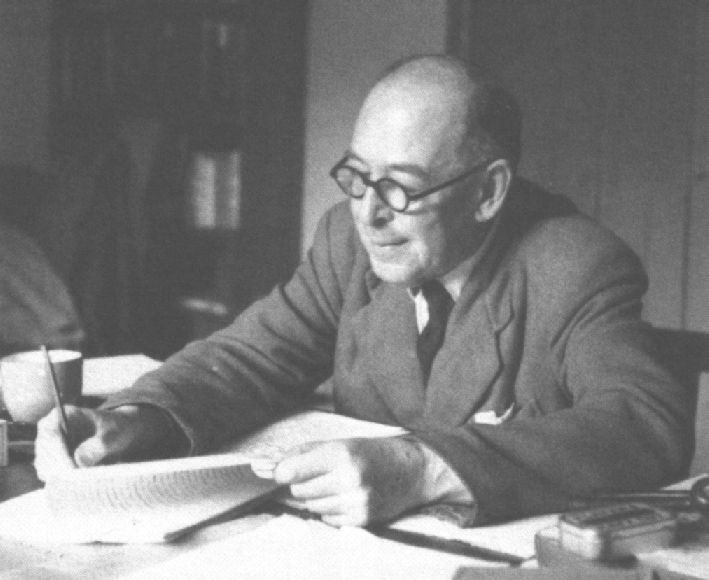
Lewis falls squarely into the mystic category. His stories are well formed and flow extremely well. He is a master of getting a little idea and playing around with it in his head, turning it over, letting it frolic a bit, and then seeing what's become of it. He is exceedingly quotable because he is a master of knowing when two words don't quite get along when they have to stand next to each other. He can create tension, humor, and insight all at once with a carefully chosen metaphor, because he knows just how endless the ideas that flow from it can be. Of course, Lewis is also not known for his theological rigor, and when we try to dig too deeply into the theology of his creations like Narnia, we find that the edges of the reality he created begin to fade away as soon as we step beyond the words on the published page; the point was the story itself, not the indestructibility of logic behind them. And yet there is something deeply compelling when he says that the journey in Aslan's Country is always "further up and further in."

Tolkien, by way of contrast, is a mechanics mechanic. His enterprise with his Middle-earth books was to create a new mythology, and the stories grew up to fill it out. The Lord of the Rings is not considered great because of its bantering dialogue. It is great because it lives in a fully developed universe all its own, with its own structure and laws as iron-clad as the laws of physics are in our own universe. The backstory is seemingly endless (and in reality it kind of is, since it continued to be assembled from his writings long after his death). The imitation of medieval Norse and Germanic literature is exacting, and its solid foundation has been the inspiration of thousands of imitators, none of whom can match Tolkien for richness. The down side is that most of what Tolkien assembled about this world has never seen the light of day, and much that has been published after his death is as hard for all but the truly devoted to wade through as the original language Old English and Scandinavian texts that inspired it.  I know of many people who love to dig deeply into Tolkien's sub-creations, but not many that have been moved to tears by the tales of the kings of Numenor.

Or, for a more direct comparison, consider the heroes of the long running TV series The X-Files: Fox Mulder and Dana Scully.
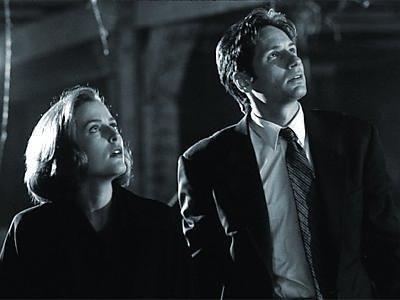
 At first, it seems obvious how we should divide up these two: Scully is a medical doctor and a scientist, while Mulder is a man of faith who thinks aliens, werewolves, golems and the bogeyman are FBI concerns. Scully must be the mechanic and Mulder the mystic, right?

Wrong. Mulder, for all the strange things he is willing to accept as explanations for the things he sees, must have an explanation. He has to know the forces at work, where and why and how they do what they do. It is more palatable for his mind to accept a bizarre category for what he sees than to admit he has no category for it. Scully, on the other hand, is willing to say she doesn't know why something happened and then walk away. She isn't sure whether her life is saved by a microchip implanted in her skin or the power of prayer, but that doesn't stop her from debunking Mulder's ghost stories while wearing a cross necklace. She is trained to think mechanically (it's true that schools in general, and especially the sciences, are taught in a way that favors mechanics), she is the mystic of the two. Spooky Mulder is the mechanic.

I think this presents the distinction much more clearly than the first post did. I bring it up for several reasons. One is because of a conversation I had a while back with my wife's parents about the subject. In particular, her father (a mechanic) didn't like the terms, especially 'mystic,' because they seemed derogatory. I chose terms that are somewhat inflammatory on purpose, though. You see, the ideal response to proposing this distinction is "Hey, what do you mean by that?" The terms are going to need explaining whether those hearing about them ask for an explanation or not. Inflammatory terms make it more likely that the conversation will keep going. It's a risky move, I admit, but I think a risk worth taking.

Another reason I am posting about this now is that Enchanted Postmodern linked to this piece on theology vs. poetry. The author is essentially concerned with the institutionalizing of mechanic thinking. What if the mystics are right, and we're wrong? Of course, I would say that reality involves both equally, and theology and poetry are two tools that help us know God well. I think mystics deserve more intellectual free reign than they have now, but that doesn't make the precision of theology unfaithful. God told us most things about himself through stories, sayings, and poetry, it's true. Then again, I think most people tend to lean toward the mystic side than toward the mechanic side, and in that sense God may just be speaking the language of the people. And let us not forget that one of the most prolific Biblical writers (of the New Testament, anyway), St. Paul, was about as much of a mechanic as you can get.

The final reason I am writing this now is that I have a one year old daughter. I don't know yet if she is more of a mechanic like me, or more of a mystic like her mother. I'm not really rooting for either team. But how she most naturally perceives truth will make a difference in how I help her learn it. It's true that mystics can often learn to do things the mechanic's way (and vice versa) just as someone who is naturally left-handed can learn to write with his right hand. But since neither way is morally superior (or provides more insight into truth), it makes sense to this mechanic to take advantage of her natural tendency, whatever that may be. Our pastor here is a mechanic, while our campus minister is a mystic. Both share the Gospel of Jesus Christ with thoroughness and passion. But if Lucy (or my wife, or our friends) could learn more from one than another, I see no reason not to make use of the difference.

My wife says I should write a book about this because of how useful it has been for her in understanding that it's okay to think differently from the way we are taught in school. I'm not sure I've got the credentials to get something like that published (or even enough to say to fill a book), but I do think these are categories worth exploring. I'd love to hear your thoughts and answer any questions you guys might have. Please feel free to sound off in the comments.

Lovecraft and Lewis, Masters of Worldview

I've made no secret of my admiration for C. S. Lewis. I particularly like his non-fiction works dealing with the interaction of Christianity and the rest of life. I don't like him because I agree with his theology (he was Anglican, which I'm not, and believed in a few things like purgatory which I don't). I like him because Lewis, more than any other modern writer, understood that the Christian cannot believe the good news of Christ without it changing the way you interact with every aspect of reality. To illustrate how deeply (and sometimes subtly) this difference runs, consider the following (somewhat long) paragraph from God in the Docks:
I have every respect for those who wish women to be priestesses. I think they are sincere and pious and sensible people. Indeed, in a way they are too sensible. That is where my dissent from them resembles Bingley's dissent from his sister. I am tempted to say that the proposed arrangement would make us much more rational 'but not near so much like a Church'.
 [...] Christians think that God Himself has taught us how to speak of Him. To say that it does not matter is to say either that all the masculine imagery is not inspired, is merely human in origin, or else that, though inspired,it is quite arbitrary and unessential. And this is surely intolerable: or, if tolerable, it is an argument not in favour of Christian priestesses but against Christianity. It is also surely based on a shallow view of imagery. Without drawing upon religion, we know from our poetical experience that image and apprehension cleave closer together than commonsense is here prepared to admit; that a child who has been taught to pray to a Mother in Heaven would have a religious life radically different from that of a Christian child. And as image and apprehension are in an organic unity, so, for a Christian,are human body and human soul. [...]
[...] The point is that unless 'equal' means 'interchangeable,' equality makes nothing for the priesthood of women. And the kind of equality which implies that the equals are interchangeable (like counters or identical machines) is, among humans, a legal fiction. It may be a useful legal fiction. But in church we turn out backs on fictions. [...]
This is what common sense will call 'mystical.' Exactly. The Church claims to be the bearer of a revelation. If that claim is false then we want not to make priestesses but to abolish priests. If it is true, then we should expect to find in the Church an element which unbelievers will call irrational and which believers will call supra-rational. There ought to be something in it opaque to our reason though not contrary to it--as the facts of sex and sense on the natural level are opaque.
[...] With the Church, [...] we are dealing with male and female not merely as facts of nature but as the live and awful shadows of realities utterly beyond our control and largely beyond our direct knowledge. Or rather, we are not dealing with them but (as we shall soon learn if we meddle) they are dealing with us.
Aside from being able to apply the form of revelation to a practical decision of the Church, I like that the quote above shows that the necessity of mystics. It takes the clarity and comprehension of Lewis to explain it to someone like me.

I particularly enjoy Lewis' fiction -- the Narnia books, the Space trilogy, the Screwtape Letters, the Great Divorce, etc. --because his sharp understanding of the Christian worldview always comes through. Not that his protagonists always adhere to the Christian worldview, but the worlds in which they exist derive their essence from Lewis' character, just as Christianity says the real world derives its character from its Creator. Consider the following commentary on Heaven and Hell from The Great Divorce:
'Son,'he said,' ye cannot in your present state understand eternity...That is what mortals misunderstand. They say of some temporal suffering, "No future bliss can make up for it," not knowing that Heaven, once attained, will work backwards and turn even that agony into a glory. And of some sinful pleasure they say "Let me have but this and I'll take the consequences": little dreaming how damnation will spread back and back into their past and contaminate the pleasure of the sin. Both processes begin even before death. The good man's past begins to change so that his forgiven sins and remembered sorrows take on the quality of Heaven: the bad man's past already conforms to his badness and is filled only with dreariness. And that is why...the Blessed will say "We have never lived anywhere except in Heaven," : and the Lost, "We were always in Hell." And both will speak truly.'
Or consider this from The Lion, The Witch, and The Wardrobe:
"But where is the fourth?" asked Aslan.
"He has tried to betray them and joined the White Witch, O Aslan," said Mr. Beaver. And then something made Peter say:
"That was partly my fault, Aslan. I was angry with him and I think that helped him to go wrong."
And Aslan said nothing either to excuse Peter or to blame him but merely stood looking at him with his great golden eyes. And it seemed to all of them that there was nothing to be said.
"Please--Aslan," said Lucy, "can anything be done to save Edmund?"
"All shall be done," said Aslan, "But it may be harder than you think." And then he was silent again for some time. Up to that moment Lucy had been thinking how royal and strong and peaceful his face looked; now it suddenly came into her head that he looked sad as well.
Or perhaps the best example of the Christian worldview extended outside its usual bounds, the following excerpt from Perelandra, in which Ransom comes to the new and untarnished world:
As he let the empty gourd fall from his hand and was about to pluck a second one, it came into his head that he was now neither hungry nor thirsty. And yet to repeat a pleasure so intense and almost so spiritual seemed an obvious thing to do. His reason, or what we commonly take to be reason in our own world, was all in favour of tasting this miracle again; the childlike innocence of fruit, the labours he had undergone, the uncertainty of the future, all seemed to commend the action. yet something seemed opposed to this "reason." It is difficult to suppose that this opposition came from desire, for what desire would turn from so much deliciousness? But for whatever cause, it appeared to him better not to taste again. Perhaps the experience had been so complete that repetition would be a vulgarity--like asking to hear the same symphony twice in a day.
In every case, Lewis looked at every circumstance through the lens of Christianity. The reason, I believe, that so many of us turn to Lewis time and again for the expression of our heartfelt thoughts is precisely because Lewis' words are born out of meditation on the Kingdom of Christ and the transforming power of the Holy Spirit. Lewis puts words to what our still fallen but sanctified hearts yearn to mean.

In this sense, Lewis represents an internal consistency of thought and feeling that few authors ever achieve. However, as the title suggests (Ghost Ship Moment approaching!), I feel there is a parallel genius of the evolutionary atheistic worldview in Howard Philips Lovecraft.

Now, I have friends whom I highly respect who believe that Christianity offers the only logically consistent worldview. As a logician, I take this to be a silly claim simply because logical validity is simply not that high a bar to set, and is certainly not enough to identify the only worldview which is true. In order to be logically valid, a worldview needs only that its conclusions flow necessarily from its premises, and that none of the (stated or unstated) premises are explicitly contradictions. This does preclude some worldviews that are commonly held, particularly in reference to what the worldview asserts regarding right and wrong. But in this, Lewis himself set out the conditions that must be met for a worldview to be at least consistent in his book The Abolition of Man:
[...] wherever any precept of traditional morality is simply challenged to produce its credentials, as though the burden of proof lay on it, we have taken the wrong position. The legitimate reformer endeavours to show that the precept in question conflicts with some precept which its defenders allow to be more fundamental, or that it does not really embody the judgement of value it professes to embody.The direct frontal attack 'Why?'--'What good does it do?'--'Who said so?' is never permissible; not because it is harsh or offensive but because no values at all can justify themselves on that level. [...] Only those who are practising the Tao will understand it. It is the well-nurtured man, the cuor gentil, and he alone, who can recognize Reason when it comes. It is Paul, the Pharisee, the man 'perfect as touching the Law' who learns where and how the Law was deficient.
In order to avoid misunderstanding, I may add that though I myself am a Theist, and indeed a Christian, I am not here attempting any indirect argument for Theism. I am simply arguing that if we are to have values at all we must accept the ultimate platitudes of Practical Reason as having absolute validity: that any attempt, having become sceptical about these, to reintroduce value lower down on some supposedly more 'realistic' basis, is doomed. Whether this position implies a supernatural origin for the Tao is a question I am not here concerned with.
And this criterion, in my view, is precisely what Lovecraft satisfies while more modern atheistic apologists fail.

Lovecraft's worldview vehemently denies the existence of any supernatural Deity, instead holding that the material world is all there is, modern sciences possess the tools to identify objective reality and truth, and the nature of man and all life is driven by the process of evolution. In this sense his views are not very different from many other scientific atheists. However, Lovecraft is willing to accept two things most others this category are not: First, he makes no attempt to place himself or his own perceptions outside of the generally accepted morals and attitudes of his culture, implicitly accepting the Tao as a product of evolution which he has no need or interest in questioning; and second, he is willing to follow the premises of his worldview wherever they lead, making no attempt at imposing new assumptions along the way that prevent distasteful conclusions.

Consider the essay At the Root, on the sources of World War I (written before its conclusion):
Four years ago a large part of the civilised world laboured under certain biological fallacies which may, in a sense, be held responsible for the extent and duration of the present conflict. These fallacies, which were the foundation of pacifism and other pernicious forms of social and political radicalism, dealt with the capacity of man to evolve mentally beyond his former state of subservience to primate instinct and pugnacity, and to conduct his affairs and international or interracial relations on a basis of reason and good-will. That belief in such capability is unscientific and childishly naive, is beside the question. The fact remains, that the most civilised part of the world, including our own Anglo-Saxondom, did entertain enough of these notions to relax military vigilance, lay stress on points of honour, place trust in treaties, and permit a powerful and unscrupulous nation to indulge unchecked and unsuspected in nearly fifty years of preparation for world-wide robbery and slaughter. We are reaping the result of our simplicity.
[...]
Man's respect for the imponderables varies according to his mental constitution and environment. Through certain modes of thought and training it can be elevated tremendously, yet there is always a limit. The man or nation of high culture may acknowledge to great lengths the restraints imposed by conventions and honour, but beyond a certain point primitive will or desire cannot be curbed.[...]
Lovecraft accepts distinctions of "civilised" and "high culture", acknowledging the perceived goodness of "respect for the imponderables." Nevertheless, the slow crawl of evolution means to him that any sort of "sanctification" must be a superficial one, with all men ultimately no more sophisticated than any other beast.

Much of Lovecraft's fiction revolves around the human mind attempting to comprehend its true place in the stark, unforgiving, uncaring universe of Lovecraft's beliefs. In many cases the realization is enough to drive his protagonists to madness or even suicide rather than live with the reality of insignificance. The opening paragraph of one of his most famous works, The Call of Cthulhu, says it best:
The most merciful thing in the world, I think, is the inability of the human mind to correlate all its contents. We live on a placid island of ignorance in the midst of black seas of infinity, and it was not meant that we should voyage far. The sciences, each straining in its own direction, have hitherto harmed us little; but some day the piecing together of dissociated knowledge will open up such terrifying vistas of reality, and of our frightful position therein, that we shall either go mad from the revelation or flee from the deadly light into the peace and safety of a new dark age.
Lovecraft's writing is often difficult to read, in some ways the polar opposite of Lewis. But what Lovecraft truly masters is atmosphere, especially the eerie sense of being alone and without recourse amidst a universe that does not care what happens to you. Lovecraft described his reasoning for this focus on fear in Notes on Writing Weird Fiction:
I choose weird stories because they suit my inclination best—one of my strongest and most persistent wishes being to achieve, momentarily, the illusion of some strange suspension or violation of the galling limitations of time, space, and natural law which forever imprison us and frustrate our curiosity about the infinite cosmic spaces beyond the radius of our sight and analysis. These stories frequently emphasise the element of horror because fear is our deepest and strongest emotion, and the one which best lends itself to the creation of Nature-defying illusions. Horror and the unknown or the strange are always closely connected, so that it is hard to create a convincing picture of shattered natural law or cosmic alienage or “outsideness” without laying stress on the emotion of fear.
My personal favorite of Lovecraft's works is a masterpiece of  atmospheric horror. Just taking one relatively weak example, nearly at random, from The Colour Out of Space:
Winter came early, and was very cold. Ammi saw Nahum less often than usual, and observed that he had begun to look worried. The rest of his family too, seemed to have grown taciturn; and were far from steady in their church-going or their attendance at the various social events of the countryside. For this reserve or melancholy no cause could be found, though all the household confessed now and then to poorer health and a feeling of vague disquiet. Nahum himself gave the most definite statement of anyone when he said he was disturbed about certain footprints in the snow. They were the usual winter prints of red squirrels, white rabbits, and foxes, but the brooding farmer professed to see something not quite right about their nature and arrangement. He was never specific, but appeared to think that they were not as characteristic of the anatomy and habits of squirrels and rabbits and foxes as they ought to be. Ammi listened without interest to this talk until one night when he drove past Nahum's house in his sleigh on the way back from Clark's Corner. There had been a moon, and a rabbit had run across the road, and the leaps of that rabbit were longer than either Ammi or his horse liked. The latter, indeed, had almost run away when brought up by a firm rein. Thereafter Ammi gave Nahum's tales more respect, and wondered why the Gardner dogs seemed so cowed and quivering every morning. They had, it developed, nearly lost the spirit to bark.
Lovecraft embraces how Nature, from a truly atheistic, scientific perspective, will inevitably feel unnatural. In other works, he places a frequent emphasis on impurity of ancestral descent (and impurity in general), a focus driven by his unrepentant racism. And after all, in his view there is no real reason to repent of racism; no human being, nor plant or animal or any other form of life, deserves more particular recognition or concern beyond any other except what that granted by a sense of identity. Within Lovecraft's view, that sense of identity is owed to no one, although as in Lewis' Tao it will of course be felt with some. In some sense, Lovecraft accepts 'love your neighbor'... but he doesn't play ball on who your neighbor is.

I could go on quoting Lewis and Lovecraft until all readers abandon me (have you?). I truly enjoy both authors. One I largely agree with, while the other I vehemently deny. But in both there is a logic, a consistency of perspective, that flows through fiction and non- alike. I think it is this consistency that enables them to write so compellingly. I would have loved to see them debate each other, if for no other reason than to see two worldviews truly, honestly collide.

Truth Claim of the Day

I have to say, this is fast becoming my favorite bit of material for this blog (can you tell?). I'm hoping to put together a couple of "How to Deceive with Statistics" posts soon, and something else big is (hopefully) on its way for mid-month.

Today's truth claim is a bit lengthy, as it represents (in my estimation, anyway) a rich, full, complex worldview in a few short lines:

You seem to have a misconception that as life advances, order increases. This hinges on one's definition of 'order'.

A human being, considered as a closed system, is in a high state of entropy, a high state of disorder. We are a constant, unending, gigantic chemical reaction, and that means we are wasting a great deal of energy. A grown person, purely by virtue of being tens of kilos more of reactant material, is wasting more energy than a baby. Thus over time, the system 'a person' experiences increasing entropy. -- This is obviously a very simplified and abstracted example, but is necessary to demonstrate that a living being is not an ordered or order-increasing element of a system; life is the ultimate grower of disorder.

Life expands. When it has the potential to do so, it often does on an exponential scale. Everything that is life is powered by chemical energy, and so as life spreads, more and more energy is wasted. Life is like a naturally occuring function of the universe which _increases the rate of entropy_.

You could classify entropy-increasing mechanisms into various classes: Atomic Decay, Physical interaction (space rocks collide, cause heat), Chemical Interaction (oxidization of a material), Sustained Chemical Interaction (natural production of simple hydrocarbons), Simple life (mono or low-count cellular organisms, like algae), Complex life (like squirrels), and I believe, Spaceborne Life, which we will soon be.

With this examination, you could derive that as the universe ages, more complex and more powerful means of increasing entropy necessarily develop. Life (and we) are just a natural part of the process designed to guide the universe on its path to entropic maximum, as quickly as possible.

While I don't know how much I subscribe to the fact, one could make the argument that such a fascinating, sensible, and seemingly *purposeful* system is likelier to have a designer. A designer is by no means required, but still definitely not excluded.

Please, discuss. I'd especially be interested in hearing thoughts about the practical implications of thinking about Life in these terms. Not to bias the discussants with my own thoughts, but I'm seeing a fascinating fusion of Weston from Perelandra and the Joker from The Dark Knight. The context (among the flame-ish comments) is here.

Rational Evil

Unless it falls under the "Truth Claim of the Day" label, I have typically only shared links through Facebook. However, this blog post by Jeff Weintraub deserved a bit of commentary, so I thought I'd put it here.

I have debated with various friends on more than one occasion that someone can believe something that is fundamentally wrong without it being logically incoherent. As a somewhat skilled debater, I have found that any position can be supported in a logically valid way, even if it is wrong, evil, or bearing any other type of error.

That is to say, the usual position I have to fight against is the idea that if something is wrong, it must therefore be absurd. It has to be the case that for someone to believe something that is wrong they have to have some sort of logical inconsistency driving it. Of course, this deeply misunderstands what logic is and what it does. Logic is a tool for showing how proper thinking connects assumptions or premises with conclusions or implications. If the assumptions must necessarily lead to the conclusions, then the statement or believe is what we call valid. Logic can, of course, indicate when a conclusion may or may not follow from the given assumptions; it can also indicate when a conclusion is expressly not possible given the assumptions. These cases indicate that the belief or statement is invalid. That a belief is valid, however, says nothing at all about whether it is true. If a statement is invalid, similarly, while the whole statement cannot be true, this condition says nothing at all about whether any of the assumptions or conclusions in isolation (or different combinations) are contained in statements which are true. You can't use logic to disprove assumptions.

The flip side of the position I typically combat is presented in the link, namely, that if there is no logical error or invalidity the position cannot then be wrong. This is the position taken by many academics, and from the perspective of those in the previous paragraph, they shouldn't be wrong. There may be some debate about what constitutes logical inconsistency (a silly thought, really, because validity is essentially a mathematical process), but otherwise these two views are perfectly compatible. And perfectly wrong, whether they are internally consistent or not.

In both cases, my logically minded friends seem to be unaware of the limits to logical process, despite the fact that logic itself clearly identifies certain limits to its own domain. Which, to my mind, means they're not nearly as skilled logicians as they think.

Conspiracy Theories are for Suckers

Here at Metadoxy, we (in the royal sense, I suppose, as I can't actually speak for my commenters) prefer Conspiracy Meta-Theories:

[...] all conspiracy theories that become popular are actually produced by the government to keep the paranoids occupied looking for aliens, bigfoot, and psychics instead of focusing on the more nefarious intrusions into civil and social rights. Meta-theory has a lot of benefits, such as that it explains why government explanations for things like Roswell are so terrible: a good explanation would leave only a few true believers, a bad explanation actually creates more believers in the conspiracy. As a final benefit, generating conspiracy theories as red herrings is cost-effective. A conspiracy theory works by arguing from the void/gaps. All the government need do is create a few vague clues and let the mind of the legions of paranoids do the rest of the work filling in the huge, ambiguous spaces. Why would anyone investigate mundane government corruption when there are aliens and psychics to research?


This was posted by Kyle Munkittrick over at Marginal Revolution. Personally, this reminds me of the Lone Gunmen televisions show. I thought about listing this as a Truth Claim of the Day, but in the end I think this is something different. So instead of the usual discussion, I'll invite you all to list the conspiracy theory you think is most likely to be true. Or just your favorites.

Truth Claim of the Day

New York Times Easter Sunday Believability Edition
In a way, the doubts that modern religious believers harbor about the resurrection of the dead may reflect, not the triumph of  rationalism over supernaturalism, but an odd symbiosis between the two.[...] People today may disbelieve in the resurrection of the dead, in other words, not because it’s too fantastic, but because it doesn’t seem fantastic enough.
Please, discuss. The context can be found here.

POW!

If you were about to be stranded on a desert island, but could choose one book to take with you, what would it be?

I would choose Watchmen by Alan Moore and Dave Gibbons. This seems an unremarkable claim until I mention the truth: Watchmen is a comic book.

Comic books are a wonderful way to tell a story. They can be read with a surface appreciation in scarcely any time at all, yet to fully appreciate them can take dozens of close and contemplative readings. For my estimation, the narrative of a good comic flows better than nearly any novel, with the imagery being captured in a glance rather than dragged out. As the old saying goes, it takes a thousand words to be worth a picture. One panel may have dialogue, facial expressions, and religious markers in the background, with a recurring motif beside it. The linearity of pure text does not capture in time and layers what a well-written and drawn comic can.

Not that there aren't drawbacks. Comics would not be my first choice for communicating technical information, not do they usually demonstrate the utter mastery of a language that is possible in novel form.

But what they can capture is an utter mastery of a culture. Watchmen is remarkable because it taps into the deep concerns and fears of its time (the 1980s) and any time: Atomic weaponry, genetic manipulation, abuse of governing power, determinism, homosexuality, justice vs. mercy, conservatism vs. liberality, ethical paradox, child abuse, fetishism, thermodynamic miracles, and the teleology of human history. The story is different from many comics in that no character is pure good or pure evil, the characters thoughts are shown through expression rather than thought bubbles, and there is a balance between the fears of ambiguity and inevitability. The images and words are seemlessly of a piece. A remarkably well written piece which I can read again and again, still finding new connections and contrasts which I had not noticed before. I have never had such an experience from a book, as once it is fully read I cannot re-read it (despite my best efforts).

I have loved comic book characters since I was a child making up my own stories for the gallant adventurers. Vigilantism fascinates me, as does the post script quotation to Watchmen (which after all is just another word for vigilantees): "Quis custodiet ipsos custodes." I think deep down I'd like to write a graphic novel one day, if I knew an artist agreeable to my ideas and mythology. The term 'graphic novel' is silly, I know, but think of it this way: graphic novel is to serial comic book as movie is to television series.

But of course, the communication of narrative in pictures, like all stories, departs from the real world eventually. As Elijah Price said, "It's allright to be afraid, David, because this part won't be like a comic book. Real life doesn't fit into little boxes that were drawn for it. "

Truth Claim of the Day

We are at the beginning of the Death of Credentials. The ROI [Return On Investment] for 95% of college educations will be negative.
Please, discuss. The context is here. I'm particularly interested in the thoughts of those who are currently or plan to eventually be teaching at the post-secondary level.

Truth Claim of the Day

"The list is the origin of culture. It's part of the history of art and literature. What does culture want? To make infinity comprehensible. It also wants to create order -- not always, but often. And how, as a human being, does one face infinity? How does one attempt to grasp the incomprehensible? Through lists, through catalogs, through collections in museums and through encyclopedias and dictionaries.
"The list doesn't destroy culture; it creates it."
Please, discuss. The context is found here. Via Marginal Revolution.

Truth Claim of the Day

To contemplate a person as an ideal is to submit to his authority. The admirer of Napoleon does not judge him by independent previously established standards, but accepts, on the contrary, the figure of Napoleon as a standard for judging himself. Such an admirer may be mistaken in the choice of his hero, but his relation to greatness is correct.
Please, discuss. The quote is from Michael Polanyi (1959), The Study of Man, page 96.

Truth Claim of the Day

[...] it is not legitimate to try to protect attractive theories from the data.
Although targeted at economic theory which rejects empirical investigation, I see this statement as bearing much more generally. Anything making truth claims about the empirical world could be held to this same standard, which I suppose makes this a truth claim about truth claims in general.

Please, discuss. The context is found here.

Truth Claim of the Day

Japanese politics is less competitive and Japanese rent-seeking is less competitive than in the United States.  Sustained near-zero growth in the United States would mean that interest groups tear apart the social fabric and grab too lustily at the social surplus.  Whether we like it or not, we are "built to grow" and we use the fruits of that growth to buy off interest groups as we go along.  Japan in contrast has greater capacity to stifle these grabs for new redistributions because their politics is more of an insider's game.
In other words, American society is arranged such that we must "grow or die"; other countries might not be. Please, discuss. The context can be found here.

Truth Claim of the Day

When I was young I thought I was experiencing a series of events.   Now I understand that I was experiencing the feeling of being young.  Sure you can go back and revisited a bunch of European countries, but it won’t seen the same as when you first tramped around Europe with a backpack, and the world seemed charged with mystery and meaning.
Please, discuss. The context is here.

Truth Claim of the Day

Artificial Intelligence and The Meaning of Human Thought edition
[...] the question of whether a machine can think is no more interesting than the question of whether or not a submarine can swim.
Please, discuss. the context is here (an interesting read overall, but long).

Truth Claim of the Day

Unless you can completely automate torture (as is done in some cases of judicial killing), the most significant costs of torture are psychological: the torturers are damaged almost as much as the torture recipients.
Please, discuss. The context is found here (in the comments).

Truth Claim of the Day

Witnesses saw Jesus. They told others. We have to believe other people...a long line, a very long line, of witnesses back to the truth. That's a big step of faith to trust a bunch of people going back that far. But reason itself can't really do much better. Faith is not reason, but reason is also not all its always made out to be.
Please, discuss. The context can be found here.

Truth Claim of the Day

We are not good when we are happy and bad when we are down. We are simply experiencing the natural spectrum of emotions as part of our human experience. When we take the time to appreciate all of our experiences, they will have far less power over us, thus increasing our capacity for true joy and contentment.
Please, discuss. The context is here.

Truth Claim of the Day

The work of science has nothing whatever to do with consensus. Consensus is the business of politics.
Please, discuss. The context is found in the comments here, in a quote from Michael Crichton.

Truth Claim of the Day

Communism is to modern liberalism roughly what racism is to modern conservatism.  Conservatives claim to be free of racism and progressives claim to oppose communism, but both groups have a lot of skeletons in their closets.
Please, discuss. The context can be found here.

Truth Claim of the Day

In many ways the core of blogging is a willingness to apply what you know to every problem you encounter, and see how good a job you can do of it in a more or less integrated fashion.
Please, discuss. I think this is a particularly good one for readers to voice thoughts on, since you after all are among the people who read blogs (probably several). The context is here.
 

© Metadoxy
Revolution Elements by Blozard. Original WP theme by Jason Schuller | Distributed by Deluxe Templates