
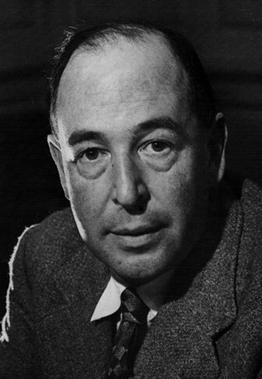
I have every respect for those who wish women to be priestesses. I think they are sincere and pious and sensible people. Indeed, in a way they are too sensible. That is where my dissent from them resembles Bingley's dissent from his sister. I am tempted to say that the proposed arrangement would make us much more rational 'but not near so much like a Church'.
[...] Christians think that God Himself has taught us how to speak of Him. To say that it does not matter is to say either that all the masculine imagery is not inspired, is merely human in origin, or else that, though inspired,it is quite arbitrary and unessential. And this is surely intolerable: or, if tolerable, it is an argument not in favour of Christian priestesses but against Christianity. It is also surely based on a shallow view of imagery. Without drawing upon religion, we know from our poetical experience that image and apprehension cleave closer together than commonsense is here prepared to admit; that a child who has been taught to pray to a Mother in Heaven would have a religious life radically different from that of a Christian child. And as image and apprehension are in an organic unity, so, for a Christian,are human body and human soul. [...]
[...] The point is that unless 'equal' means 'interchangeable,' equality makes nothing for the priesthood of women. And the kind of equality which implies that the equals are interchangeable (like counters or identical machines) is, among humans, a legal fiction. It may be a useful legal fiction. But in church we turn out backs on fictions. [...]
This is what common sense will call 'mystical.' Exactly. The Church claims to be the bearer of a revelation. If that claim is false then we want not to make priestesses but to abolish priests. If it is true, then we should expect to find in the Church an element which unbelievers will call irrational and which believers will call supra-rational. There ought to be something in it opaque to our reason though not contrary to it--as the facts of sex and sense on the natural level are opaque.
[...] With the Church, [...] we are dealing with male and female not merely as facts of nature but as the live and awful shadows of realities utterly beyond our control and largely beyond our direct knowledge. Or rather, we are not dealing with them but (as we shall soon learn if we meddle) they are dealing with us.
I particularly enjoy Lewis' fiction -- the Narnia books, the Space trilogy, the Screwtape Letters, the Great Divorce, etc. --because his sharp understanding of the Christian worldview always comes through. Not that his protagonists always adhere to the Christian worldview, but the worlds in which they exist derive their essence from Lewis' character, just as Christianity says the real world derives its character from its Creator. Consider the following commentary on Heaven and Hell from The Great Divorce:
'Son,'he said,' ye cannot in your present state understand eternity...That is what mortals misunderstand. They say of some temporal suffering, "No future bliss can make up for it," not knowing that Heaven, once attained, will work backwards and turn even that agony into a glory. And of some sinful pleasure they say "Let me have but this and I'll take the consequences": little dreaming how damnation will spread back and back into their past and contaminate the pleasure of the sin. Both processes begin even before death. The good man's past begins to change so that his forgiven sins and remembered sorrows take on the quality of Heaven: the bad man's past already conforms to his badness and is filled only with dreariness. And that is why...the Blessed will say "We have never lived anywhere except in Heaven," : and the Lost, "We were always in Hell." And both will speak truly.'

"But where is the fourth?" asked Aslan.
"He has tried to betray them and joined the White Witch, O Aslan," said Mr. Beaver. And then something made Peter say:
"That was partly my fault, Aslan. I was angry with him and I think that helped him to go wrong."
And Aslan said nothing either to excuse Peter or to blame him but merely stood looking at him with his great golden eyes. And it seemed to all of them that there was nothing to be said.
"Please--Aslan," said Lucy, "can anything be done to save Edmund?"
"All shall be done," said Aslan, "But it may be harder than you think." And then he was silent again for some time. Up to that moment Lucy had been thinking how royal and strong and peaceful his face looked; now it suddenly came into her head that he looked sad as well.
As he let the empty gourd fall from his hand and was about to pluck a second one, it came into his head that he was now neither hungry nor thirsty. And yet to repeat a pleasure so intense and almost so spiritual seemed an obvious thing to do. His reason, or what we commonly take to be reason in our own world, was all in favour of tasting this miracle again; the childlike innocence of fruit, the labours he had undergone, the uncertainty of the future, all seemed to commend the action. yet something seemed opposed to this "reason." It is difficult to suppose that this opposition came from desire, for what desire would turn from so much deliciousness? But for whatever cause, it appeared to him better not to taste again. Perhaps the experience had been so complete that repetition would be a vulgarity--like asking to hear the same symphony twice in a day.
In this sense, Lewis represents an internal consistency of thought and feeling that few authors ever achieve. However, as the title suggests (Ghost Ship Moment approaching!), I feel there is a parallel genius of the evolutionary atheistic worldview in Howard Philips Lovecraft.

[...] wherever any precept of traditional morality is simply challenged to produce its credentials, as though the burden of proof lay on it, we have taken the wrong position. The legitimate reformer endeavours to show that the precept in question conflicts with some precept which its defenders allow to be more fundamental, or that it does not really embody the judgement of value it professes to embody.The direct frontal attack 'Why?'--'What good does it do?'--'Who said so?' is never permissible; not because it is harsh or offensive but because no values at all can justify themselves on that level. [...] Only those who are practising the Tao will understand it. It is the well-nurtured man, the cuor gentil, and he alone, who can recognize Reason when it comes. It is Paul, the Pharisee, the man 'perfect as touching the Law' who learns where and how the Law was deficient.
In order to avoid misunderstanding, I may add that though I myself am a Theist, and indeed a Christian, I am not here attempting any indirect argument for Theism. I am simply arguing that if we are to have values at all we must accept the ultimate platitudes of Practical Reason as having absolute validity: that any attempt, having become sceptical about these, to reintroduce value lower down on some supposedly more 'realistic' basis, is doomed. Whether this position implies a supernatural origin for the Tao is a question I am not here concerned with.
Lovecraft's worldview vehemently denies the existence of any supernatural Deity, instead holding that the material world is all there is, modern sciences possess the tools to identify objective reality and truth, and the nature of man and all life is driven by the process of evolution. In this sense his views are not very different from many other scientific atheists. However, Lovecraft is willing to accept two things most others this category are not: First, he makes no attempt to place himself or his own perceptions outside of the generally accepted morals and attitudes of his culture, implicitly accepting the Tao as a product of evolution which he has no need or interest in questioning; and second, he is willing to follow the premises of his worldview wherever they lead, making no attempt at imposing new assumptions along the way that prevent distasteful conclusions.
Consider the essay At the Root, on the sources of World War I (written before its conclusion):
Four years ago a large part of the civilised world laboured under certain biological fallacies which may, in a sense, be held responsible for the extent and duration of the present conflict. These fallacies, which were the foundation of pacifism and other pernicious forms of social and political radicalism, dealt with the capacity of man to evolve mentally beyond his former state of subservience to primate instinct and pugnacity, and to conduct his affairs and international or interracial relations on a basis of reason and good-will. That belief in such capability is unscientific and childishly naive, is beside the question. The fact remains, that the most civilised part of the world, including our own Anglo-Saxondom, did entertain enough of these notions to relax military vigilance, lay stress on points of honour, place trust in treaties, and permit a powerful and unscrupulous nation to indulge unchecked and unsuspected in nearly fifty years of preparation for world-wide robbery and slaughter. We are reaping the result of our simplicity.
[...]
Man's respect for the imponderables varies according to his mental constitution and environment. Through certain modes of thought and training it can be elevated tremendously, yet there is always a limit. The man or nation of high culture may acknowledge to great lengths the restraints imposed by conventions and honour, but beyond a certain point primitive will or desire cannot be curbed.[...]
Much of Lovecraft's fiction revolves around the human mind attempting to comprehend its true place in the stark, unforgiving, uncaring universe of Lovecraft's beliefs. In many cases the realization is enough to drive his protagonists to madness or even suicide rather than live with the reality of insignificance. The opening paragraph of one of his most famous works, The Call of Cthulhu, says it best:
The most merciful thing in the world, I think, is the inability of the human mind to correlate all its contents. We live on a placid island of ignorance in the midst of black seas of infinity, and it was not meant that we should voyage far. The sciences, each straining in its own direction, have hitherto harmed us little; but some day the piecing together of dissociated knowledge will open up such terrifying vistas of reality, and of our frightful position therein, that we shall either go mad from the revelation or flee from the deadly light into the peace and safety of a new dark age.
 Lovecraft's writing is often difficult to read, in some ways the polar opposite of Lewis. But what Lovecraft truly masters is atmosphere, especially the eerie sense of being alone and without recourse amidst a universe that does not care what happens to you. Lovecraft described his reasoning for this focus on fear in Notes on Writing Weird Fiction:
I choose weird stories because they suit my inclination best—one of my strongest and most persistent wishes being to achieve, momentarily, the illusion of some strange suspension or violation of the galling limitations of time, space, and natural law which forever imprison us and frustrate our curiosity about the infinite cosmic spaces beyond the radius of our sight and analysis. These stories frequently emphasise the element of horror because fear is our deepest and strongest emotion, and the one which best lends itself to the creation of Nature-defying illusions. Horror and the unknown or the strange are always closely connected, so that it is hard to create a convincing picture of shattered natural law or cosmic alienage or “outsideness” without laying stress on the emotion of fear.
Winter came early, and was very cold. Ammi saw Nahum less often than usual, and observed that he had begun to look worried. The rest of his family too, seemed to have grown taciturn; and were far from steady in their church-going or their attendance at the various social events of the countryside. For this reserve or melancholy no cause could be found, though all the household confessed now and then to poorer health and a feeling of vague disquiet. Nahum himself gave the most definite statement of anyone when he said he was disturbed about certain footprints in the snow. They were the usual winter prints of red squirrels, white rabbits, and foxes, but the brooding farmer professed to see something not quite right about their nature and arrangement. He was never specific, but appeared to think that they were not as characteristic of the anatomy and habits of squirrels and rabbits and foxes as they ought to be. Ammi listened without interest to this talk until one night when he drove past Nahum's house in his sleigh on the way back from Clark's Corner. There had been a moon, and a rabbit had run across the road, and the leaps of that rabbit were longer than either Ammi or his horse liked. The latter, indeed, had almost run away when brought up by a firm rein. Thereafter Ammi gave Nahum's tales more respect, and wondered why the Gardner dogs seemed so cowed and quivering every morning. They had, it developed, nearly lost the spirit to bark.
I could go on quoting Lewis and Lovecraft until all readers abandon me (have you?). I truly enjoy both authors. One I largely agree with, while the other I vehemently deny. But in both there is a logic, a consistency of perspective, that flows through fiction and non- alike. I think it is this consistency that enables them to write so compellingly. I would have loved to see them debate each other, if for no other reason than to see two worldviews truly, honestly collide.


 Posts
Posts

