Showing posts with label for sale. Show all posts

Matt Yglesias Is Right and Wrong

As Matt Yglesias discussed a few days ago, he has a problem with public choice economics:
While of course I agree with many of the specific observations made under the banner of public choice (public officials often do corrupt and self-interested things), I don’t really “get” public choice and think I never will. The basic theory [...] seems to go like this:
1) Spread cynicism about public officials.
2) …
3) Libertarianism!
The psychological and sociological links here seem clear enough. Both libertarian political ideology and spreading cynicism about public officials serve to raise the status of businessmen and lower the status of politicians and bureaucrats. But as a political agenda it doesn’t work at all.
He goes on to provide plenty of good reasons why cynicism is problematic as a guiding principle for political decisions. He's right.

But he's completely wrong in thinking that what he's talking about is public choice economics. Perhaps a trip to Wikipedia could have cleared this up. Public choice is not a political agenda. It's descriptive, applying the analytical tools of economics to the decision-making process of political bodies. It's core premise is that politicians are no less (and no more!) oriented toward their own best interests than any other human being.

It's true that public choice is often used as a part of the case for libertarianism, but only because advocates all too often assume that politics has the uncanny ability to attract only the most altruistic idealists into its ranks. Public choice makes the case, rather, that political institutions can just as easily attract those seeking economic rents... or at the very least those whose motives look very like the motives of any other consumer or firm manager.

So Yglesias is right that if we are trying to tell political figures how they can look out for the well-being of society we shouldn't expect public choice economics to give us the answers. But then we wouldn't offer advice on generating bigger externalities to polluters, either. If we want to be able to predict how the political system will deal with something, though, we might want to model the actual decision-makers, and public choice provides an under-utilized means of doing that. For that matter, if we want to construct institutions that limit the ability of politicians to indulge their self-interest, public choice can help us there, too, although it will also tell us why such institutional changes are difficult to achieve.

In the end, it seems like what Matt Yglesias doesn't really get is the difference between prescriptive policy and descriptives science.

Truth Claim of the Day

We are at the beginning of the Death of Credentials. The ROI [Return On Investment] for 95% of college educations will be negative.
Please, discuss. The context is here. I'm particularly interested in the thoughts of those who are currently or plan to eventually be teaching at the post-secondary level.

Materialism?

In anticipation of going on the job market late this fall, I'm planning to make a few upgrades. In particular, I need to get a computer that will allow me to work while traveling, an expansion of my professional wardrobe, and new shoes. I'm thinking of going a bit crazy on all counts.


Computer

I've been doing some looking around, and the main computers I'm considering right now are as follows:

Lenovo IdeaPad S10-3


Toshiba Mini NB305-N410


ASUS Eee PC 1001P


Any tips or comments on these or other models with similar specs & price range would be appreciated.


Wardrobe

I need to get a couple suits for my job market interviews at the AEA meetings in January. I want to really convey my competence, but let people know I'm still fun. Maybe I should get something like these:

This is The Doctor.

Doctor? Doctor who?


My wife favors the three-piece suit, though. We'll see where I end up on this. (As an aside, I'd take that overcoat if it comes in my length, too. I'm a fan of outerwear.)


Shoes

My current pair (yes, I usually own one pair of every-day shoes at a time) have gotten pretty worn in the sole.  For as long as I can remember I've either worn all-white shoes or all-black shoes (except for one pair of brown shoes my wife talked me into), and always with a (partially) leather upper.

I'm thinking of really changing it up and getting something like these:


I will probably not wear them to the job interviews. Probably.

Modern Day Patrons?

First off, sorry for not posting much for a few weeks. Illness and travel got in the way. I am planning to be back on a regular schedule at this point, though, which means full posts on Mondays and Thursdays, with video collections on Fridays. My inconsistency would no doubt be remedied if I had enough followers to make some money on this blogging gig, but as the following will point out, it's easier theorized than actualized.

We live in a tough world for professional content creators: authors, photographers, filmmakers, and the like. We've been hearing for years that journalists are an endangered species, and in a world where novels are self-publishable and available on e-book readers for under $10, it's not hard to imagine a world where everyone is an amateur story-teller but nobody can make a living doing it. And while there are some safe havens for those with a truly creative flair, even in those cases very few can do so for a living.

It's as if we live in a world where the superstars make more money than they know what to do with, and everyone else works for the Man, transforming these creative minds into mere evening hobbyists.

In response to this mainstream narrative, there are those out there favoring a different approach to professional creativity. They say you don't have to be a megastar to support yourself and your family, you just need 1,000 True Fans. What exactly is a "True Fan," you may ask?
 A True Fan is defined as someone who will purchase anything and everything you produce. They will drive 200 miles to see you sing. They will buy the super deluxe re-issued hi-res box set of your stuff even though they have the low-res version. They have a Google Alert set for your name. They bookmark the eBay page where your out-of-print editions show up. They come to your openings. They have you sign their copies. They buy the t-shirt, and the mug, and the hat. They can't wait till you issue your next work. They are true fans.
This is an appealing idea to an artist, since it gives you an audience that genuinely appreciates what you like to create, and the marketing level is manageable at an individual level.
True Fanship is doable. Pleasing a True Fan is pleasurable, and invigorating. It rewards the artist to remain true, to focus on the unique aspects of their work, the qualities that True Fans appreciate. 
The key challenge is that you have to maintain direct contact with your 1,000 True Fans. They are giving you their support directly. [...]  The technologies of connection and small-time manufacturing make this circle possible.
How is this an effective way to make a decent income? The idea is that, on average, your True Fans will spend "one day's wages per year" on what you create. The article suggests this is about $100 per year, leaving you with $100,000 per year to cover your living and production expenses. It's a chance to turn the demise of many professional content-producing institutions into an opportunity.

Of course, there's the practical question of whether the theoretical structure works in practice. According to the follow-up post, The Case Against, it can, but usually doesn't:
What my research tells me: there are very few artists making their entire living selling directly to True Fans. The few that are, are selling high-priced goods, like paintings, rather than low-priced goods like CDs. But there are many that partially fund their livelihood with direct True Fans. However, most of these artists make it very clear in their notes to me: It takes a lot of time to find, nurture, manage, and service True Fans yourself. And, many artists don't have the skills or inclination to do so.  The fact that very few creators wholly sustain themselves with direct True Fans may be because it is a job few want to do for very long.  
The results reminded me of this piece by Cowen and Tabarrok of Marginal Revolution. The paper focuses on the complex trade-offs between pleasing customers and pleasing yourself in how you do your job. It also points out that artists are most inclined to pursue their own tastes when their final product is hard to market to the masses--paintings are usually avante-garde, but movies are usually popular.

All things considered, it's a pretty interesting way to use the technology of tomorrow to simulate the patronage system of yesterday. I think I'll stick with working for the Man, though.

Teaching Philosophy

What follows was written for an award application I turned in last week. In order to prove how awesome I am, they wanted to see a statement of my teaching philosophy, and I have no idea if this was the kind of thing they were looking for. At the very least, it was probably not something they've seen before.


Students are in the process of becoming who they will be for the rest of their lives. Although they sometimes don't realize who that is yet, I believe this means they should be shown the dignity of who they are and are becoming all the same. First and foremost, my students are adults. They have chosen to attend my classes, whether at the guidance of parents and councelors or at their own discretion. As a teacher, I want how I teach to be shaped by the goals the students have when they make this choice. As an economist, I know that these goals really fall into three broad categories: consumption, productivity, and signaling.

Students might be in my classes because they think it will be fun. Maybe they see economics coursework as part of the ``college experience.'' Perhaps they've noticed that economics comes up in every nightly news broadcast, or that every political and business decision has an economic element they'd like to know more about. In any case, some students come to my classes purely for their own enjoyment, information, and satisfaction; they've come to consume economics. What these students really want out of the course is real world examples, something that connects the abstract essence of economic thinking to the complex experience of life. They want me to be honest when I'm simplifying reality, and they want me to tell them when what we talk about is a good guide to understanding the world and when it's not.

Beyond their own enjoyment, students might actually come to college to learn something, to make themselves more productive. They want to improve their thinking skills so that they'll make better employees and better employers after they graduate. They are hoping that what they learn from me will help them get better, higher-paying jobs, and retain those jobs over time. These are the students who want to see how decisions are made, how to compare costs and benefits, and what sort of factors they need to consider when dealing with problems. They want to be able to look at a situation and understand not only which things they can see are really important, but also what important considerations may remain unseen. The theoretical building blocks of economics help these students translate bewildering real world problems into intellectually managable models. And of course, they need to translate the answers the models give back into real world solutions.

Finally, some students are already a cut above the rest. What these students really want is to be able to prove their skill, to signal to the job market their true abilities. They take economics courses because they're challenging. They hate grade inflation because it makes it harder for them to demonstrate their talent and effort. What these students need the most from me is honest grading and rigorous academic standards. They want me to expect a lot from them, because they know they have a lot to give. They want an A in Principles of Microeconomics to mean something.

Of course, the students I've outlined above are an abstraction from reality. Most students are motivated by a mixture of the three, and they may not even be sure which ones matter to them the most. I need to provide all of the benefits to all of my students, and let the individuals sort out which parts are most useful to them. Many students aren't thinking these things about my class as much as they are about their entire program of study, so I need to keep in mind what their backgrounds are like and where they plan to go after my course is over. But by beginning with these principles, I believe I can respect the interests and desires of my students and provide them with the education they are really looking for.

Products You May Need

Do you ever come across a product for sale and wonder how it could even exist, much less be sold? While browsing Amazon recently, I came across several that I was not able to account for. These products may or may not be real, but they certainly make you think.

For your consideration:

For the kid who has everything (until it all gets thrown in the trash by airport security), the Playmobil Security Check Point.

What do hens and ergonomics have in common? This chair.

Enjoy the aesthetics of toast, but watching your carbs? No? Well, you might like this inflatable breakfast dish anyway.

More worried about the coming alien invasion than the coming zombie apocalypse? Consider investing in either of the fine anomaly detectors here or here. (May also work with ghosts, but I don't think that's guaranteed)

Ever wish you could relax in your very own isolation pod? Now, for a mere $40k, you can.

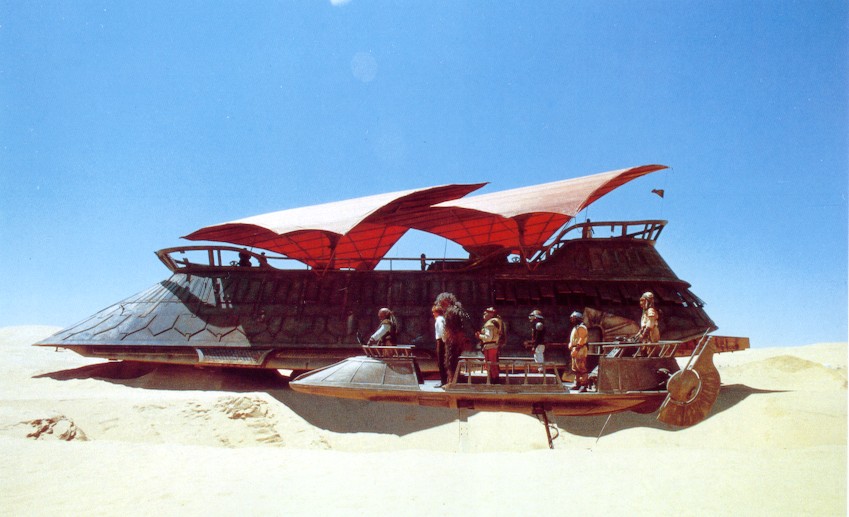
And last, but certainly not least, the JL421 Badonkadonk Land Cruiser: a small personal tank shaped frighteningly like Jabba the Hutt's Barge.
 

© Metadoxy
Revolution Elements by Blozard. Original WP theme by Jason Schuller | Distributed by Deluxe Templates