
 |
| The real guilty party. |
I thought they’d come out and put it out, even if you hadn’t paid your $75, but I was wrong.They did respond to calls from a paying neighbor.
This was a really thought provoking article for me. If I were calling the shots at the fire department, I probably would have put the fire out anyway, thus validating Cranick's attempt to be a free-rider supported by the payments of his neighbors. It's not OK to let people's homes burn. But if I were in charge of investigating the fire department, as you know had to happen, I'd probably not accuse them of any wrongdoing. They fulfilled their contracted duty.
The author of the article, Daniel Foster, sees this as a pretty good argument for providing fire-fighting services to anyone in the jurisdiction, and just charging them through a tax (that is, nobody gets to opt out). In one sense I tend to agree, but that left me wondering how this was different from the Obama Health Care plan, which I don't like. After talking it over with my wife (who has better economics instincts than I do, despite never having taken a class on the subject), we concluded that the main difference is that there is nobody else offering to put out fires; if you wanted to use another service to put out fires, too bad, there's nobody. No amount of money is going to be enough to get someone else to provide fire-fighting services. That's not true when it comes to doctor's office visits, checkups, and prescription drug provision. Now, if Obama had proposed a plan for universal catastrophic health insurance (with correspondingly high deductible), then it would be a lot more like public provision of fire departments. I might be OK with that health insurance system, too.
But what this really got me wondering about was Cranick's homeowner's insurance. Do they have to pay out despite the fact that he could have gotten fire-fighting protection, but didn't? How can you even get homeowner's insurance on a house that isn't covered by the local fire department? If I'm the insurance company, I probably wouldn't sell to a guy who won't join the local fire department club, no matter how much he tries to reassure me "oh, they'll come anyway, trust me." They don't make premiums high enough for that kind of nonsense.
On the other hand, might Cranick be able to argue that he offered to pay them the cost of fighting the fire ex post, and they refused? Could he say it's really their fault everything he had burned to cinders? I suspect this wouldn't fly, but I really don't know.
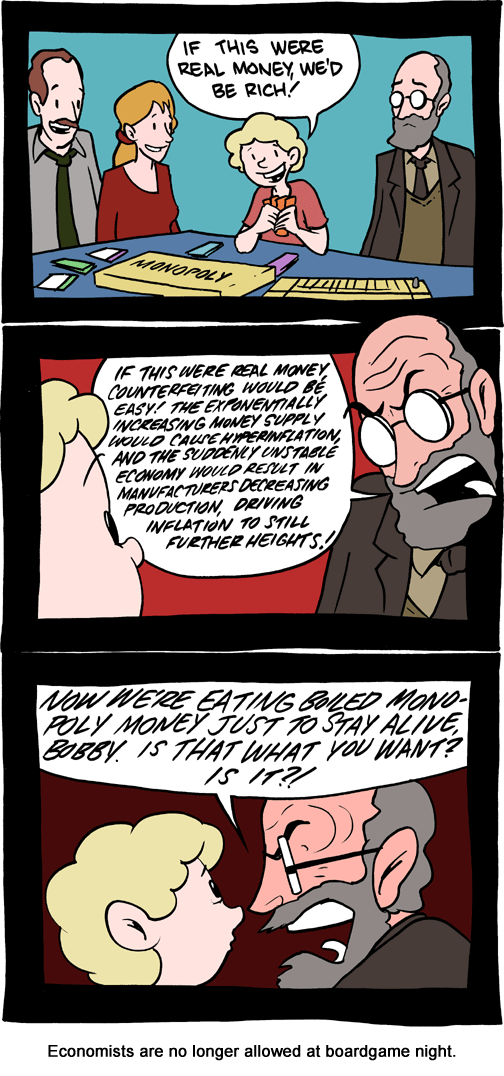
The gist is, I guess, that I don't agree with the fire department's call, but I'm having trouble drumming up sympathy for someone victimized by his own poor choices. Not too much of a surprise, I guess, since we've learned years ago from Yale psychology professor Paul Bloom (via Freakanomics coauthor Stephen Dubner) that economists are evil.
David Henderson offers a libertarian response here. Tyler Cowen is not moved.





 Posts
Posts

