Showing posts with label meta-blogging. Show all posts

This Could Have Been Three Posts...

... if I had time to provide decent comments on each item, that is.  Instead of delving into my thoughts about the following links, though, I'll just put them up Marginal Revolution style.

Psychohistory, the sci-fi version of what I do for a living. For those with some knowledge of the history of macroeconomics, you'll notice that as early as 1942, Asimov saw the importance of the Lucas Critique, something economists didn't latch on to until 1976.
while one cannot foresee the actions of a particular individual, the laws of statistics as applied to large groups of people could predict the general flow of future events. [...] The character responsible for the science's creation, Hari Seldon, established two axioms:
  • that the population whose behaviour was modeled should be sufficiently large
  • that the population should remain in ignorance of the results of the application of psychohistorical analyses
That last bullet point is the one macroeconomists took nearly 35 years to figure out.

A mind-boggling "How to Deceive with Statistics" entry. The nature of averages suggests that your friends are cooler than you. The money quote:
Let’s imagine a small department offering three courses for the semester. One is a survey course with 80 students, one an upper-level course with 15 students, and one a seminar with five students. Now what is the average class size? Clearly, it is (80 + 15 + 5)/3, or 33.3 students. This is the number the department is likely to publicize.

But once again, let’s adopt the perspective of the average person and reexamine these numbers. Eighty of the 100 students find themselves in a class with 80 students, 15 find themselves in a class of 15 students, and five in a class of five students. Thus, the average student’s class size is (80 × 80 + 15 × 15 + 5 × 5)/­100, or 66.5 students. This number is less likely to be publicized by the department.
Did that just blow your mind? It did mine.

Theories of International Relations and Zombies. How is this *not* something I need to read?  A nice discussion by the author is available here. Max Fisher at the Atlantic Wire, capturing a lot of why I find zombies so fascinating, has this to say:
[...]the beauty of zombie theory is that it applies too [sic] all sorts of emerging trans-national security threats, including those we have yet to anticipate or imagine.
Yes. Zombies are really just a proxy for disasters and crises of a scale and nature we can't quite foresee.  Namely, the zombie apocalypse.  If someone wants to buy this book for me, I will put a detailed review up on this blog with a shout out / link to the website of your choice.

Are Recessions Possible?

The obvious answer seems to be 'yes.' The more difficult question is 'how?' WARNING: what follows is a more technical musing than I usually post here. I'll try to keep it as close to the principles level of accessibility as possible, but I won't be offended if those of you who are less economically interested skip this one.

The problem is that, at the macroeconomic level, there is an accounting identity that says INCOME=EXPENDITURE.  All of the income in an economy in a given period has to be spent on something.  All your income, after all, is just somebody else's spending, and all your spending is somebody else's income.  Every seller in one market is a buyer in another, and every buyer in one market is a seller in another (and yes, this even holds when some people live off other people's money, although it gets more complicated to sort out how).

This leads to something called Say's law, which basically says that if there are more sellers than buyers in one market (such as in the labor market when we have unemployment), there has to be some other market where there are more buyers than sellers, a shortage.  It's the only way for the accounting identity to be true, and it's true by definition.

So how can we have a recession, where it seems there are more sellers than buyers everywhere?  I've been thinking about this recently because of some recent discussion at EconLog (here, here, and here, for examples) about that very question. Scott Sumner and Nick Rowe argue that the excess demand has to be for money.  People want to hang on to (not to spend, but to have in their pockets) more of the good we use in exchange than they can get their hands on.  Brad DeLong and Paul Krugman, on the other hand, think there is excess demand for "safe assets," essentially places investors can store their value without any real risk that they'll walk away with less than when they started. Money is OK at this, but not great; a better option is typically government bonds, particularly when our faith in the quality of supposedly safe private firms is shaken.

Arnold Kling of EconLog, on the other hand, thinks we are in the middle of what he calls a recalculation, in which people find themselves working on things no longer in demand (more sellers than buyers) and don't yet know where the demand has gone. To my understanding, his story is basically that the recession, as we usually talk about it, is a myth. We don't have more sellers than buyers everywhere; it's just easy to see where we have more sellers than buyers, but it takes more time to figure out which markets have more buyers than sellers.

Well, the thing about markets is that when there's a shortage, it's a chance for some business to raise its prices and still sell more, thus making a ton of money. Sellers who want to make money (and don't they all?) in order to consume things they like (and don't we all?) will leave the market where there are too many sellers and enter the market where there aren't enough. Shortages and surpluses should always be rather brief.  Sumner and Rowe have an answer for this: the money market isn't normal, there's a single supplier of money, the Fed (and there are good reasons to have a single supplier as I've discussed in this series). DeLong and Krugman have a similar defense: the best safe assets are supplied by the government, and are thus influenced more by political pressure than market pressure.

What I haven't seen from the Recalculation Story (or, to use Kling's latest phrase, Patterns of Sustainable Specialization and Trade) is an explanation for why market adjustments are so slow. He has talked before about why economic busts happen much more quickly than booms, but that's not really what I'm after. What I want to know is why is the information that we have excess supply in many, many markets so easily obtained by everyone (this is what creates the unemployment in his story, after all), but information about where supply isn't keeping up with demand is so very hard for entrepreneurs to obtain. 

Is it that entrepreneurs have to borrow money to chase demand quickly, but it's hard to borrow during recessions? Is it that information transmits most quickly out of markets with many established firms (and if so, why)? Is it government intervention, particularly temporary attempts to undo the shift in demand?  I just really don't get what in Kling's view is holding entrepreneurs back, and make no mistake, if we don't have something holding entrepreneurs back, then recessions are just not possible.
Bad #6!  Let that entrepreneur go!

Well, at Least I Got a Friday Post Up

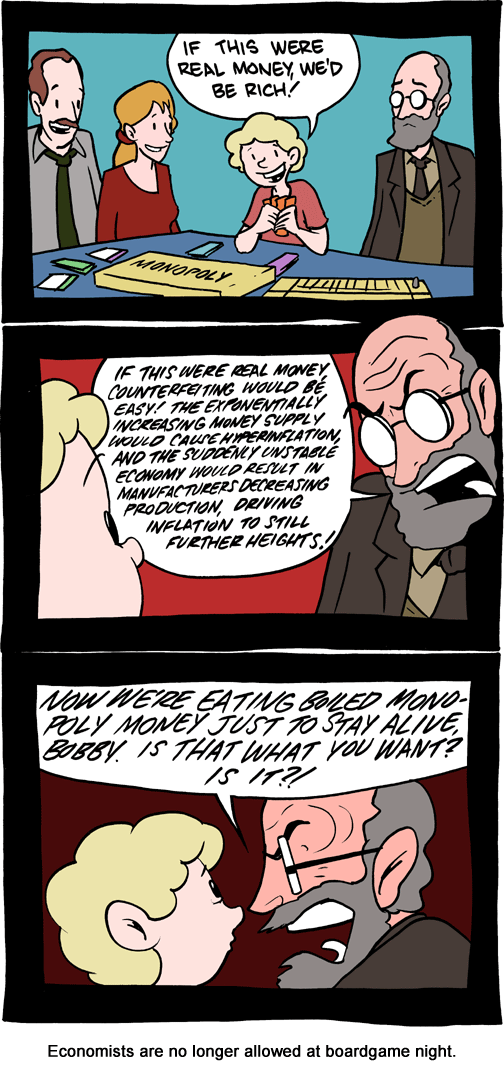
I've been immersed in teaching economic growth and trying to pull my research together, so my posting has been sporadic lately. And I'm in a wedding this weekend, which means I need to get weekend stuff done during the week. So I don't have a Video Extravaganza for you. All I've really got for you is a cartoon about how much fun I am to have around:

(courtesy of Saturday Morning Breakfast Cereal via behavioral economist Jodi Beggs)

I can link to a few videos I've been watching lately (they won't let me embed):

Old Spice Guy Sent Roses to Alyssa Milano

Old Spice Guy Offers Political Advice

(for those who don't know Old Spice Guy, aka actor Isaiah Mustafa, check out this commercial, and its sequel)

Modern Day Patrons?

First off, sorry for not posting much for a few weeks. Illness and travel got in the way. I am planning to be back on a regular schedule at this point, though, which means full posts on Mondays and Thursdays, with video collections on Fridays. My inconsistency would no doubt be remedied if I had enough followers to make some money on this blogging gig, but as the following will point out, it's easier theorized than actualized.

We live in a tough world for professional content creators: authors, photographers, filmmakers, and the like. We've been hearing for years that journalists are an endangered species, and in a world where novels are self-publishable and available on e-book readers for under $10, it's not hard to imagine a world where everyone is an amateur story-teller but nobody can make a living doing it. And while there are some safe havens for those with a truly creative flair, even in those cases very few can do so for a living.

It's as if we live in a world where the superstars make more money than they know what to do with, and everyone else works for the Man, transforming these creative minds into mere evening hobbyists.

In response to this mainstream narrative, there are those out there favoring a different approach to professional creativity. They say you don't have to be a megastar to support yourself and your family, you just need 1,000 True Fans. What exactly is a "True Fan," you may ask?
 A True Fan is defined as someone who will purchase anything and everything you produce. They will drive 200 miles to see you sing. They will buy the super deluxe re-issued hi-res box set of your stuff even though they have the low-res version. They have a Google Alert set for your name. They bookmark the eBay page where your out-of-print editions show up. They come to your openings. They have you sign their copies. They buy the t-shirt, and the mug, and the hat. They can't wait till you issue your next work. They are true fans.
This is an appealing idea to an artist, since it gives you an audience that genuinely appreciates what you like to create, and the marketing level is manageable at an individual level.
True Fanship is doable. Pleasing a True Fan is pleasurable, and invigorating. It rewards the artist to remain true, to focus on the unique aspects of their work, the qualities that True Fans appreciate. 
The key challenge is that you have to maintain direct contact with your 1,000 True Fans. They are giving you their support directly. [...]  The technologies of connection and small-time manufacturing make this circle possible.
How is this an effective way to make a decent income? The idea is that, on average, your True Fans will spend "one day's wages per year" on what you create. The article suggests this is about $100 per year, leaving you with $100,000 per year to cover your living and production expenses. It's a chance to turn the demise of many professional content-producing institutions into an opportunity.

Of course, there's the practical question of whether the theoretical structure works in practice. According to the follow-up post, The Case Against, it can, but usually doesn't:
What my research tells me: there are very few artists making their entire living selling directly to True Fans. The few that are, are selling high-priced goods, like paintings, rather than low-priced goods like CDs. But there are many that partially fund their livelihood with direct True Fans. However, most of these artists make it very clear in their notes to me: It takes a lot of time to find, nurture, manage, and service True Fans yourself. And, many artists don't have the skills or inclination to do so.  The fact that very few creators wholly sustain themselves with direct True Fans may be because it is a job few want to do for very long.  
The results reminded me of this piece by Cowen and Tabarrok of Marginal Revolution. The paper focuses on the complex trade-offs between pleasing customers and pleasing yourself in how you do your job. It also points out that artists are most inclined to pursue their own tastes when their final product is hard to market to the masses--paintings are usually avante-garde, but movies are usually popular.

All things considered, it's a pretty interesting way to use the technology of tomorrow to simulate the patronage system of yesterday. I think I'll stick with working for the Man, though.

Speaking of Making Distinctions

We could try to divide the world into Mechanics and Mystics. Alternatively, we could divide the world into Askers and Guessers:
This terminology comes from a brilliant web posting by Andrea Donderi that's achieved minor cult status online. We are raised, the theory runs, in one of two cultures. In Ask culture, people grow up believing they can ask for anything – a favour, a pay rise– fully realising the answer may be no. In Guess culture, by contrast, you avoid "putting a request into words unless you're pretty sure the answer will be yes… A key skill is putting out delicate feelers. If you do this with enough subtlety, you won't have to make the request directly; you'll get an offer. Even then, the offer may be genuine or pro forma; it takes yet more skill and delicacy to discern whether you should accept."
As Joel pointed out, the mechanic/mystic trait is closely associated with the kinds of objects or insights that they are good at dealing with. Similarly, the author suggests the asker/guesser trait is closely associated with the culture you come from. The real question for me, though, is how do I get a prominent blogger like Tyler Cowen to talk about mechanics and mystics?

Blogging the Blogroll

I thought I'd take this opportunity to introduce a few blogs I read, and give a brief discussion of why I read them. For this post-tax season post, I'll focus on some economics blogs that frequently comment on political matters. Following the conventions of written English, I'll work my way from left to right.

Brad DeLong, UC Berkeley
Definitely the most liberal blogger I read, DeLong is a major supporter of both the fiscal stimulus bill and the health care reform bill. Occasionally he has provided economic arguments in their favor, although more often he provides a mixture of economic and ad hominem arguments against the objections of their opponents. There aren't many matters I agree with him on, and I'm not a big fan of his level of discourse. Why do I read him, then? Because he consistently brings up good points. He is often cited on many other blogs I read precisely because he is asking good questions. Add on the fact that I want to always be ready to learn something from people I disagree with, and it's a worthwhile read.

Paul Krugman, NYT Columnist and Princeton
Still quite liberal (as you might guess from his blogs name, The Conscience of a Liberal), Paul Krugman won the Nobel Memorial Prize in Economics a couple years ago, and for good reason. His major work in international trade involved bringing very simple, clear models to bear on problems everyone up to that point had seen as dizzyingly complex. Although he now spends most of his time arguing for whatever the Democratic party happens to be supporting at the time, there are flashes of that clarity and brilliance that come through from time to time. On top of this, he's possibly the most widely read economics blogger right now, which means it's a good idea to know what he's talking about.

Scott Sumner, Bentley University
I started reading Sumner because for a couple months I heard about his views from every single economics blogger that I was reading. His way of looking at macroeconomic problems differs substantially from those of economists in the policy realm, but only because he is unusually willing to take long-standing economic theory seriously. Over time I have become more and more converted to his way of seeing macroeconomics and monetary policy. He is currently working on a book about the Great Depression, and you can bet I'll be buying a copy when it comes out. He favors more stimulus for the current recession, but from the Fed rather than the Treasury. In general, I wouldn't call him left-wing or right-wing (although he self identifies a bit more with the latter); Sumner is allied with economic theory, and whoever has the best argument from that angle gets his support. As you know, here at Metadoxy we support people who do what they believe in and believe in what they do, so the internal consistency of Sumner's thoughts really appeal to me.

Greg Mankiw, Harvard
On the Republican side (although I'd hardly call him right-wing), Mankiw is author of the most popular economics textbooks in the world right now. He is a frequent commenter on current US legislation, particularly those affecting long term government debt. He has a very readable writing style, and is generally very respectful of all sides in a debate. Like Krugman, he is a trend-setter when it comes to econ topics, and is often viewed as the counterpoint to Krugman. I think of him as closer to a moderate opinion than truly conservative, though.

Craig Newmark, North Carolina State University
Newmark's perspective differs from the academic economists on this list in that he is more of a Business School Economist: he focuses less on theory and more on practical matters, with more of a "well, duh!" attitude towards major government events (he's not a fan of stimulus or the health care bill). He also comments frequently on new products in the market, teaching economics, and other non-economics material he happens to find interesting. It's a nice blog, although he does get a bit snarky with liberals and hippies.

EconLog (Arnold Kling / Bryan Caplan / David Henderson), Various Affiliations
Probably the most right-wing blog I read (There was another even more so for a while, but I got bored and unsubscribed), this blog leans heavily Libertarian. The authors tend toward free market pacifism, and often don't subscribe to conventional economic interpretations of things. I probably disagree with Kling (the closest thing the blog has to a "front man") more often than I agree, but he always makes me think through why, and for that alone he's probably got me as a reader for life. Caplan regularly introduces interesting a lot of cultural and broadly social scientific topics that probably deserve the label of sociology or social psychology. Henderson is more of an advocate of the Austrian school of economics, which is outside the mainstream of the profession but still frequently provides fascinating and unexpected insights.

Those are the main blogs that focus almost exclusively on economic matters. Well, there's also James Hamilton and Menzie Chinn over at Econbrowser, both of whom are quite excellent commentators. The problem is that the blog is unintelligible without a year of graduate level economics or finance as background, so I shouldn't recommend it to the uninitiated.

Next time I think I'll mention some of the blogs that move more frequently between economics and social commentary, and then perhaps move on to some of my other areas of expertise.

Clean Bill of Health?

Every economist on the blogosphere seems to be offering an opinion on the health care reform bill. I'd be happy to give some general opinions if you are interested, but I tend to favor Tyler Cowen's recent comment:
I recall the passage from Herodotus, where he writes of a group (I can't remember which one) which debates all major policy issues both sober and drunk, both reasonably and full of irresponsible passion.  That's not my personal model, nor do I wish to see it in the comments.  So I'll wait just a wee bit, and let others get both their celebrating and hand-wringing out of their systems...
So instead of offering my own rantings on the subject, here are some links providing the thoughts of economists whose opinions I listen to. I don't agree with all of them, but I think they're all worth hearing out if you care about this issue.

Paul Krugman on the surprise political win for the Democrats

Greg Mankiw on libertarian versus communitarian goals

Jodi Beggs gives an even handed (and thorough!) opinion

James Hamilton talks about the purpose of health care reform

Bryan Caplan chimes in

Rick Saenz (thanks for the link, Kelly P.) would like everyone to get a little perspective

UPDATE: A Point and Counterpoint on the bill at Economics and Ethics.

Monday Post Missing

... due to excessive celebration. Happy spring break, everyone.

The Sonnschein Pipe

So, at this point you may have noticed the new header image. I enjoy estate pipes (my collection is currently sitting at 15 pipes), and this particular one, the latest addition, has a fascinating story behind it.

The pipe has metal fittings and a hinged cap, and is quite large. There's no stem, which I might remedy at some point, but I don't really mind. I don't plan to smoke this one.

You see, this pipe is around 200 years old. Inside the bowl there is a note that reads as follows:

'this Pipe was given to my grandfather (born 1811) William Sonnschein, and he said it was given him by his grandfather so that would make this pipe at least 150 years old (in 1910)
     Frank Eckert  --- grandson of William Sonnschein
Note initials on silver lid "A.S"'

I received this pipe as a gift from my wife's grandmother, who had received it from her grandfather, Frank Eckert. According to the note, he received it from his grandfather William Sonnschein, who received it from his own grandfather (presumably the "A.S." of the initials). So while I don't quite follow the math that dates the pipe to the 1760s, it's still been in the family since Jessie's great-great-great-great-great-great grandfather. Which is pretty great.

So I'd seen this at Jessie's grandmother's house before, and I was an instant fan. She's been downsizing her possessions, and I jokingly told her that if no one had spoken for the pipe I'd throw my name in. I felt kinda bad when she actually decided to give it to me, as I had sort of thought she would want to keep it as decoration until she dies (I know I would). But at this point I'm just grateful. It might be the oldest thing we own (I have a couple of ill-repaired 19th century Bibles, and one of them was published in 1811), and is definitely the piece I would take with me to the Antiques Roadshow. It's similar in shape to the Hungarian meerschaum-style metal pile found here (3rd down), although the lid is simpler on the Sonnschein pipe. It's simply classy, which is how we role at Metadoxy.

By the way, all photos, including the header, were taken by the magnificent and ever-professional Jessie. For more examples of her handiwork, check out here Etsy shop.

Welcome to Metadoxy

The new layout is up and in place. I may do a bit of final tweaking, but I'm pretty happy with it. The new look corresponds to a renewed attempt to make this a blog worth reading, so please feel free to let me know how you think it's going.

The goal here has always been to develop, publicly and honestly, a consistency between what I think, feel, believe, and do, and maybe post some things that make me think or feel deeply along the way. "Exercises in Self-Awareness," the tag line reads. It took me a while to conclude that what I really enjoy discussing in this medium are these attempts at knowing and becoming who God makes us to be. If you're a regular reader, you probably also get excited about this kind of thing - either that or you feel a sense of obligation to read the mutterings of your friends, no matter how contrived. Either way, I figure I've got you and can do things as I please.

The changes at work here are more than just superficial. I've got a number of projects in the works aimed at bringing more of my scholarly background forward in the posts. If Metadoxy is to be about developing self-awareness, part of that awareness has to be that I am an economist, and a lot of what I spend my time thinking about is economics- and education- related.

Before you get concerned, let me reassure you that I still plan to post other things I find funny, fascinating, and thought provoking (and the occassional intersection of all three involving zombies!). And the target audience is still general (meaning you!), so I plan to communicate what I'm thinking in a non-technical way.

In conjunction with this shift in blogging appearance and focus, I'm also trying to boost the frequency of posts. I'll try to put something online most days of the week, and should at least have a couple posts every week. If need be, I may even expand Metadoxy into a group blog to keep the thoughts flowing. Surely I've got a few intelligent, insightful friends willing to exercise their self-awareness once or twice a month, right?

In any event, I hope you enjoy the new and improved blog. I was never a fan of pure lecture, so please comment / Digg / Share / whatever-else-the-kids-are-doing-these-days when a post interests you. I don't respond to all comments, but I do read them all. Self-awareness is a part of sanctification, and sanctification happens in context, in community. I consider what happens here, and those of you participating in it, a part of mine.

PS- I'd like to give a shout out and happy birthday to my brother. Go, 28!

Special Wednesday Edition

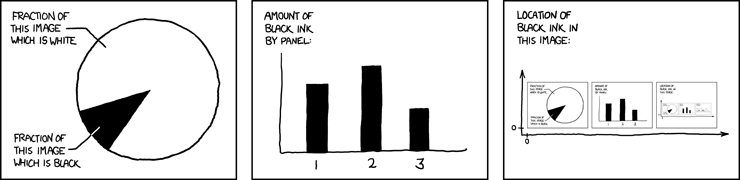
Sometimes I come across something so self-aware that, by virtue of this blog's tag line, I have to post it here:

via xkcd.

New Look?

If you've been reading this blog for any length of time, you may have noticed that its aesthetic is somewhat... minimalist. And by minimalist I mean black. Lots of black. This blog wears more black than Johnny Cash. Which has been fine so far; it's been functional and effective. However, I feel like it's time to make a few changes around here, and that includes upgrading the visual appeal of the blog.

After extensive searching around, here are a few templates that I like. I need some help making a decision, and since you, the reader, are the ones who will have to endure looking at whatever template is chosen, I want to hear you guys sound off in the comments. Anything from "I like this one best, and this one least" to a detailed ranking with pragmatic and philosophical reasons for each position are highly encouraged. Most of all, say something! I can't take your preferences into account unless you reveal them! I'll probably wait about a week or so, but after that, you might be too late.

Irresistible - I like the colors on this one. I am also a fan of the translucent post background over the regular background, and the rounded edges. The white lettering might be a bit of a problem at the top, though.

Zanblue - This one has a simple layout that I find very easy to read. I'm a big fan of two column blogs, and I like the sidebar and menu buttons on this one. The red provides a nice break from the grays. I also like to offset bars around the comments. It might be a bit too monotone.

The Peaceblogger - This is actually based on a template called Revolution Elements. It's probably the most professional, classy setup I'm considering. This would be a great setup for a serious academic blog on the level of William Easterly's AidWatch. I'd like to recommend it to the guys over at Kids Prefer Cheese, since the seriousness would fit some of the major academic topics they discuss, and it would just feel ironic with posts like this one. It might not blend well with a blog that regularly features the tag 'zombies,' though.

Black Grass - I really like the layout on this one. I like the comments flags, I like the sidebar, and I really like the search bar. Actually, there's only one thing I'm not a big fan of... the grass. I mean, it's grass. Actually it kinda looks like carpet. It doesn't really fit the vibe here at Metadoxy, which is a problem because it's prominently featured and there's no easy way to change from grass to some other background. The corn bullet points are really easy to change, but the grass is integrated into several images, including that wicked sweet floating search bar. So the question is, do I live with the grass in order to get the other cool aspects of the template?

Charcoal 2 - This is a nice template. I like the colors, the way the menus and sidebars are highlighted, the timestamp on each post... it's nice. However, I'm not a fan of the three column setup. Combined with the color scheme here, it gives me the feeling that I'm on a forum for some kind of MMORPG or something like that. The new comments sidebar is a big plus, but it doesn't seem to have an archive structure, so that's kind of a minus.

Of the five, I'm leaning most toward either Black Grass or Charcoal 2, but they're all still in the running. This is only a part of the new and improved blog experience I'd like to provide, but it is a big part.

So let me know what you think in the comments. The more thoughts you provide, the better informed a decision I can make. I need to hear from as many readers as possible! (Did I mention I want to see some comments?)

UPDATE: Just found out that there is a two column version of Charcoal. It is now in the running as well. Keep those comments coming!

How to Deceive with Statistics

Nightly News Slight-of-Hand Edition

If your goal is to get people nervous about something specific like Swine Flu, one of the most effective ways to do it is to talk about how scientists have been attempting to identify how many people have been affected by it, then start quoting some statistics about how many people have been affected by any and all diseases:


Now, even if the statistics are actually reporting about those suffering from flu-like symptoms, they're still palming the actual swine flu card and playing something different. Boo, NBC Nightly News. Boo.

In other news, sorry I haven't been posting much lately. I've been trying to help out with my daughter more. I've also been developing my dissertation and doing some curriculum development for a couple distance learning courses. So that hasn't left much time for blogging. The curriculum development is almost done now, so I'm hoping to be back to a more regular schedule soon. I've got a few more posts scheduled for the next couple of weeks, so hopefully that will last until I can put things up more regularly.

New Sidebar Links

This is just a heads up that I have set up a new section in the sidebar with some of my favorite old posts. I think they capture a lot of my unique thoughts about thinking and beliefs about beliefs, which after after all what metadoxy is all about. In particular, it includes the infamous Mechanics and Mystics post, which has come to shape so much about how both Jessie and I relate to people who think differently than we do.

I am also considering doing some revamping on the layout and design of the blog in general. Monochrome black and gray fit me really well when I started this blog, but I don't think it quite fits anymore. Anything you guys would like to see in a change? Color schemes? Or Colour schemes, for those from the British Isles?

Truth Claim of the Day

In many ways the core of blogging is a willingness to apply what you know to every problem you encounter, and see how good a job you can do of it in a more or less integrated fashion.
Please, discuss. I think this is a particularly good one for readers to voice thoughts on, since you after all are among the people who read blogs (probably several). The context is here.

Conspiracy Theories are for Suckers

Here at Metadoxy, we (in the royal sense, I suppose, as I can't actually speak for my commenters) prefer Conspiracy Meta-Theories:

[...] all conspiracy theories that become popular are actually produced by the government to keep the paranoids occupied looking for aliens, bigfoot, and psychics instead of focusing on the more nefarious intrusions into civil and social rights. Meta-theory has a lot of benefits, such as that it explains why government explanations for things like Roswell are so terrible: a good explanation would leave only a few true believers, a bad explanation actually creates more believers in the conspiracy. As a final benefit, generating conspiracy theories as red herrings is cost-effective. A conspiracy theory works by arguing from the void/gaps. All the government need do is create a few vague clues and let the mind of the legions of paranoids do the rest of the work filling in the huge, ambiguous spaces. Why would anyone investigate mundane government corruption when there are aliens and psychics to research?


This was posted by Kyle Munkittrick over at Marginal Revolution. Personally, this reminds me of the Lone Gunmen televisions show. I thought about listing this as a Truth Claim of the Day, but in the end I think this is something different. So instead of the usual discussion, I'll invite you all to list the conspiracy theory you think is most likely to be true. Or just your favorites.

What Are My Odds? [MATH WARNING]

My wife recently brought up an interesting question that I think might be relevant to you frequent blog readers out there. It concerns participation in a blog contest. For those of you not familiar, a blog contest is a venerable gambling institution of the internet, closely akin to online poker and office bets about who will get the highest score on Bejeweled today. Most blog contests involve participants engaging in various activities in order to earn an entry (essentially a raffle ticket) in a giveaway. The more crazy things readers are willing to do (comment, link to blog, become a fan on the Facebook, StumbleUpon, wear a sandwichboard, etc.), the more entries received. At the end of the contest date, one entry is selected from all those submitted, and somebody wins a nice cookbook or something like that.

All this is well and good. My wife's question, however, revolved around a particular fact/myth/truth claim she had heard regarding these additional entries. She wanted to know, is it possible that increasing your number of entries actually decreases your chances of winning?

Some readers of this blog probably thought "Clearly not, more entries means more chances," and stopped reading. Others thought "Sure, more entries means more chances to not get it," and stopped reading. For those of you still reading, I shall give you the true economist's answer: It depends.

The key is to understand exactly what it depends on, which requires me to provide a brief education in probability and statistics. Don't worry, it won't hurt much. You may even learn something that will help out the next time Grandma wants to make a game of go-fish interesting!

First of all, some labels. Let's call the number of entries you decide to submit 'n,' and the number of entries everyone else decides to submit 'm.' If there is only one winning entry, which is chosen randomly with each entry having an equal chance, then the probability that one of your entries will be picked and you will win is

n / (n + m) x 100%

since (n + m) is the total number of entries. Notice that as you submit more and more entries, both the top (or numerator, in math-speak) and bottom (or denominator, in math-speak) of this fraction get bigger and bigger. The easiest way to see whether your chances go up or down is to find out whether the top grows faster, slower, or at the same speed as the bottom.

The rate of change of the top is always the same, one. If you submit one more entry, you get one more chance out of however many total entries there are. Simple enough.

The rate of change of the bottom is a bit more complex. First off, the bottom always increases by the one from your new entry. Next, we have to add to that the increase in the number of rival contestant entries that are caused by your additional entry. The mathematical notation for this is dm/dn, but don't let that intimidate you. This just means that for your first entry there are some number of people (we'll call that number M) who are participating whether you do or not. Beginning on your second entry, a certain number of rival contestant entries are added, probably because they heard about the blog contest because of your entry. Mathematically, all this can be summarized by saying that for your first entry, m = M, and for each entry after that we have

m = M + (dm/dn) * (n - 1),

where we subtract one from your entries because the first one doesn't count against you. In this case, the rate of change of the bottom is

1 + dm/dn.

So if we want to know what your chances of winning will be as you add more and more entries, we will simply place the rate of change of the top over the rate of change of the bottom,

1 / (1 + dm/dn).

We can then see if increasing your number of entries is good or bad by comparing this to your chances of winning with just the first entry,

1 / (1 + M).

First, let's consider the case in which additional entries on your part never bring in new rivals. This would be the case if additional entries are things like commenting, becoming the author's Facebook friend, and anything else that doesn't really let anyone new know about the blog contest. In this case, dm/dn = 0, so as you add more and more of these entries your chances of winning get closer and closer to 1 / (1 + 0), or 100%. You can only make yourself better off by adding these entries.

Next, what if submitting extra entries advertises the blog contest, so that every additional entry of yours brings in the same number of new rival contestant entries. In this case, dm/dn = a, some constant number, and your chances of winning approach 1 / (1 + a). This improves your probability of winning whenever 1 / (1 + a) > 1 / (1 + M), or whenever the number of extra contestant entries from each of your submissions, a, is less than the number of contestant entries there would be even if you never showed up, M. So even if in total your extra entries bring in more new people than would have entered otherwise, as long as each entry brings in fewer than M, you are better off submitting the entry. (Note to Jessie: this is a bit different than the way I explained it to you. I was assuming that a is always less than M.) If a > M, however, you should just stick with your original entry.

Finally, what if some extra submissions will bring in more rival entries than others? Obviously you'll want to start with the ones that do the worst job advertising (why generate more competition than you have to?), and work your way up to the most effective ones. In this case, we can say dm/dn = a * n, just as a convenient example. This means that your chances of winning approach 1 / (1 + a * n), which is shrinking as n gets bigger and bigger. So at some point, a * n has to become bigger than M, and you definitely don't want to submit any entries beyond that point. However, if you start out with a * n < M, then the first few entries will actually help your chances of winning. In order to make your chances as good as possible, you will want to submit extra entries until n = M / a, which is a bit difficult to interpret (especially since you won't know exactly what M and a are, anyway), but suffice it to say that if there are a lot of contestants entering no matter what you do, you'll want to try a few extra submissions, but the more effective entries are at advertising for the contest the fewer entries you want to submit.

So, to sum up what we've learned from the probability accounting above: (1) if nobody is going to join the contest because of your entries, enter as much as possible; (2) if you have several options for earning entries that will all bring in about the same number of new contestants, do them all if they don't bring in too many, or do none of them if the advertising is too effective; and (3) if you have several options for earning entries that vary in how effectively they advertise the contest, do a few of the least effective ones only (how many depends on the contest).

Some of you will no doubt be saying at this point "It's so obvious! Why do we always have math and science people telling us to do things we already know?" I agree that these guidelines are pretty obvious at the end of the blog entry. But not everyone will think it's obvious, and having something reliable tell them why it makes sense could be the difference between constantly losing contests and the occassional win for these people. Even for those of us with strong statistical instincts, would we have kept all three of these points in mind while making our decisions if the statistics didn't remind us to? For a great many of us brilliant, educated people, the answer is a resounding no. Just because we get it immediately when we think about it doesn't mean we would have thought about it without prompting (man, just what tense was that last verb?).

Keeping people thinking and remembering the "obvious" is pretty much what economics and statistics education is all about. Some people have better instincts than others, but everyone can improve their thinking processes with a little bit of rigorous thinking (just not too much).

Truth Claim of the Day

[...] it is not legitimate to try to protect attractive theories from the data.
Although targeted at economic theory which rejects empirical investigation, I see this statement as bearing much more generally. Anything making truth claims about the empirical world could be held to this same standard, which I suppose makes this a truth claim about truth claims in general.

Please, discuss. The context is found here.

What Do I Do, Again?

In the last few days, there has been an interesting discussion on a couple of major economics blogs regarding the relationship between macroeconomics (which is where my research lives) and microeconomics (which is what I typically teach). The key posts, with assorted commentary, begin with Matt Yglesias, followed by some thoughts by Arnold Kling and David Henderson. The gist is that, beginning with Keynes, macroeconomics was thought of as a separate area of study from microeconomics. This changed over time, though, and now macroeconomic work that isn't heavily founded in microeconomics is not really publishable. How and when did this happen, and is it a good thing or a bad thing?

I thought I would chime in here as if I have something to say that hasn't already been mentioned.

First, macroeconomics without micro has a serious drawback to it: namely, the work isn't structural. Without being able to say "decisions work this way because of these enduring features of human decision making," which is what micro-foundations are all about, there is no real way to say that what has happened in the past tells us anything useful about what will happen in the future, particularly if we are talking about policy in which the government changes something. The models of the 1970s failed precisely because they only told about how people behave in a specific environment, and thus couldn't actually tell us anything about how people will change what they do when the legal environment changed.

Second, macroeconomics is, in my view at least, purposed with studying the aspects of economies that we would miss if we only considered things from the micro, one market at-a-time perspective. There are a lot of things that are true of the forest that are not true of any particular tree or small group of trees. For one thing, microeconomics doesn't tell us why we don't run out of trade, and thus why economic activity doesn't work nicely for a while and then stop. There has to be something that continually expands the ways we can benefit ourselves through trade. Thus long-run economic growth is a macro subject. For another thing, microeconomics doesn't have much to say about how vague issues like how many dollars are floating around or how confident we are that this growth will continue affects individual markets. Monetary policy and economic stability are macro subjects. These examples serve, I hope, to illustrate that macroeconomics is more than just microeconomics, but it is not less than microeconomics.

Last of all, the blogs mentioned suggest that the importance of macroeconomics lies in being able to predict what will happen, not merely offer some explanation of what has happened. This is quite true. However, anyone with a bit of statistical software can predict the future with a surprising degree of accuracy. Macroeconomics contributes to this only if the models, which put restrictions on what can conceivably happen and how, actually improve forecasting above the results of naive statistical forecasts. That is to say, macro models must be predictive, but they will only be predictive if they are right and add real information not contained in easily viewed data. So far, the economic models which have contained additional information that seems to be right have all been derived from microeconomics to one degree or another.

So in my macroeconomic research, I don't worry too much about the microeconomic foundations. But the closer the models I test fit the microeconomics that seems to be true, the better the chances those models will add to our knowledge and tell us things simply staring at data can't.

And For This Milestone Achievement...

... which is to say, my 100th post, let me announce officially before the blogosphere that I am a father.

Lucy Marcia Maynard was born on April 26th at 10:32pm. She was 8 pounds 2.5 ounces and 21.75 inches long. We hardly noticed the thunderstorm outside the midwives' birthing cottage, and I held my wife's hand until they lifted Lucy out and laid her across my wife's chest. I saw a strength in my wife that night I had never seen before, and I can honestly say it was the most emotional experience I have ever felt. I cried at the sight of my daughter's full head of hair.

My wife and baby are asleep within arms reach of me as I type this. I love them both deeply.

Lucy is being baptized this Sunday. If you know me or my wife at all, and you can make it to Christ the King Presbyterian Church in Norman, you should come and see her admission into the covenant family of God. I will be taking vows for her.

This is what life is made of. Now wasn't that a worth while 100th post?
 

© Metadoxy
Revolution Elements by Blozard. Original WP theme by Jason Schuller | Distributed by Deluxe Templates