Libertarian Catechesis?

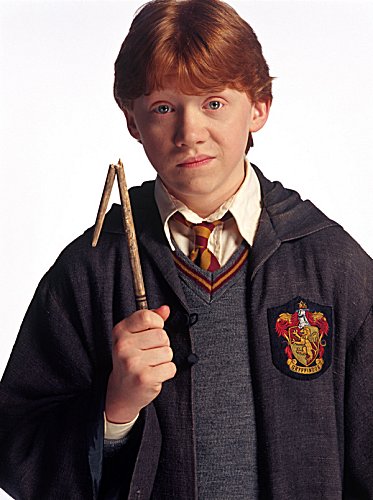
Ron Paul? Is that you?

Bryan Caplan offers, in the question-answer format of a catechism, one of the most succinct summaries of true libertarian thinking (I'm not talking about the Tea Party here). He summarizes the thinking simply:
These common-sense ethics regarding strangers, ethics that almost everyone admits, are unequivocally libertarian.  Yes, you have an obligation to leave strangers alone, but charity is optional.
The whole post is very much worth reading, as are the first ten or so comments (and probably more).

Now, I am highly sympathetic to libertarian thinking in most dimensions.  If you forced me to categorize my political views, I'd label myself 'pragmatic libertarian,' a term I stole from economist Scott Sumner.  But my political views take a back seat to my Christianity, and it's important to acknowledge that Christianity is *not* a libertarian religion. Think about the One who said these words:
“You have heard that it was said, ‘Eye for eye, and tooth for tooth.’ But I tell you, do not resist an evil person. If anyone slaps you on the right cheek, turn to them the other cheek also. And if anyone wants to sue you and take your shirt, hand over your coat as well. If anyone forces you to go one mile, go with them two miles. Give to the one who asks you, and do not turn away from the one who wants to borrow from you.
 “You have heard that it was said, ‘Love your neighbor and hate your enemy.’ But I tell you, love your enemies and pray for those who persecute you, that you may be children of your Father in heaven. He causes his sun to rise on the evil and the good, and sends rain on the righteous and the unrighteous. If you love those who love you, what reward will you get? Are not even the tax collectors doing that? And if you greet only your own people, what are you doing more than others? Do not even pagans do that?
And consider that in the story of the good Samaritan, Jesus emphasizes that we are obligated to love even those who hate us (and who we equally hate) if we are to live.  Would this Jesus have agreed with the following?
What are you morally forbidden to do to a stranger?  You may not murder him.  You may not attack him.  You may not enslave him.  Neither may you rob him.
What are you morally required to do for a stranger?  Not much.  Even if he seems hungry and asks you for food, you're probably within your rights to refuse.
Now, part of the problem is that Caplan equates your obligations with another's rights. It is entirely possible for you to be morally obligated to give generously, and yet if you fail in your obligation the beggar has no right to extract from you what your obligations says he is due.  I'll also readily admit that there is an important distinction between being obligated to give generously and being obligated to give to a particular person. Similarly, just because you are morally obligated to give generously doesn't mean it's the duty of the state to extract such giving from you.  There is a lot of room for compatibility between libertarianism and Christianity.
But if we truly take Christ seriously, we *have* to part ways from the libertarians when they say "charity is optional." Charity--uncomfortable, sacrificial charity--is essential to what Christ referenced when he said "Do this and you will live."


Libertarianism doesn't show us our need of the gospel. Real Christianity does.

This Could Have Been Three Posts...

... if I had time to provide decent comments on each item, that is.  Instead of delving into my thoughts about the following links, though, I'll just put them up Marginal Revolution style.

Psychohistory, the sci-fi version of what I do for a living. For those with some knowledge of the history of macroeconomics, you'll notice that as early as 1942, Asimov saw the importance of the Lucas Critique, something economists didn't latch on to until 1976.
while one cannot foresee the actions of a particular individual, the laws of statistics as applied to large groups of people could predict the general flow of future events. [...] The character responsible for the science's creation, Hari Seldon, established two axioms:
  • that the population whose behaviour was modeled should be sufficiently large
  • that the population should remain in ignorance of the results of the application of psychohistorical analyses
That last bullet point is the one macroeconomists took nearly 35 years to figure out.

A mind-boggling "How to Deceive with Statistics" entry. The nature of averages suggests that your friends are cooler than you. The money quote:
Let’s imagine a small department offering three courses for the semester. One is a survey course with 80 students, one an upper-level course with 15 students, and one a seminar with five students. Now what is the average class size? Clearly, it is (80 + 15 + 5)/3, or 33.3 students. This is the number the department is likely to publicize.

But once again, let’s adopt the perspective of the average person and reexamine these numbers. Eighty of the 100 students find themselves in a class with 80 students, 15 find themselves in a class of 15 students, and five in a class of five students. Thus, the average student’s class size is (80 × 80 + 15 × 15 + 5 × 5)/­100, or 66.5 students. This number is less likely to be publicized by the department.
Did that just blow your mind? It did mine.

Theories of International Relations and Zombies. How is this *not* something I need to read?  A nice discussion by the author is available here. Max Fisher at the Atlantic Wire, capturing a lot of why I find zombies so fascinating, has this to say:
[...]the beauty of zombie theory is that it applies too [sic] all sorts of emerging trans-national security threats, including those we have yet to anticipate or imagine.
Yes. Zombies are really just a proxy for disasters and crises of a scale and nature we can't quite foresee.  Namely, the zombie apocalypse.  If someone wants to buy this book for me, I will put a detailed review up on this blog with a shout out / link to the website of your choice.

The Dark Knight Rises

On Wednesday Warner Bros. announced the villains and casting for Christopher Nolan's sequel to 'The Dark Knight.' Since a lot of the tone and even plot of the movie depend on these roles, I feel compelled to comment. [Warning: if you haven't seen 'Batman Begins' and 'The Dark Knight,' what are you doing reading blogs?!? Go watch them. For the rest of you, spoilers below.]

First, the obvious:
CATWOMAN
We all knew Catwoman was going to be one of the major villains.  The previous film ended with Batman heartbroken, without a love interest, on the run from the law.  It also featured low-budget Bat-imitators.  The stage was perfectly set for this character. In Frank Miller's Batman: Year One, Selina Kyle is a street prostitute who decides that if someone can dress up like a bat and fight crime, she can put on a costume and make a living off of the mob royalty of Gotham.  I'd love to see Selina use her new found wealth to position herself as a high class call girl, thus bringing her in contact with Bruce Wayne. Maybe she'll see through the billionaire-playboy act, or maybe she'll just take him for an easy mark.  In any case, it's hard to argue that being without a love interest and on the outs with the law won't leave Batman tempted to join a woman with the grit, intelligence, and skill to match him.  It's a moral dilemma Bale's Batman needs to face before we're done, in my view.

And who did they cast for this iconic role?
ANNE HATHAWAY

I'll admit, this is not the casting I expected. Selina Kyle is basically a classic noir femme fatale in a costume, and Anne Hathaway has never struck me as a femme fatale.  She has the physique for the role, and I'm pretty sure she has some background in films requiring some stuntwork.  But I'm not convinced she can sell a Tim Sale version of the character.

So I'm not convince here, yet. But you know who else I was skeptical of? Heath Ledger.
That's Best Supporting Actor Heath Ledger to the rest of us.
So we'll wait and see on Selina Kyle. I am willing to be convinced.

Now, Catwoman is a great villain, but certainly couldn't carry a blockbuster movie on her own. So who is going to be the big-bad villain?

BANE
That... was unexpected.  The stage seemed perfectly set for someone much like the Batman--but without his unwillingness to kill criminals--to enter the scene.  Someone like the Reaper, for example, who was rumored to be one of the villains considered for Batman Begins. Personally, I really wanted Nolan to steal a bit from Frank Miller's The Dark Knight Returns. I have in mind the first half of the last chapter, in which the city is plunged into chaos, and a large gang of teens called the Sons of Batman are getting ready to meet out their own version of justice when Batman shows up and decides to claim them as his own army. He brings order to the city, even though he is being hunted by the police.  When the new commissioner (Gordon has retired by this point) is asked "Shouldn't we bring him in?" She replies "No... he's too big..." He truly does become a legend larger than just one man, which would nicely bookend some of the key ideas from Batman Begins.

With a villain like Bane, though, I really don't know what direction they'll go with it.  He's a great villain, despite his appearance.  When he was introduced, he masterminded wave after wave of Batman's toughest enemies facing him, wearing the Bat down until Bane could face him at his weakest. As the picture above shows, Bane actually won, leaving Batman bound to a wheelchair for a time.  He also was one of only a few enemies Batman has had who figured out that he and Bruce Wayne were the same man.  The character is a pretty long way from the last version to make it on screen.  I really don't know what direction Nolan is going with this one.

It turns out Christopher Nolan picked someone he's worked with before to fill out Bane's wrestling mask:

TOM HARDY
 OK, I have no idea how he's going to pull off Bane, but casting Tom Hardy as the villain opposite Christian Bale's Batman is going to be awesome.  The pic is from Hardy's role in Inception, which he handled quite well.  He has a physical presence that should work well in a Batman movie, and I thought his performance was one of the better ones in the movie.  If we can get a scene between Hardy and Bale as electric as the interrogation scene between Bale and Ledger from The Dark Knight, the movie will be worth the price of admission right there.

So I don't really know what to make of the casting and villain choices at this point, at least beyond the non-committal, Spock-like response "fascinating."  I'll definitely be seeing this one in theaters... but you probably knew that already.

B+?!? No Soup for You!

The most effective parent ever?
I thought I'd offer some brief comments on Amy Chua's WSJ article on parenting, which has been making the rounds:
Once when I was young—maybe more than once—when I was extremely disrespectful to my mother, my father angrily called me "garbage" in our native Hokkien dialect. It worked really well. I felt terrible and deeply ashamed of what I had done. But it didn't damage my self-esteem or anything like that. I knew exactly how highly he thought of me. I didn't actually think I was worthless or feel like a piece of garbage.
As an adult, I once did the same thing to Sophia, calling her garbage in English when she acted extremely disrespectfully toward me. When I mentioned that I had done this at a dinner party, I was immediately ostracized.
Ostracized for ridiculing your daughter and then bragging about it to other mothers? Why on earth would they see that as a bad thing?
If the child comes home with a B on the test, some Western parents will still praise the child. Other Western parents will sit their child down and express disapproval, but they will be careful not to make their child feel inadequate or insecure, and they will not call their child "stupid," "worthless" or "a disgrace." [...] If a Chinese child gets a B—which would never happen—there would first be a screaming, hair-tearing explosion. The devastated Chinese mother would then get dozens, maybe hundreds of practice tests and work through them with her child for as long as it takes to get the grade up to an A.
First of all, the idea that the Chinese parenting style creates high achievers is overplayed. If anything it creates good test-takers--unsurprising since Chinese society has thousands of years of history in which one's ranking in the government, and thus their standing in society, depends on taking an exam. It does not in any sense encourage problem solving, understanding, or *actual* hard work.

Chinese college students are renowned for failing to attend class and instead cramming for final and placement exams. The exams I write require you to understand why things work a certain way, rather than just memorizing formulae or finding the answer to a multiple choice question. Chinese exchange students have no better a track record in my course than either first generation college students from small town Oklahoma or the narcissistic children of alumni. 

Others have commented on this as well.  We have Bryan Caplan, Part 1:
My initial reaction is exasperation.  Yet another essay on parenting that doesn't even contain the words "genes" or "heredity"?
And Part 2:
The most bizarre thing about Amy Chua's essay is that she combines contempt for drama with fanatical devotion to music.
 I originally got the pointer from Angus at KPC, who is not known for mincing words:
Huge article in today's WSJ by Yale Law professor Amy Chua (of World on Fire "fame") called, "Why Chinese Mothers are Superior". Should have been titled "I am a raging, abusive, racist, a-hole".
It's terrific to read the whole thing. You think it can't get any worse and then it does.
I will add at the end here that the parenting she criticizes is also, admittedly, horrible.  Christians are not commanded to raise their children "in the entitlement and self-pity of the Lord"; but neither are we to raise them "in the mercilessness and Stockholm syndrome of the Lord." Those two words "nurture and admonition" (or paideia kai nouqesia for you Greek scholars out there) are pretty important. 
"If only someone had called me garbage!"

A Benediction for a New Year

From Neil Gaiman, no less:


I'm thinking we don't place enough value on spoken blessings. These things matter.

(Thanks to Jessie and Katie for drawing this to my attention.)

Wasting Time

I'll be doing first round job interviews this week, which consists of not too many interviews squeezed into several days.  If you, like me, find yourself with time to kill, here are a few websites to wile away the hours:

TV Tropes

If you've ever watched a television program or movie (or played a video game for that matter) and thought "didn't they do something like this on that other program?" the answer is yes. TV tropes will give the trope a name, tell you everywhere else it's been used, explain why it works the way it does, and what other tropes are similar but not quite identical.  This site is the ultimate encyclopedia of media and fiction clichés.

Difference Between

For those curious about the finer distinctions of modern linguistic usage, this site will clear it all up.

The Motivator

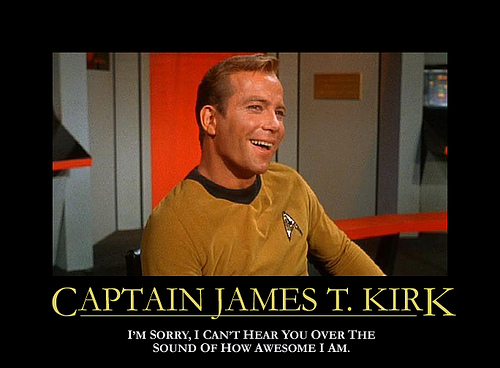
Do you enjoy those fake motivational posters that combine a photo with an unfortunately apt caption, like the one with Captain Kirk smirking that says "I'm Sorry, I can't hear you over the sound of how awesome I am"?  Well with the motivator, you can make your own.

Youtube

The standard, tried-and-true source.  Bouncing from one music video / comedy sketch / zombie preparedness video to another will cost you several hours, easily.
 

© Metadoxy
Revolution Elements by Blozard. Original WP theme by Jason Schuller | Distributed by Deluxe Templates