Christ is infinitely more important than Christianity and always will be, no matter what Christianity is, has been or might become.Please, discuss. The context is here.


HOW I FEEL WHEN I’M TWO WEEKS OUT FROM QUALS
9 years ago

Christ is infinitely more important than Christianity and always will be, no matter what Christianity is, has been or might become.Please, discuss. The context is here.

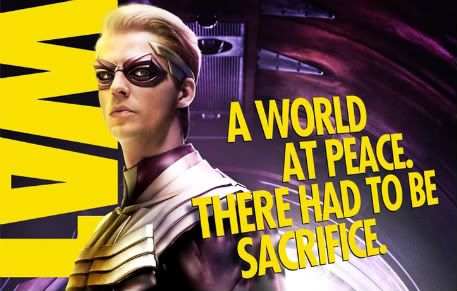
The world faces existential risk, i.e., a risk that the world will die. Such a death is bad not only for those who live here now, but also for vast future generations who might descend from us now. Cultures and ethnicities face related risks. By preparing to save themselves under various disaster scenarios, survivalists also tend to make their culture, ethnicity, and world a bit less likely to die. An effort for which future generations should be quite grateful. [emphasis added]Hanson's argument is that survivalists might not be much benefit to society right now--in fact, they probably hold current society in disdain and avoid outsiders where possible. But the true beneficiaries of their peculiar brand of risk aversion are the untold future generations who might not exist without the efforts of lunatics and maniacs.
Each step had to be taken carefully, constantly striving to keep in mind the enormous scale of what was at stake! The Earth. Humanity. All we've ever known... "end of the world" does the concept no justice. The world's present would end. Its future, immeasurably vaster, would also vanish. Even our past would be cancelled. Our struggle from the primal ooze, every childbirth, every personal sacrifice rendered meaningless, leading only to dust, tossed in the void-winds.
Save for Richard Nixon, whose name adorns a plaque upon the moon, no human vestige would remain. Ruins become sand, sand blows away... all our richness and color and beauty would be lost... as if it had never been.That's right, Robin Hanson is channeling the World's Smartest Man, Adrian Veidt, also called Ozymandias.
 Which of the two, Hanson or Veidt, said this?
An intractable problem can only be resolved by stepping beyond conventional solutions.Or this?
I have a passion, a sacred quest, to understand everything, and to save the world.They could have come from the same mind, if not the same voice.
"Do it?" Dan, I'm not a Republic Serial villain. Do you seriously think I'd explain my master stroke if there remained the slightest chance of you affecting its outcome? I did it thirty-five minutes ago.Robin Hanson wants to save the world, but how? By educating people? Maybe. Maybe something else. "Canaan is devastated, Ashkelon is fallen, Gezer is ruined, Yendam is reduced to nothing, Israel is desolate and her seed is no more, and Palestine has become a widow for Egypt... All the countries are unified and pacified," says mighty Ozymandias.

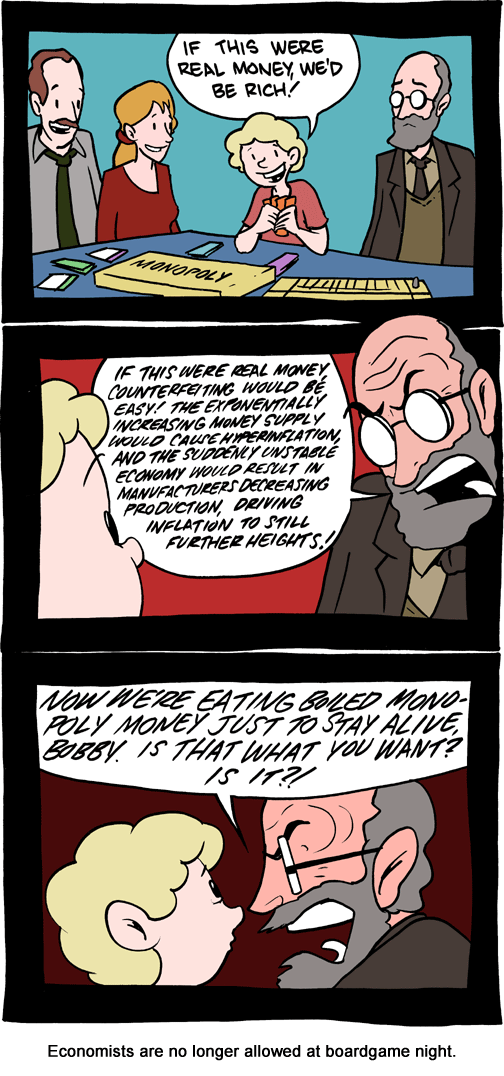

The moral of the story is that if you are smart enough to be a Nobel-prize winning economist maybe you can do without the math, but the rest of us mere mortals cannot. We need the math to make sure that we think straight--to ensure that our conclusions follow from our premises and that we haven't left loose ends hanging in our argument.Of course, there are still points in our reasoning when economists are still vulnerable to bad logic. In particular, economists can make major blunders when identifying the most relevant parts of the real world--the parts that need to be included in the model--and when translating the implications of the models back into real world terms. But this system is still much better than simply describing arguments in way that leaves room for sloppiness throughout the process. While we're in the mathematics of the model, we know that every result must certainly follow from the premises.
In explaining our extensive and demanding curriculum, I emphasize that development is too important to be left to mushy thinking.Essentially, the student said, economics matters more than those others. While I would disagree with this to a certain extent--journalism certainly matters because it influences public opinion, and philosophy matters because it influences future economists*--I do think there is a sense in which the consequences of bad economic policy, the inevitable result of sloppy thinking, are more costly and immediate than the consequences of bad thinking in many other disciplines.

What matters most is a certain habit of mind--of being able and willing to break a complicated problem into its constituent parts and then put it back together.These are the skills I'm really trying to teach my students. Finally, I have to mention the commenter Rodrik quotes who wants to see some more humility in mathematical economic theory:
I am not supportive of economists who then forget that they have a "model", an abstraction of the world, and begin to believe that their model is the world. I find very few economists that are humble enough to admit that about their analysis.Like Rodrik, I hope I am always humble enough to distinguish what models are helpful for and what they are not. If our interest is to help the people of less developed countries, formal economic analysis is only one component in the complex process of promoting growth. It's an important one, at least I think it is. But a sense of professional perspective is indispensable.

 Posts
All Comments
Posts
All Comments
© Metadoxy
Revolution Elements by Blozard. Original WP theme by Jason Schuller | Distributed by Deluxe Templates

