
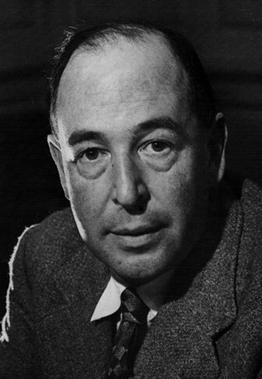
I have every respect for those who wish women to be priestesses. I think they are sincere and pious and sensible people. Indeed, in a way they are too sensible. That is where my dissent from them resembles Bingley's dissent from his sister. I am tempted to say that the proposed arrangement would make us much more rational 'but not near so much like a Church'.
[...] Christians think that God Himself has taught us how to speak of Him. To say that it does not matter is to say either that all the masculine imagery is not inspired, is merely human in origin, or else that, though inspired,it is quite arbitrary and unessential. And this is surely intolerable: or, if tolerable, it is an argument not in favour of Christian priestesses but against Christianity. It is also surely based on a shallow view of imagery. Without drawing upon religion, we know from our poetical experience that image and apprehension cleave closer together than commonsense is here prepared to admit; that a child who has been taught to pray to a Mother in Heaven would have a religious life radically different from that of a Christian child. And as image and apprehension are in an organic unity, so, for a Christian,are human body and human soul. [...]
[...] The point is that unless 'equal' means 'interchangeable,' equality makes nothing for the priesthood of women. And the kind of equality which implies that the equals are interchangeable (like counters or identical machines) is, among humans, a legal fiction. It may be a useful legal fiction. But in church we turn out backs on fictions. [...]
This is what common sense will call 'mystical.' Exactly. The Church claims to be the bearer of a revelation. If that claim is false then we want not to make priestesses but to abolish priests. If it is true, then we should expect to find in the Church an element which unbelievers will call irrational and which believers will call supra-rational. There ought to be something in it opaque to our reason though not contrary to it--as the facts of sex and sense on the natural level are opaque.
[...] With the Church, [...] we are dealing with male and female not merely as facts of nature but as the live and awful shadows of realities utterly beyond our control and largely beyond our direct knowledge. Or rather, we are not dealing with them but (as we shall soon learn if we meddle) they are dealing with us.
I particularly enjoy Lewis' fiction -- the Narnia books, the Space trilogy, the Screwtape Letters, the Great Divorce, etc. --because his sharp understanding of the Christian worldview always comes through. Not that his protagonists always adhere to the Christian worldview, but the worlds in which they exist derive their essence from Lewis' character, just as Christianity says the real world derives its character from its Creator. Consider the following commentary on Heaven and Hell from The Great Divorce:
'Son,'he said,' ye cannot in your present state understand eternity...That is what mortals misunderstand. They say of some temporal suffering, "No future bliss can make up for it," not knowing that Heaven, once attained, will work backwards and turn even that agony into a glory. And of some sinful pleasure they say "Let me have but this and I'll take the consequences": little dreaming how damnation will spread back and back into their past and contaminate the pleasure of the sin. Both processes begin even before death. The good man's past begins to change so that his forgiven sins and remembered sorrows take on the quality of Heaven: the bad man's past already conforms to his badness and is filled only with dreariness. And that is why...the Blessed will say "We have never lived anywhere except in Heaven," : and the Lost, "We were always in Hell." And both will speak truly.'

"But where is the fourth?" asked Aslan.
"He has tried to betray them and joined the White Witch, O Aslan," said Mr. Beaver. And then something made Peter say:
"That was partly my fault, Aslan. I was angry with him and I think that helped him to go wrong."
And Aslan said nothing either to excuse Peter or to blame him but merely stood looking at him with his great golden eyes. And it seemed to all of them that there was nothing to be said.
"Please--Aslan," said Lucy, "can anything be done to save Edmund?"
"All shall be done," said Aslan, "But it may be harder than you think." And then he was silent again for some time. Up to that moment Lucy had been thinking how royal and strong and peaceful his face looked; now it suddenly came into her head that he looked sad as well.
As he let the empty gourd fall from his hand and was about to pluck a second one, it came into his head that he was now neither hungry nor thirsty. And yet to repeat a pleasure so intense and almost so spiritual seemed an obvious thing to do. His reason, or what we commonly take to be reason in our own world, was all in favour of tasting this miracle again; the childlike innocence of fruit, the labours he had undergone, the uncertainty of the future, all seemed to commend the action. yet something seemed opposed to this "reason." It is difficult to suppose that this opposition came from desire, for what desire would turn from so much deliciousness? But for whatever cause, it appeared to him better not to taste again. Perhaps the experience had been so complete that repetition would be a vulgarity--like asking to hear the same symphony twice in a day.
In this sense, Lewis represents an internal consistency of thought and feeling that few authors ever achieve. However, as the title suggests (Ghost Ship Moment approaching!), I feel there is a parallel genius of the evolutionary atheistic worldview in Howard Philips Lovecraft.

[...] wherever any precept of traditional morality is simply challenged to produce its credentials, as though the burden of proof lay on it, we have taken the wrong position. The legitimate reformer endeavours to show that the precept in question conflicts with some precept which its defenders allow to be more fundamental, or that it does not really embody the judgement of value it professes to embody.The direct frontal attack 'Why?'--'What good does it do?'--'Who said so?' is never permissible; not because it is harsh or offensive but because no values at all can justify themselves on that level. [...] Only those who are practising the Tao will understand it. It is the well-nurtured man, the cuor gentil, and he alone, who can recognize Reason when it comes. It is Paul, the Pharisee, the man 'perfect as touching the Law' who learns where and how the Law was deficient.
In order to avoid misunderstanding, I may add that though I myself am a Theist, and indeed a Christian, I am not here attempting any indirect argument for Theism. I am simply arguing that if we are to have values at all we must accept the ultimate platitudes of Practical Reason as having absolute validity: that any attempt, having become sceptical about these, to reintroduce value lower down on some supposedly more 'realistic' basis, is doomed. Whether this position implies a supernatural origin for the Tao is a question I am not here concerned with.
Lovecraft's worldview vehemently denies the existence of any supernatural Deity, instead holding that the material world is all there is, modern sciences possess the tools to identify objective reality and truth, and the nature of man and all life is driven by the process of evolution. In this sense his views are not very different from many other scientific atheists. However, Lovecraft is willing to accept two things most others this category are not: First, he makes no attempt to place himself or his own perceptions outside of the generally accepted morals and attitudes of his culture, implicitly accepting the Tao as a product of evolution which he has no need or interest in questioning; and second, he is willing to follow the premises of his worldview wherever they lead, making no attempt at imposing new assumptions along the way that prevent distasteful conclusions.
Consider the essay At the Root, on the sources of World War I (written before its conclusion):
Four years ago a large part of the civilised world laboured under certain biological fallacies which may, in a sense, be held responsible for the extent and duration of the present conflict. These fallacies, which were the foundation of pacifism and other pernicious forms of social and political radicalism, dealt with the capacity of man to evolve mentally beyond his former state of subservience to primate instinct and pugnacity, and to conduct his affairs and international or interracial relations on a basis of reason and good-will. That belief in such capability is unscientific and childishly naive, is beside the question. The fact remains, that the most civilised part of the world, including our own Anglo-Saxondom, did entertain enough of these notions to relax military vigilance, lay stress on points of honour, place trust in treaties, and permit a powerful and unscrupulous nation to indulge unchecked and unsuspected in nearly fifty years of preparation for world-wide robbery and slaughter. We are reaping the result of our simplicity.
[...]
Man's respect for the imponderables varies according to his mental constitution and environment. Through certain modes of thought and training it can be elevated tremendously, yet there is always a limit. The man or nation of high culture may acknowledge to great lengths the restraints imposed by conventions and honour, but beyond a certain point primitive will or desire cannot be curbed.[...]
Much of Lovecraft's fiction revolves around the human mind attempting to comprehend its true place in the stark, unforgiving, uncaring universe of Lovecraft's beliefs. In many cases the realization is enough to drive his protagonists to madness or even suicide rather than live with the reality of insignificance. The opening paragraph of one of his most famous works, The Call of Cthulhu, says it best:
The most merciful thing in the world, I think, is the inability of the human mind to correlate all its contents. We live on a placid island of ignorance in the midst of black seas of infinity, and it was not meant that we should voyage far. The sciences, each straining in its own direction, have hitherto harmed us little; but some day the piecing together of dissociated knowledge will open up such terrifying vistas of reality, and of our frightful position therein, that we shall either go mad from the revelation or flee from the deadly light into the peace and safety of a new dark age.
 Lovecraft's writing is often difficult to read, in some ways the polar opposite of Lewis. But what Lovecraft truly masters is atmosphere, especially the eerie sense of being alone and without recourse amidst a universe that does not care what happens to you. Lovecraft described his reasoning for this focus on fear in Notes on Writing Weird Fiction:
I choose weird stories because they suit my inclination best—one of my strongest and most persistent wishes being to achieve, momentarily, the illusion of some strange suspension or violation of the galling limitations of time, space, and natural law which forever imprison us and frustrate our curiosity about the infinite cosmic spaces beyond the radius of our sight and analysis. These stories frequently emphasise the element of horror because fear is our deepest and strongest emotion, and the one which best lends itself to the creation of Nature-defying illusions. Horror and the unknown or the strange are always closely connected, so that it is hard to create a convincing picture of shattered natural law or cosmic alienage or “outsideness” without laying stress on the emotion of fear.
Winter came early, and was very cold. Ammi saw Nahum less often than usual, and observed that he had begun to look worried. The rest of his family too, seemed to have grown taciturn; and were far from steady in their church-going or their attendance at the various social events of the countryside. For this reserve or melancholy no cause could be found, though all the household confessed now and then to poorer health and a feeling of vague disquiet. Nahum himself gave the most definite statement of anyone when he said he was disturbed about certain footprints in the snow. They were the usual winter prints of red squirrels, white rabbits, and foxes, but the brooding farmer professed to see something not quite right about their nature and arrangement. He was never specific, but appeared to think that they were not as characteristic of the anatomy and habits of squirrels and rabbits and foxes as they ought to be. Ammi listened without interest to this talk until one night when he drove past Nahum's house in his sleigh on the way back from Clark's Corner. There had been a moon, and a rabbit had run across the road, and the leaps of that rabbit were longer than either Ammi or his horse liked. The latter, indeed, had almost run away when brought up by a firm rein. Thereafter Ammi gave Nahum's tales more respect, and wondered why the Gardner dogs seemed so cowed and quivering every morning. They had, it developed, nearly lost the spirit to bark.
I could go on quoting Lewis and Lovecraft until all readers abandon me (have you?). I truly enjoy both authors. One I largely agree with, while the other I vehemently deny. But in both there is a logic, a consistency of perspective, that flows through fiction and non- alike. I think it is this consistency that enables them to write so compellingly. I would have loved to see them debate each other, if for no other reason than to see two worldviews truly, honestly collide.


 Posts
Posts


10 comments:
But I'm sure you see that their worldviews are not independent. If Lovecraft is right about the world, then he has no grounds to want to be consistent in the first place; consistency and inconsistency are arbitrary descriptions of incomprehensible reactions within the fizzling neurons that happen to populate his brain.
Lewis, on the other hand, has some grounds for his logic: he perceives that the universe is ruled by a rational being, and hence may be plausibly expected to hang together. Lovecraft no doubt lives and acts this way - he can hardly do otherwise - but that is in direct contravention of his poseur materialism. Does it seem consistent to you?
Joel, I see no inconsistency whatsoever. I've always thought the idea of "grounds for logic" to be rather silly; how can one make such an assertion without assuming logic itself axiomatically? Further, I think "grounds to want" anything is even less understandable. When has the 'groundedness' or lack thereof ever affected any human desires?
Lovecraft wants what he wants, and I suspect would defend it on aesthetic grounds, which he would recognize that as a purely subjective and a-teleological neurological process, as in his worldview all processes surely are. He simply has no objection to it, nor should he if his worldview is to be consistent. Essentially, he accepts Lewis' Tao, not for what Lewis (rightly) says it is, but because he likes it and has no reason to reject it.
But I think you and I are using different assumptions here. As I mentioned in last Monday's post, I don't believe a-theism to be automatically illogical (regardless of how often it is in practice), whereas you seem to. While creation does reveal the character of God, I believe we fallen creatures have to have His direct, special revelation in order to interpret it accurately. The failed human moral intuition makes us disinclined to see God in his creation as we should, but I don't think any failure of logic is necessary. Logic alone is far too feeble an instrument to isolate the truth of God's identity; it simply eliminates too few possibilities.
On somewhat of a tangent from the original topic,
'Horror and the unknown or the strange are always closely connected, so that it is hard to create a convincing picture of shattered natural law or cosmic alienage or “outsideness” without laying stress on the emotion of fear.'
What an astute observation on Lovecraft's part. Although I do enjoy many a lighthearted bit of science fiction, the most compelling and memorable scifi always has a strong element of fear and horror to it. Of course! A clever yet natural way to exploit one of fallen man's worst tendencies, fear.
I wrote a comment earlier, but apparently it failed to post. Let me sum up:
You find idea of desires having grounds or justifications puzzling. Assuming Lovecraft ever has more than one desire at the same time, how does he decide between them if not by some system or scale of values? Well then, if he has a system, if he has any kind of rational process that distinguishes him from an earthworm, then it doesn't seem unreasonable to suppose that he would wish for his desires to match that. Ergo, his desires can be, on whatever lights he pleases, either justifiable or otherwise. And this system or basis cannot itself simply be a desire, because it adjudicates between other, competing desires. What's so hard to understand about that?
The second point is that your insistence that logic is by definition groundless. I am not sure I understand you, so let me ask this to clarify.
Q. Do you suppose, then, that the rules of logic are contingent? That is, Aristotle could have just as easily said that contradiction is awesome, and that ad hominem arguments are just as solid as geometry? I am trying to suggest that logic, more or less as we understand it, is necessary, because it depends on the nature of God being a particular way. But that if you don't even accept God has a nature, there's no particular reason it should work.
Likewise, your point about the Fall seems to me to occlude the explicitly deductive nature of depravity, at least as it is explained in Romans 1. We are supposed to know the nature of God by deduction from analogy: God made it evident from the things which are made. So, we have a starting premise: if P (the world being X), then Q (God is Y). P; ergo Q. The suppression of that conclusion in the following verses seems to strike at the heart of your attempted distinction between moral and logical reasoning. I am trying to suggest, along Augustinian lines, that they are inseparable.
Joel, you said "how does he decide between them if not by some system or scale of values?"
While I understand the appeal of invoking an overriding conscious process here, in my experience very few people say to themselves "I like the color of this car, but the other has a sleeker shape; since I am a Colourite, I must favor the car with the better color." I find most people choose based on whichever desire is strongest at the moment of decision. The fact that we can identify some consistency to this doesn't mean that they are being intentionally systematic, but rather that their desires are more or less consistent.
You may say this is a fine description of non-moral decisions, but in practice I don't think most people do anything differently for their moral decisions. Indeed, for Christians we have a system that *should* guide our moral decisions, and often they do coincide; but often they don't, precisely because our desire to sin wins out over our desire to love God. And it *is* a desire to love God (given to us by Him, of course) that directs us to conform to the system, rather than the other way around.
And in any event, Lovecraft's position would be that the distinction between us and the earthworm, whether due to reason or anything else, is greatly exaggerated. I disagree, but I think he would be illogical to take any other position.
You also said "Do you suppose, then, that the rules of logic are contingent?"
In one sense, no, but I think this is because logic is the thing which identifies (and rules out) contradictions *by definition*. One could easily think of a method of intellectual discernment which did something other than isolate contradictions, and it may well be a fine method of thinking, but it wouldn't be nearly so much like logic.
I agree with you that Aristotle's tools of logic work in reality because of the nature of God, but the logic wouldn't become contradictory if that weren't the case. I think we generally accept Aristotle's logic precisely because it coincides well with what we need in reality, but this is not deductive at all, it's inductive.
I find your statement about 'the explicitly deductive nature of depravity' a bit odd. While Paul is certainly being very systematic in his presentation, I find it difficult to see in what way he says we can deduce God from observation. Indeed, Aristotelian logic (with which I believe Paul was familiar) says this can never be. The true chain of logic is 'if Q(God is Y), then P(the world is X). P; ergo..." We may inductively conclude from this Q, and indeed to an unfallen mind I believe this would be the obvious connection. But the nature of causality and the imperfectness of observation preclude the deductive leap you say Paul makes in Romans 1.
I believe his point is much more that the fallen desires of man, and thus his erroneous prior beliefs about reality, lead him to prefer the less likely model of not Q to the more likely model of Q. This may be bad Bayesianism, but it is not a contradiction, and if not a contradiction, then not necessarily illogical.
That's two of my comments your blog has perfidiously eaten!
So again...
You make an interesting distinction between theory and practice in the decisions of human beings. I am not sure I quite grant the point, but I want to ignore it for now, on the idea that comments are better shorter than otherwise.
I want to focus on the Romans passage, because it seems more critical than Lovecraft's [admittedly horrifying] brain. I'll try to flesh out what I am trying to say, then you can be a bit clearer too, and we'll both come away with something useful. One hopes.
I mean to argue that the knowledge in this case is not merely a question of percentages and probabilities, but certain, obvious, probability of 1. Whether we call it deductive or inductive is of less immediate concern.
Here is the passage in question - "For what can be known about God is plain to them, because God has shown it to them. 20 For his invisible attributes, namely, his eternal power and divine nature, have been clearly perceived, ever since the creation of the world, in the things that have been made. So they are without excuse."
So we have some sort of knowledge of God, that is clear enough; and what's more the knowledge is not direct but mediated somehow. "since the creation of the world, n the things that have been made" tells us that we derive it from (presumably) sense perception of the created order - at any rate, from the knowledge that we already possess in some unproblematic fashion of the universe. From this basis, which Paul treats as unassailable, we know discrete information about God: his eternal power and divine nature. And the point is that it's obvious, undeniable: God made it evident to them, so that they are without excuse.
You want to weaken the force of Paul's argument by adducing "the nature of causality and the imperfectness of observation". The first is a pretty general objection, so I'll leave that for you to define into usefulness. But Paul seems to rule out the second absolutely. The justice of the condemnation in his argument depends upon the utter perspicacity of nature in revealing God. Nor, as you seem to suggest, are these unfallen minds connecting the dots: the antecedent of "them" cannot syntactically be anything but "those who suppress the truth in unrighteousness".
This is why I say that Paul's argument takes on the nature of a proof - since it's conclusion is undeniable, it seems unlikely that he means to present a merely probabilistic case. Rather, he seems to feel it is a necessary implication.
At least, he does on my reading of the passage. What is your version, pray?
"the point is that it's obvious, undeniable: God made it evident to them, so that they are without excuse." I agree completely, and if I've given the impression that I wish to weaken Paul's argument, I apologize. Perhaps my view of this can best be explained, oddly enough, by a parable.
Neil was taking a course in Economics from Dr. Keynes. Keynes was a friendly lecturer, but very strict with his exams. In one lecture, Dr. Keynes had just finished telling a few jokes before saying "On a more serious note, this next topic will be on the test." He then proceeded to lecture on Effective Demand before moving on to more important areas. When it came to exam time, Neil had prepared for every topic... except Effective Demand. Neil complained about this obscure topic showing up on the exam, to which Dr. Keynes replied "I told you it would be on the exam." "Yes," Neil answered, "but I didn't believe you!"
My point here is that the sin of both Neil and fallen man is their unbelief, not their failure to think logically or carefully. The problem with thinking Dr. Keynes was joking about the test is not that such a thought is itself illogical, but that it is plainly wrong. Neil's 'excuse' is no such thing, because he had everything he needed to know, whether he believed it or not.
Similarly, mankind has everything it needs to know God's invisible attributes; they simply don't trust the evidence. I feel like you make a jump between "what can be known about God is plain to them" and "thinking any other thought about God in the presence of such clear evidence is illogical." I think it is quite sufficient condemnation to say they are obligated to believe because God is God, and they even have all the evidence they should need to believe, but they don't (because they choose to believe their assumption that 'there is no God' or 'Allah is God' or whatever else more). That failure to believe necessarily causes internal contradictions seems a different condemnation, and at any rate I don't think it's what Paul is talking about.
You seem to say that if nature is clear enough faith becomes a mere matter of being logical, or that given the right premises (whether through certainty of natural revelation or anything else) logic becomes indistinguishable from faith. I don't see a reason, whether in Romans 1 or elsewhere, to conflate the two.
While I believe Christian faith is logical, I think we have to admit that what makes Christianity right is that it logically follows from premises which are true, and if we believe these true premises it is because God has given Christians faith, not because they were logically obvious and God has given Christians logic.
And in any case, if something is only logically valid if it is based on true premises, then to my mind this makes logic less useful for discourse and learning, not more.
So the real question here is: what is the nature of the evidence? That it is evident we agree.
Incidentally, I don't conflate faith with logic. There are things which general revelation cannot tell us, which is one reason why Christ is necessary. However, it does tell us some things, and those I argue, are not a matter faith at all. Which is my point. Everyone knows them irrespective of faith, it's just a question of who is willing to admit the fact.
This brings me back to the nature of the evidence. Not only is this knowledge inescapable, it is indirect. We obviously do not enjoy immediate intellection of God's nature. We can't see his power as we see a box of Kleenex. Rather, it seems from Paul's presentation that we figure it out, indirectly, going from the evidence of our senses to a conclusion about God. I am calling that process essentially logical, or dialectical if you prefer; I think it's just the normal way humans come to have knowledge of things we cannot actually see.
Now you might turn this around, as it has just now occurred to me to do, and say "perhaps their logical faculties are working fine, only they ignore them". And this is undeniable. But, on the other hand, if the first result of unbelief is that their divinely installed premises no longer produce a true conclusion, who knows what else is wrong? At very least, their ability to reason is not in perfect shape.
So to tweak your parable: suppose instead that Neil is studying math. On the test, he is asked to add four and one, but can only write eleven. He knows perfectly well how addition works, at least theoretically and with other numbers, and can count on his fingers and all the rest. But nevertheless, he is incapable of doing the sum, and even refuses to believe Dr Keynes when he (somewhat impatiently, after his demotion to first-semester arithmetic) tells him the real answer.
You might say, in a sense, that he knows how to add - clearly, the problem is not entirely a defect of his knowledge. But has it not got implications on the rest of what he claims to know?
Ah. I think I see where you are drawing the distinction between logic and faith more clearly now. I retract my misplaced accusation. Thanks.
"perhaps their logical faculties are working fine, only they ignore them."
I think we are getting close to understanding each other on this matter, as this is very close to what I am saying. I would modify it to say "perhaps their divine-nature-perceiving faculties are working fine, only they ignore them." As I see these perceptive faculties as distinct from the faculties which identify contradictions within a thought system, I don't see this as preventing them from forming a system of belief, connecting assumptions to implications and actions, which is internally consistent.
Whether it is a good way to live in the world God has created is another matter. I never meant to say it is right, or that interaction with the world shouldn't lead them to question their assumptions. I only mean that failure to do so is not a matter of logic itself, as it does not lead to internal contradictions. The revelation Paul mentions should be one of their premises, but if it's not that doesn't make them illogical because logic isn't in the business of choosing correct premises, no matter how obvious.
"But has it not got implications on the rest of what he claims to know?"
Indeed it has. I don't think we should follow Lovecraft's guidance on who to associate with, for instance, as his blatant racism is something I think we can say is obviously misplaced in the world. However, he does manage to recognize that his worldview makes racial preference a perfectly acceptable matter of taste (if not actively encouraging it), whereas Richard Dawkins doesn't seem to.
In this sense, I would say Lovecraft comes out well ahead on the "implications on the rest of what he claims to know" compared to Dawkins or any other atheist who clings to certain absolute morals from the Christian tradition (but only the ones they like). Lovecraft is willing to follow his worldview to its (often rather distasteful) end; I don't wish to follow him, but not because I find him inconsistent.
Post a Comment